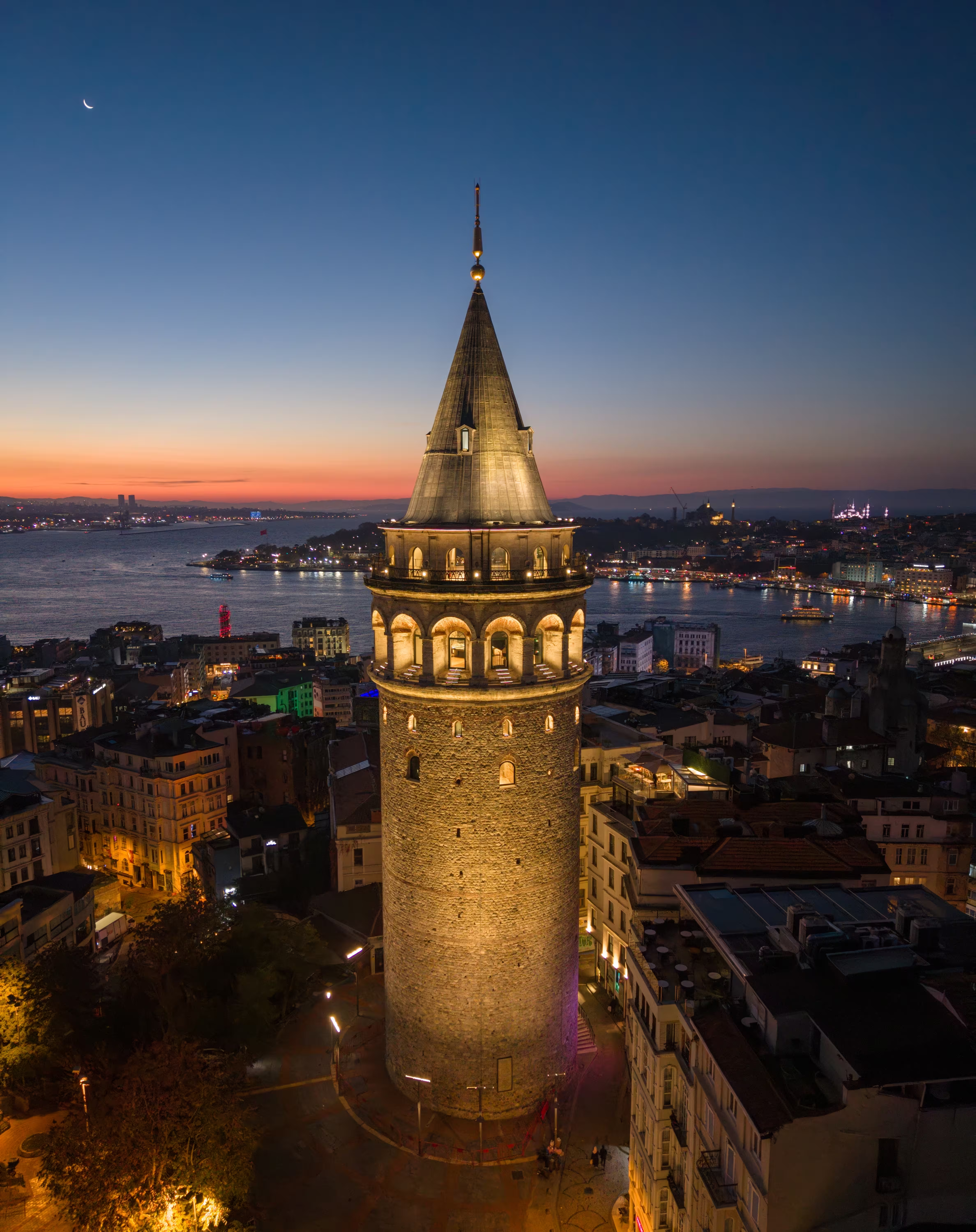
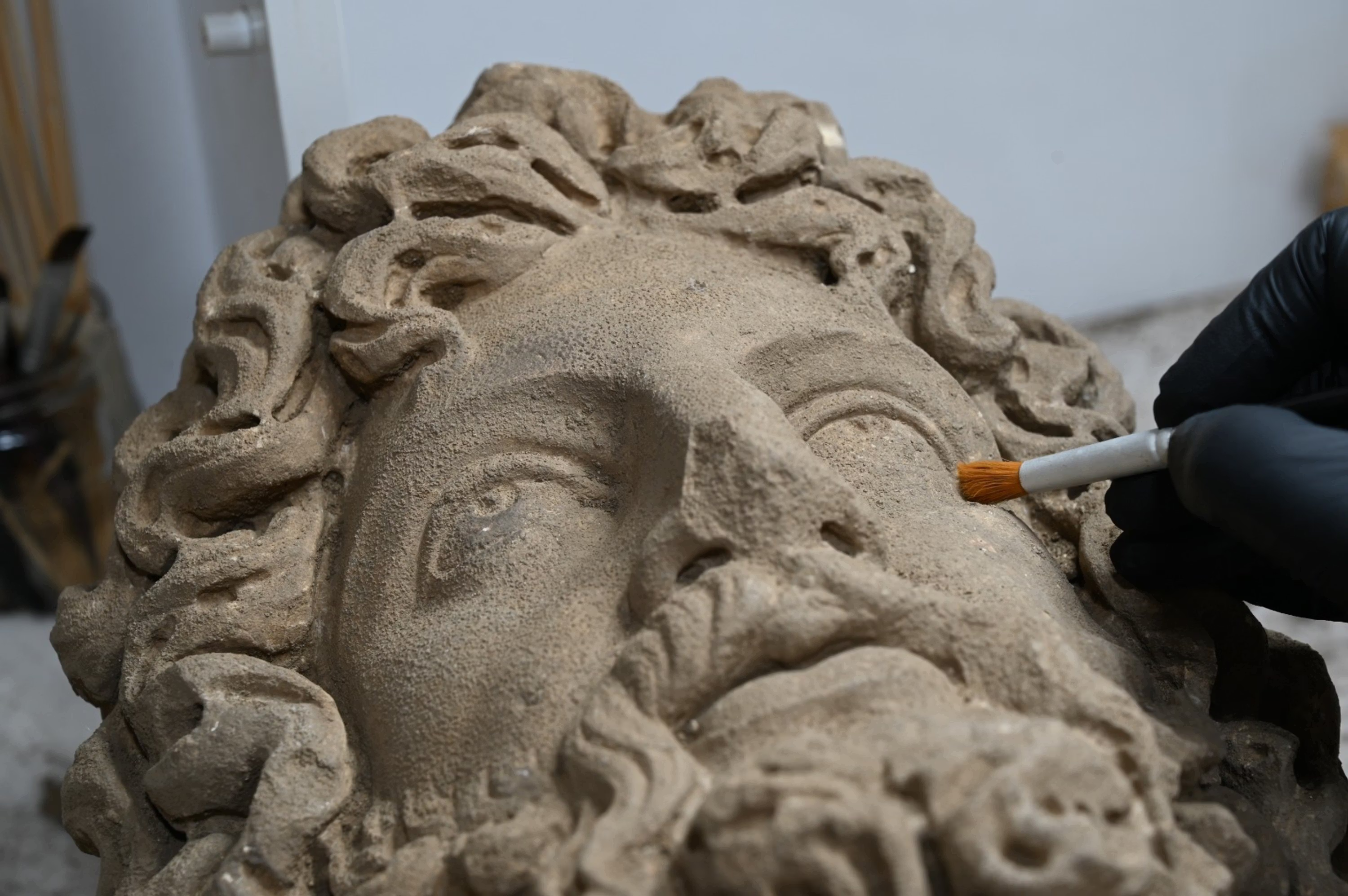
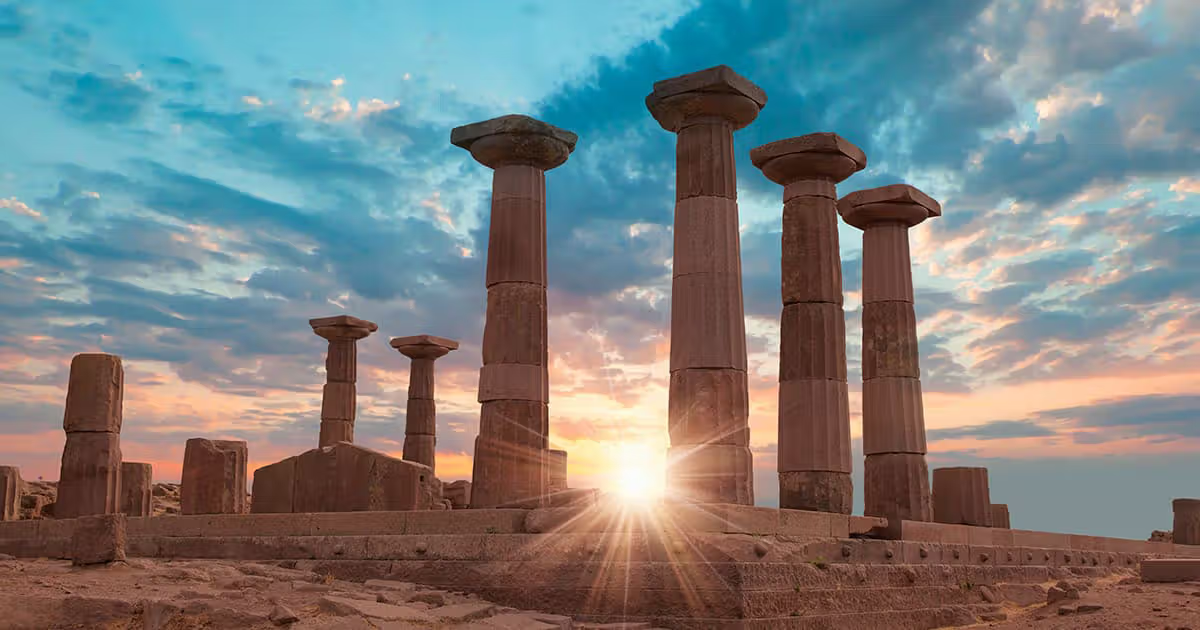
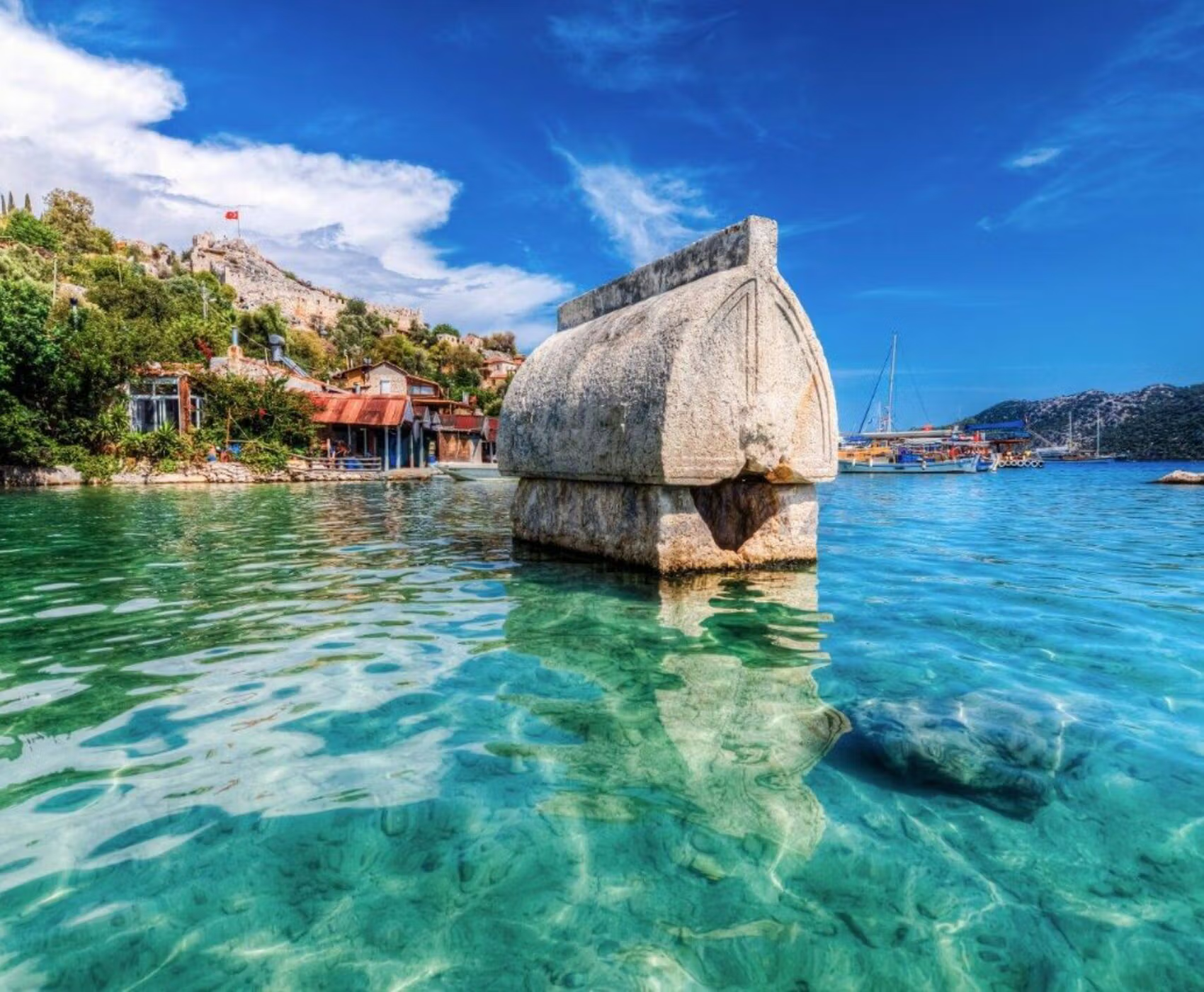
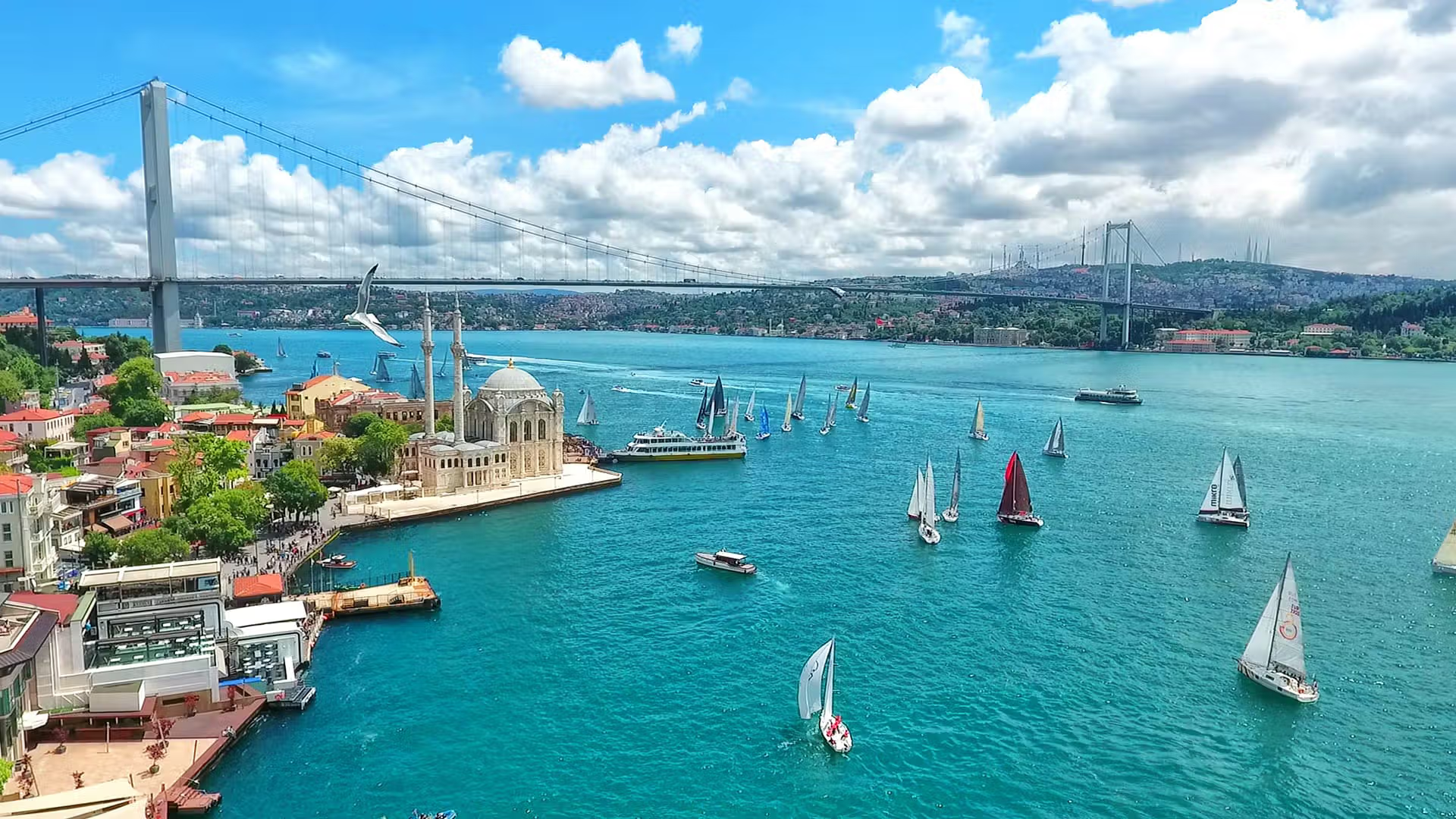
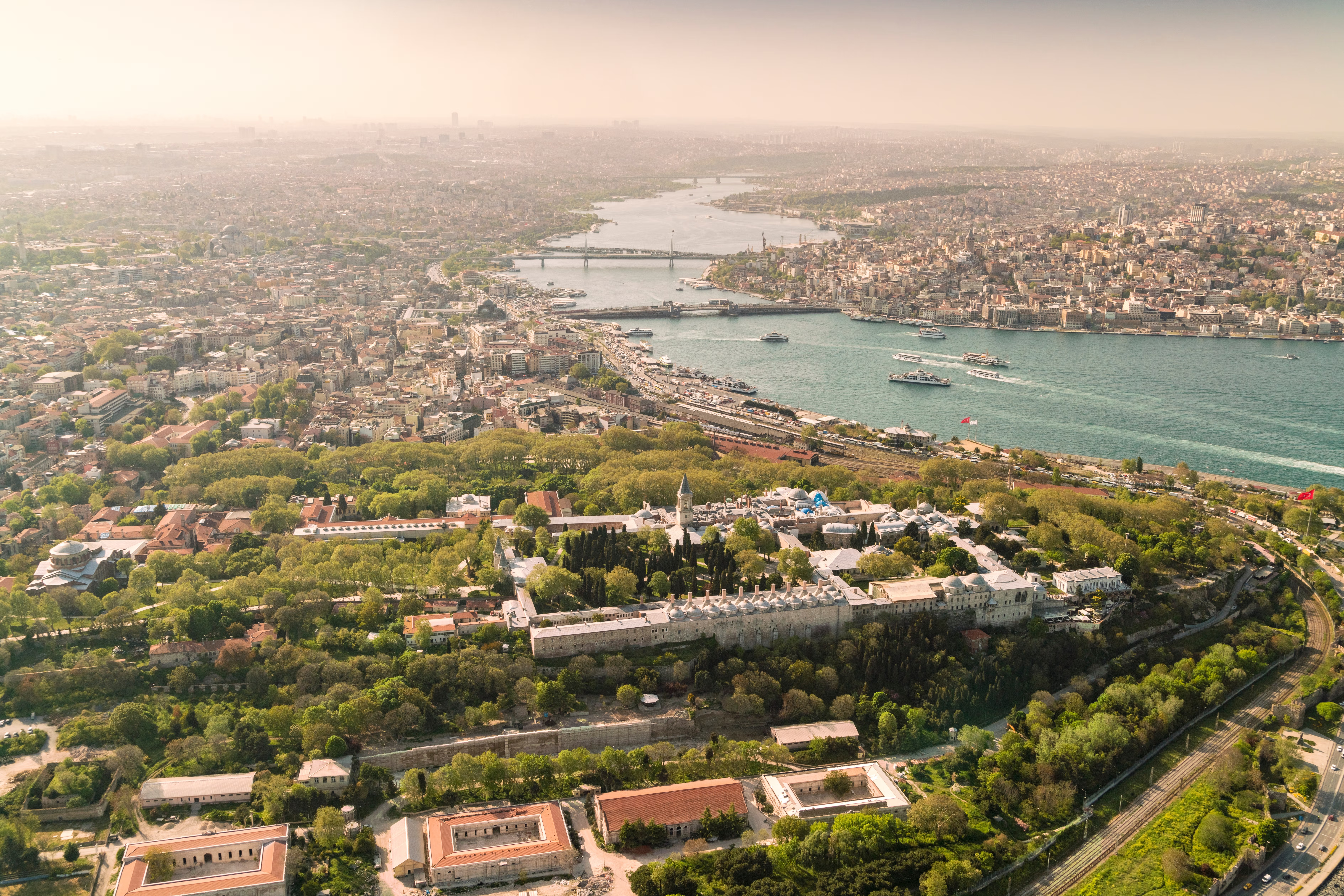
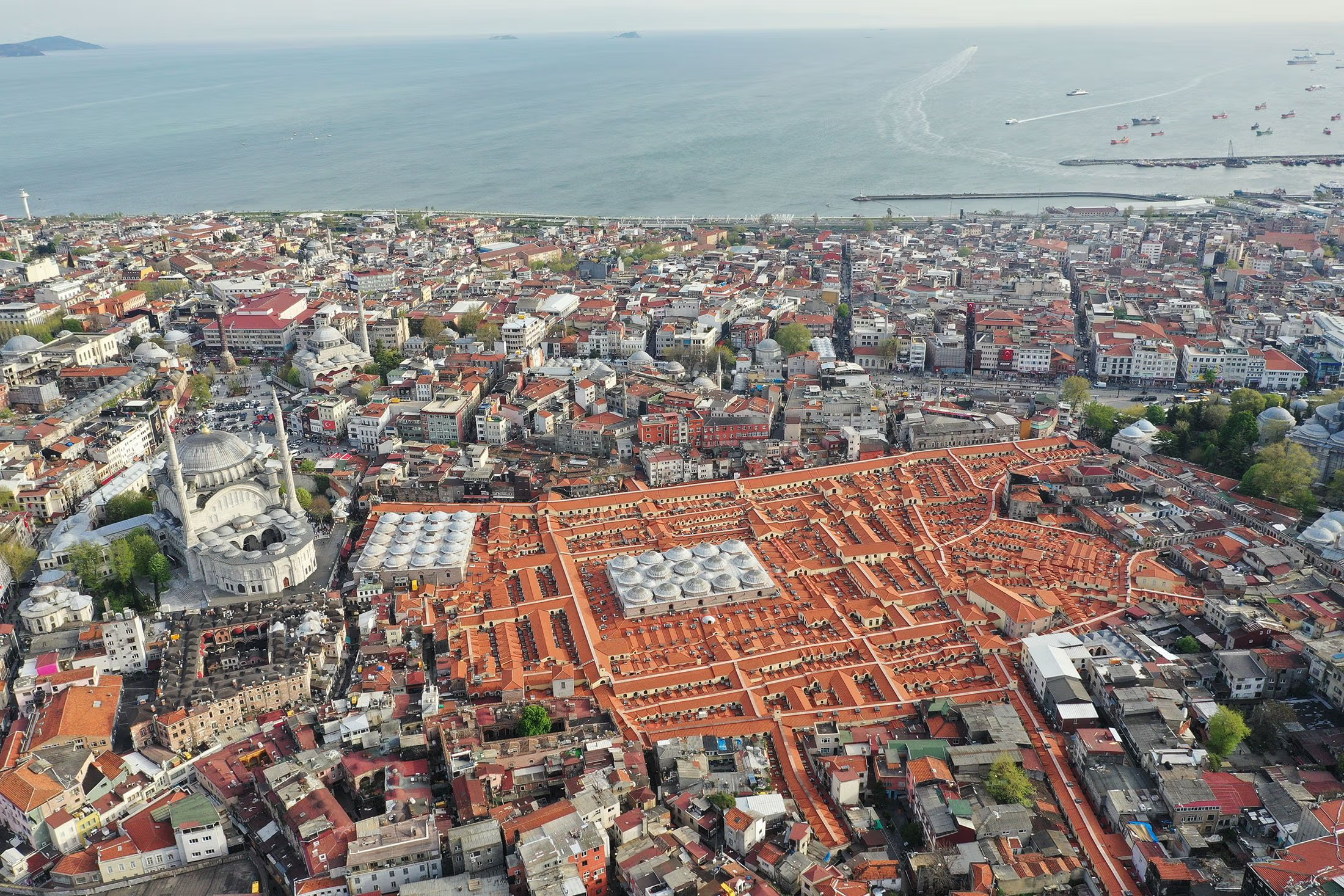
Cross from Hagia Sophia to Topkapı in a single morning, then lose an hour in the Grand Bazaar's sixty streets.
Walk Anzac Cove, Lone Pine and Chunuk Bair with a guide who works these ridges every season.
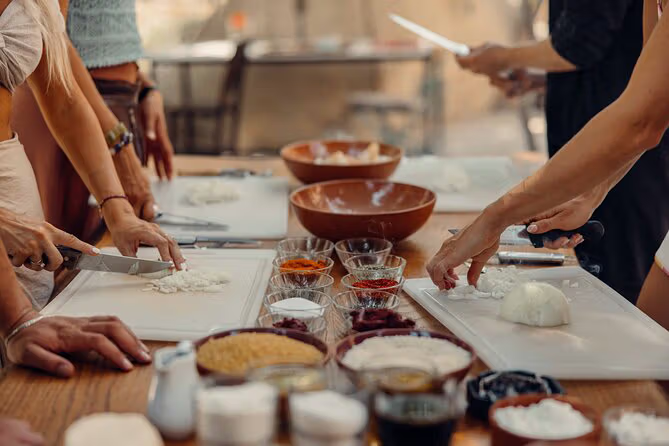
Bake bread in a village kitchen in the hills behind the Aegean, with wine the household presses itself.
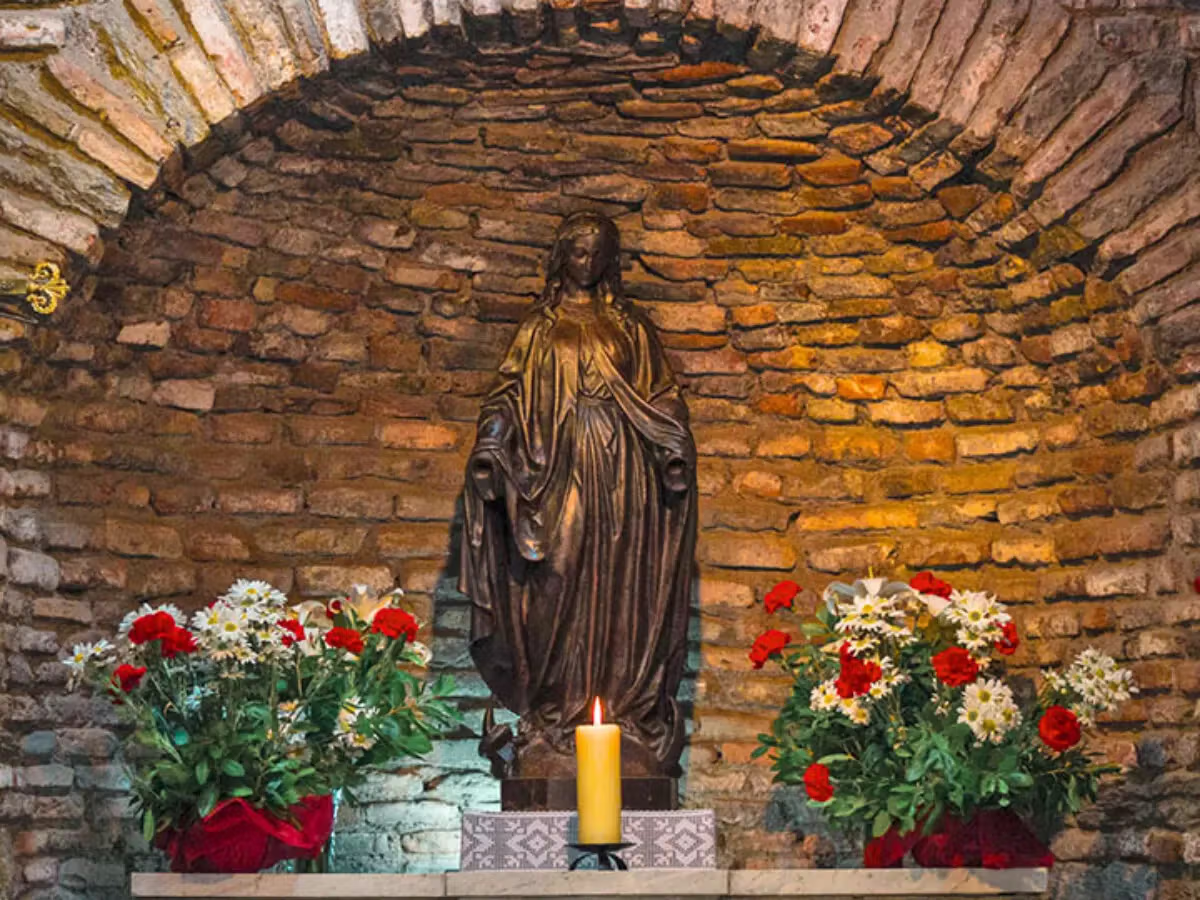
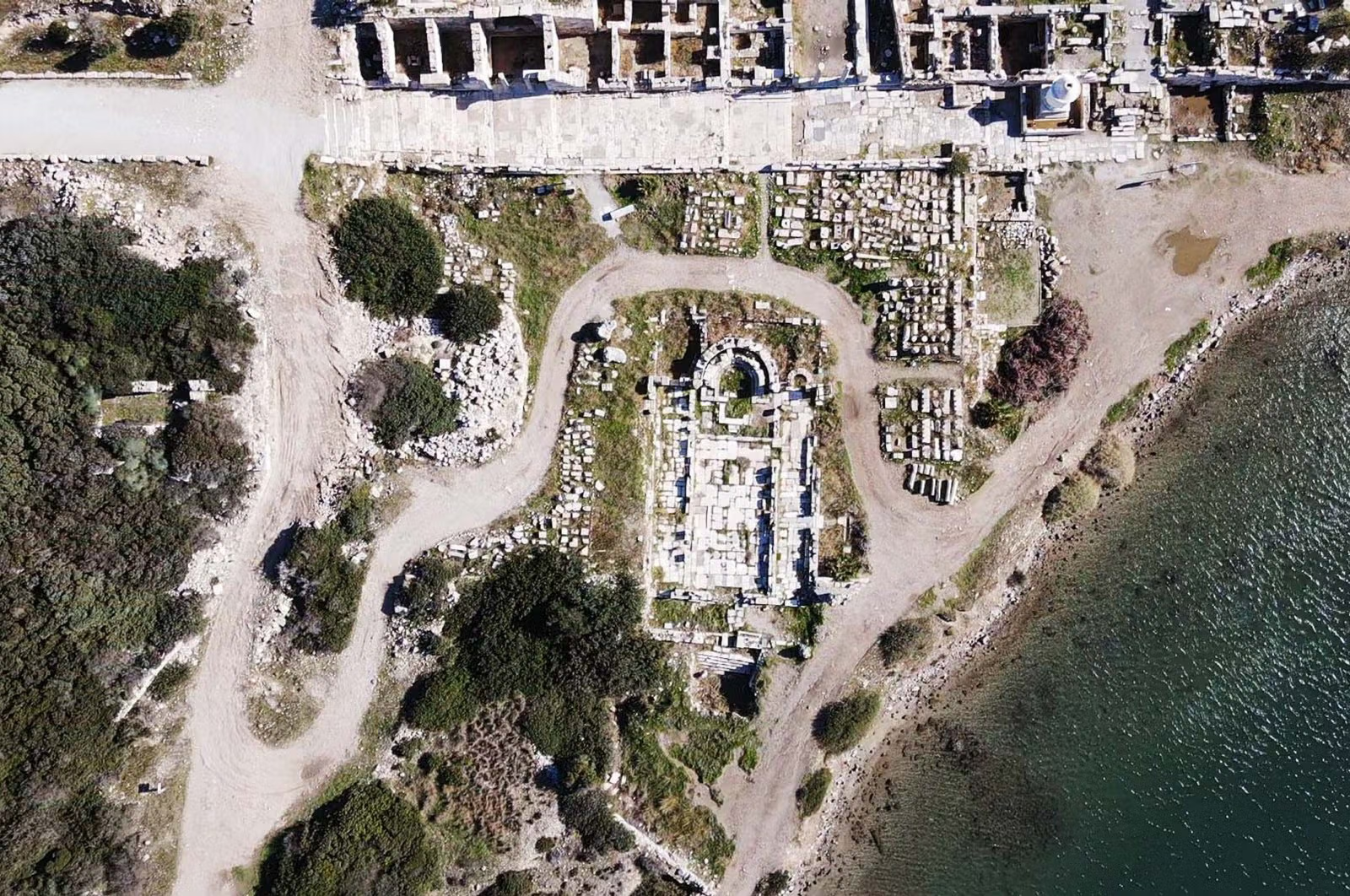
Take the marble street of Ephesus in the morning light, then drive up to the house where Mary is said to have spent her last years.
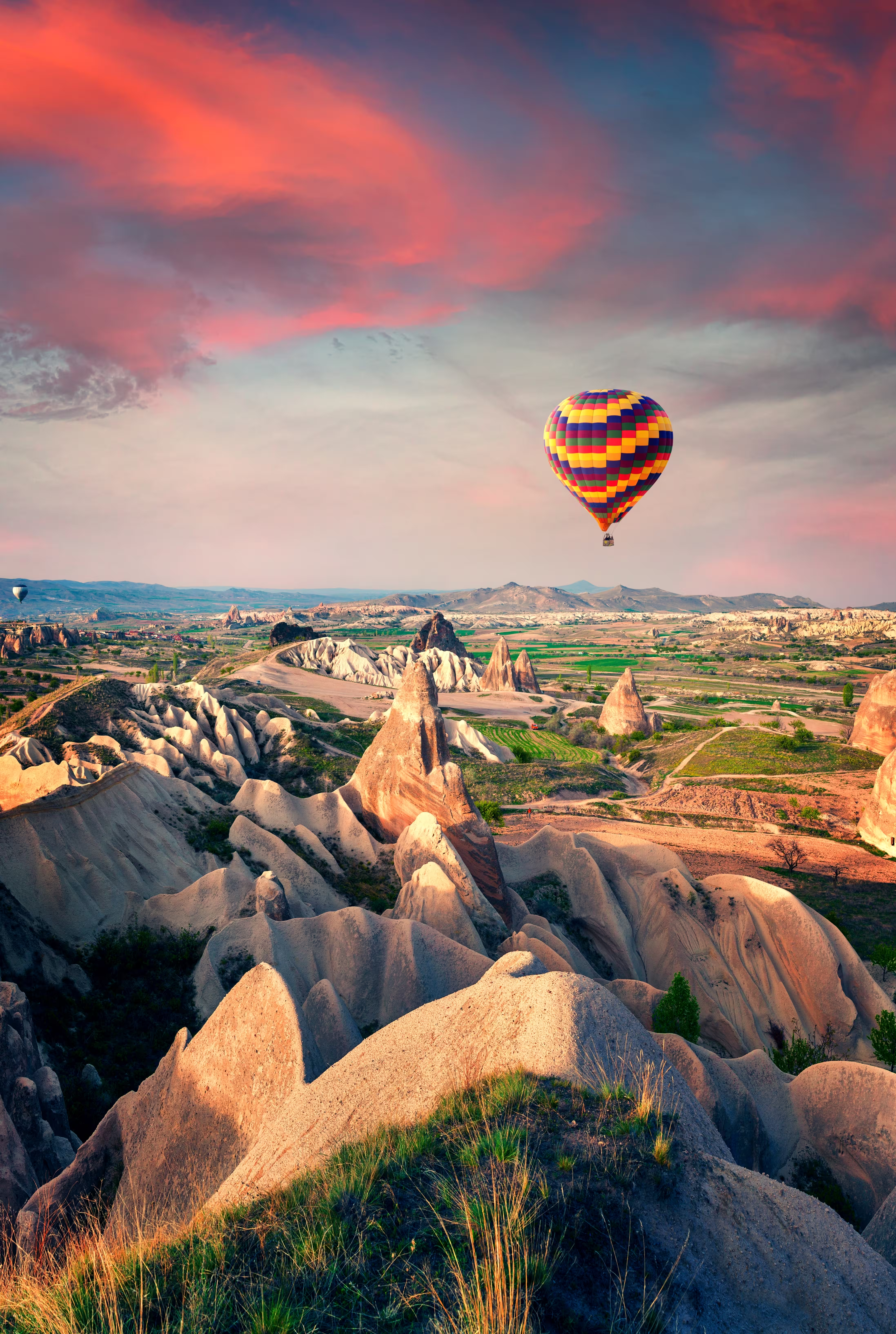
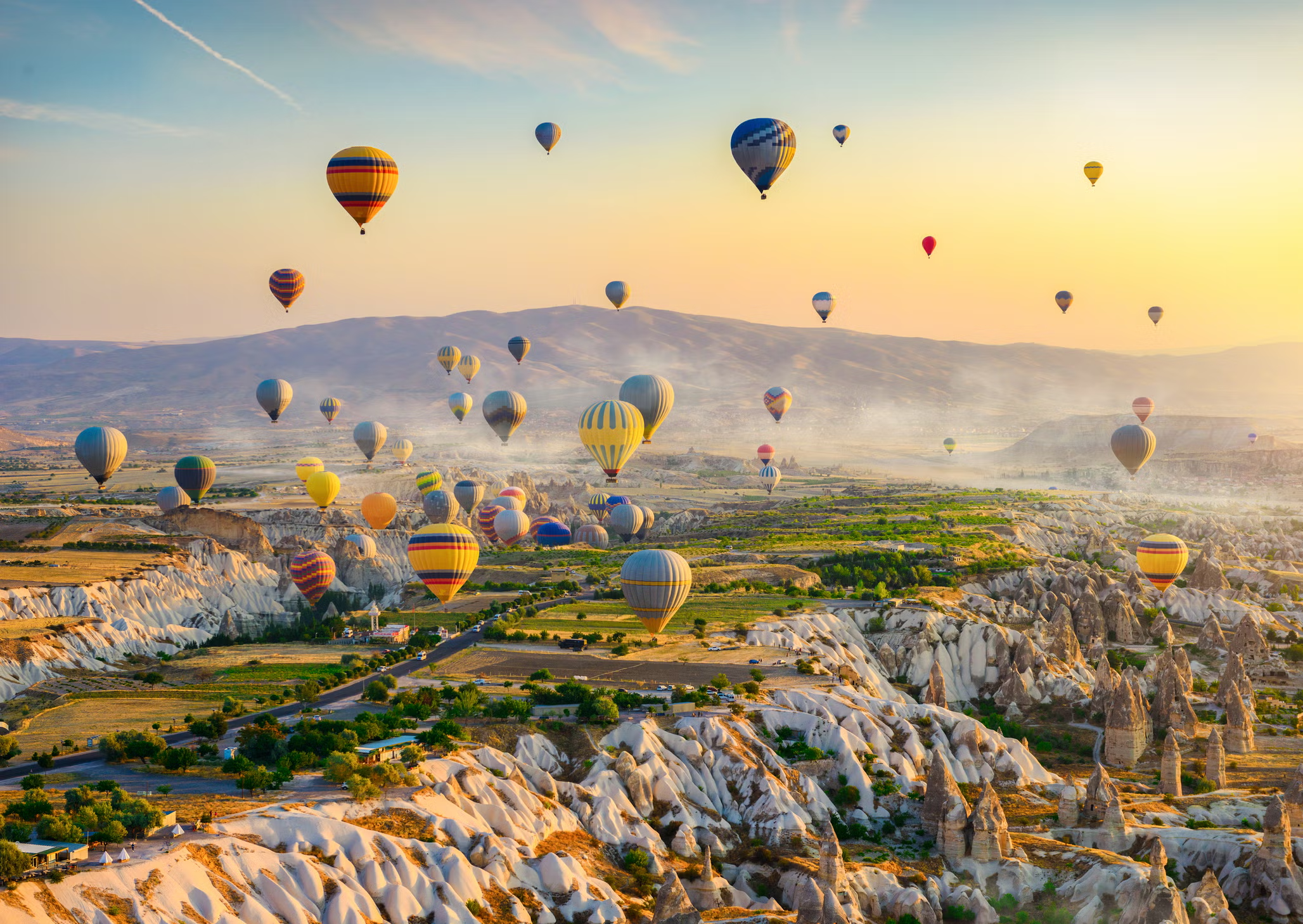
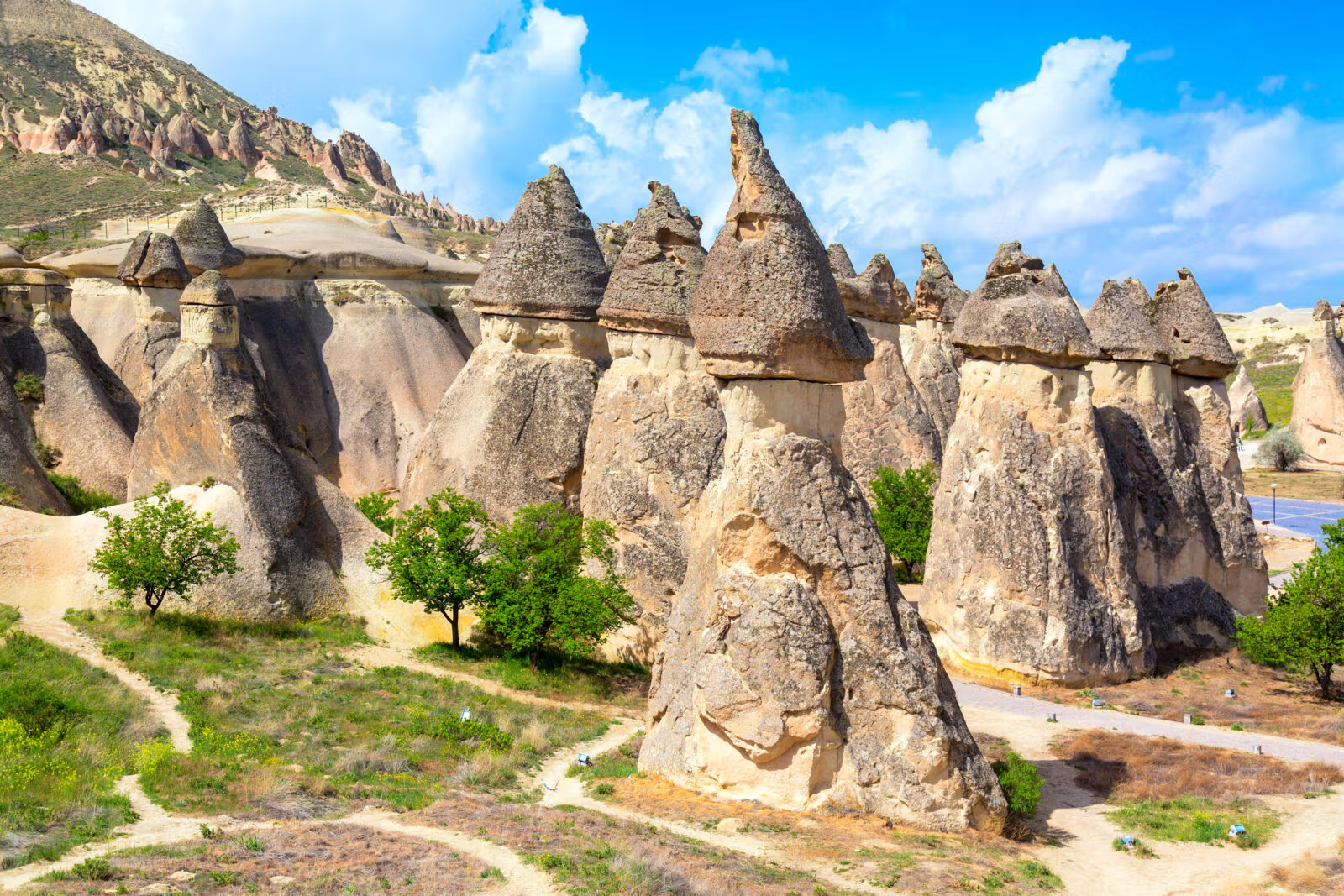
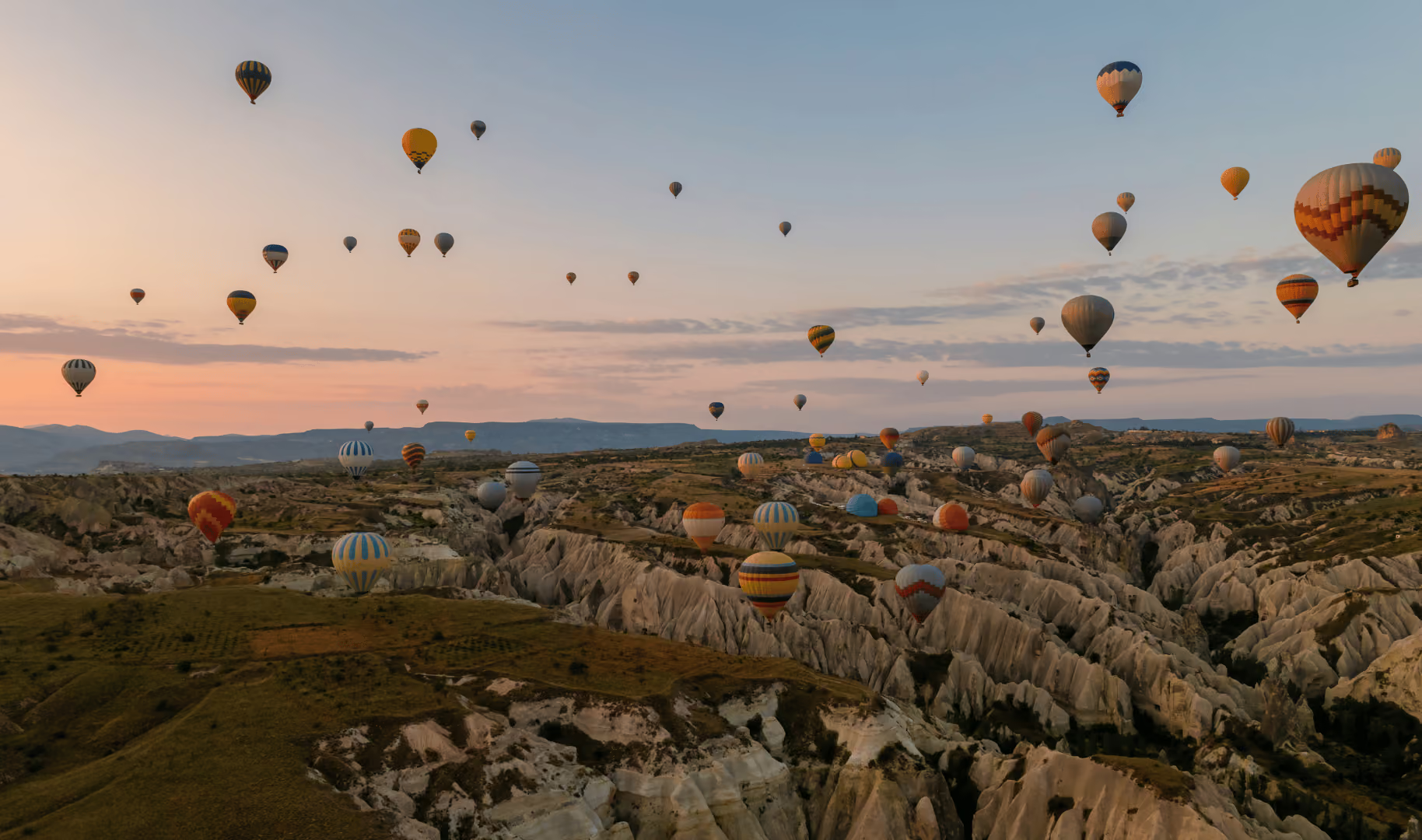
Watch the balloons lift over the fairy chimneys at first light, and break open a clay-sealed testi kebabı that evening.
Why the programme is built this way
Two decisions shape this itinerary, and both of them are about pace rather than content.
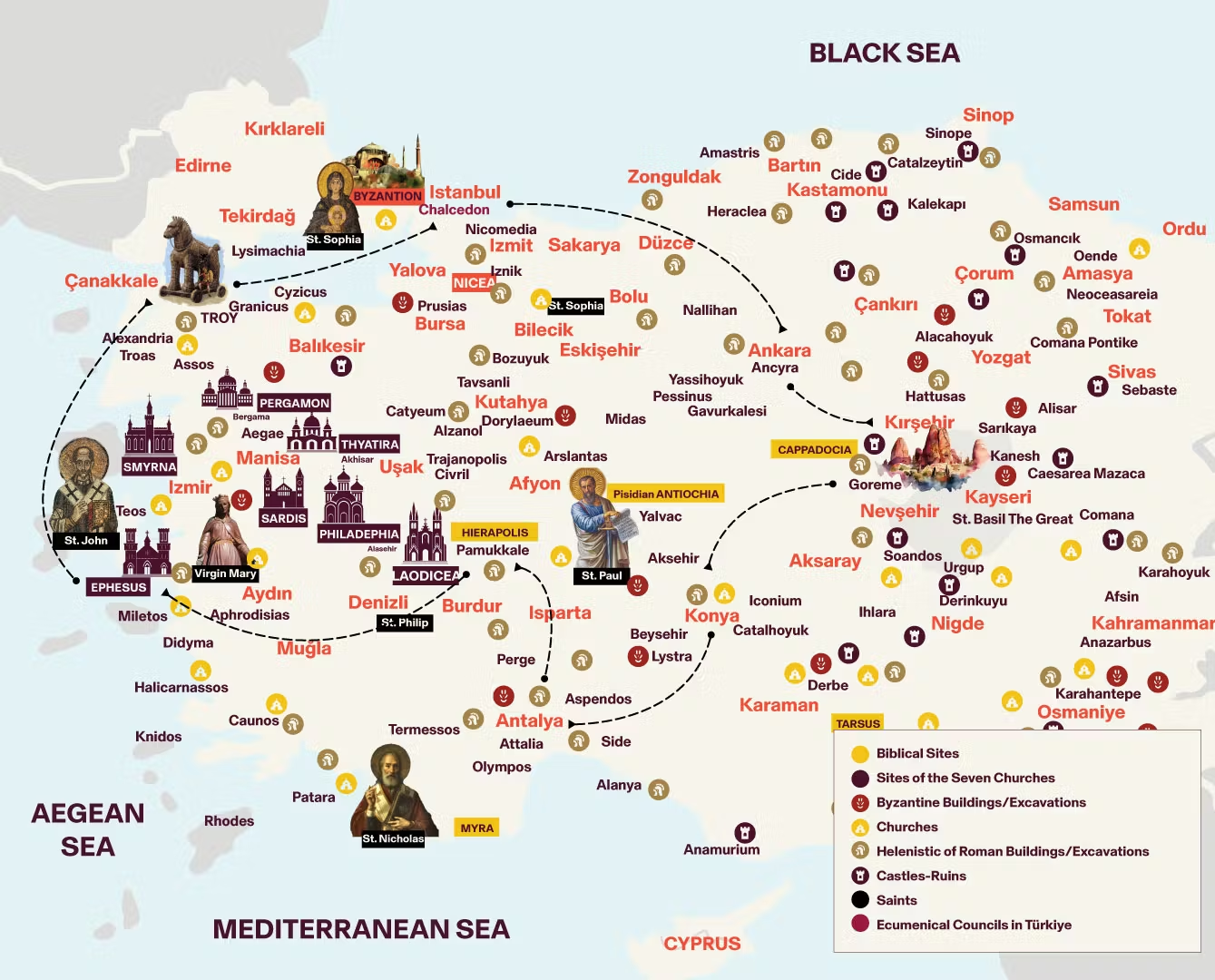
The loop closes. The group leaves from the airport it arrived at, and no stretch of road is driven twice. That sounds obvious until you price the alternative: most fourteen-day Türkiye programmes double back somewhere, and the group notices.
The long days are followed by short ones. Istanbul to Çanakkale, Antalya to Konya and Cappadocia to Ankara are the three serious transfers, and each one lands at a base where the next day either stays put or starts late. Four of the eight bases are two nights. On a programme this long, the thing that exhausts a group is not the kilometres but the sequence of early departures, and that is the part we schedule around.
Feature
Details
Days
14 days, 13 nights
Bases
8, four of them two nights
UNESCO World Heritage Sites
5 — Istanbul, Troy, Ephesus, Hierapolis-Pamukkale, Göreme and the rock sites of Cappadocia
UNESCO Intangible Heritage
1 — the Mevlevi Sema ceremony
Seas
3 — Marmara, Aegean, Mediterranean
By road
approx. 2,900 km
Longest single drive
Ankara to Istanbul, approx. 450 km
Itinerary
Day 1 | Istanbul — Arrival
Your group is met inside the terminal at Istanbul Airport and transferred to the hotel. The rest of the day is theirs, and most groups want nothing beyond a shower and a first look at the city. If flights land early, the Bosphorus ferry from Kabataş settles everyone into the geography in forty minutes for the price of a transit card: Europe on one shore, Asia on the other.
Day 2 | Istanbul — The imperial quarter and the Grand Bazaar
One morning crosses fifteen hundred years. The Hippodrome first, where the chariot track still shapes the square and two obelisks remain where the Byzantines put them. Then Topkapı and the courtyards the Ottoman court actually used, and Hagia Sophia. After lunch the Grand Bazaar — sixty streets and over four thousand shops under one roof, and the one point in the programme where the group scatters and finds its own way back.
Day 3 | Istanbul to Çanakkale — The Gallipoli peninsula
The road runs west along the Marmara to the peninsula. Anzac Cove is smaller than anyone expects, and the ground between the Turkish and Allied trenches at Lone Pine is shorter still, a few metres in places. Your guide walks the ridges rather than reciting them. Lone Pine Cemetery closes the afternoon. Then across to Çanakkale, with the strait itself doing most of the explaining.
Day 4 | Çanakkale to İzmir — Troy and a village in the hills
Troy opens early, before the heat. Nine cities stacked on one mound, and the excavation trench reads as a cross-section of the Bronze Age — your guide will show you which layers Schliemann cut through and what it cost. Then inland into the hills behind the Gulf of Edremit, to a village where bread comes out of a courtyard oven and the household presses its own wine. Lunch is long and unhurried. The road down to İzmir takes the afternoon.
Day 5 | İzmir — Ephesus and the House of the Virgin Mary
Ephesus needs the morning and gets it. You enter by the upper gate and walk downhill, the way the city was built to be read, past the odeon and the Celsus library façade to the theatre that held twenty-four thousand. Afterwards a weaving atelier, where double-knotted silk carpets are made as they have been in this region for six hundred years: silk on a cotton warp, the knots counted per square centimetre, a single piece taking a weaver months of work. Then the climb above Selçuk to the house where tradition places Mary's last years.
Day 6 | İzmir to Pamukkale — Selçuk and the first view of the terraces
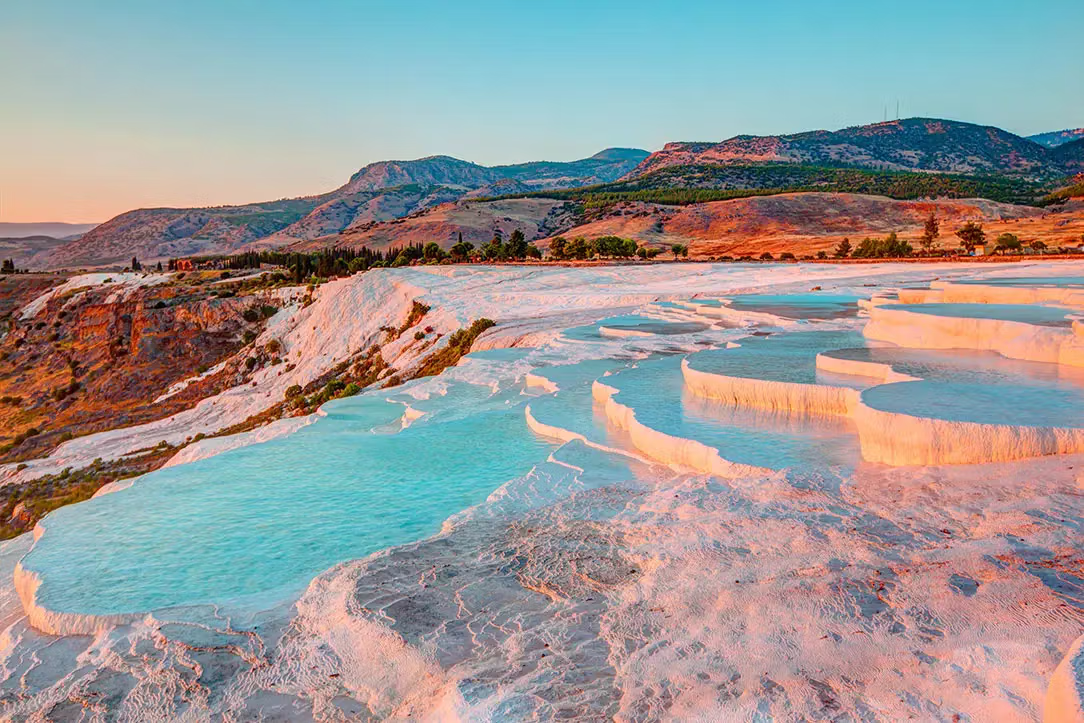
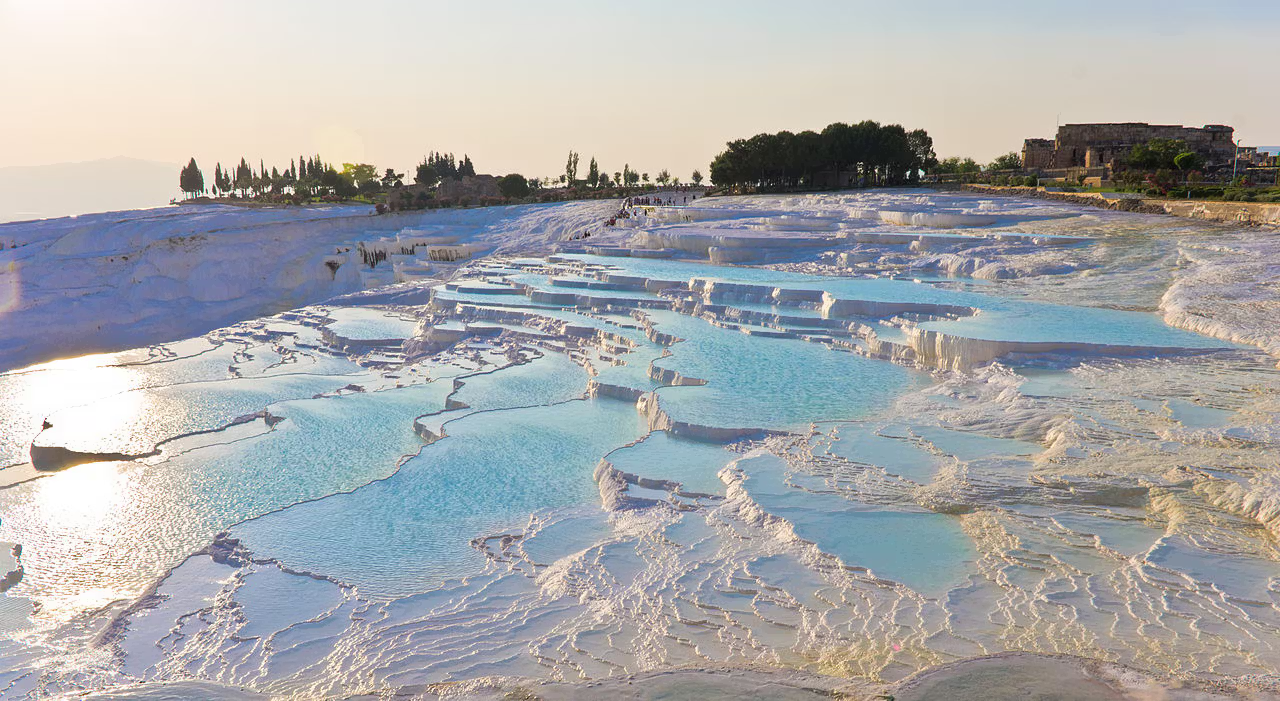
Selçuk first, where the Ephesus Archaeological Museum holds what the site cannot keep outdoors: the two Artemis statues, the Eros riding a dolphin, the household objects that make a Roman street feel inhabited. Then east, climbing out of the Aegean basin onto the Anatolian plateau. The first sight of Pamukkale arrives from the valley floor in late afternoon — a white cliff two kilometres and a half wide, which is not what anybody pictures.
Day 7 | Pamukkale to Antalya — Hierapolis and the travertines
You walk the terraces in the morning, barefoot, while the calcium is still cool enough to stand on. Hierapolis sits directly above them: a Roman spa city with a theatre, a colonnaded street and a necropolis of more than a thousand tombs, people having come here to be cured for two thousand years. In the afternoon the road climbs into the Taurus and drops down the far side to Antalya and the Mediterranean.
Day 8 | Antalya — Kaleiçi and the coast
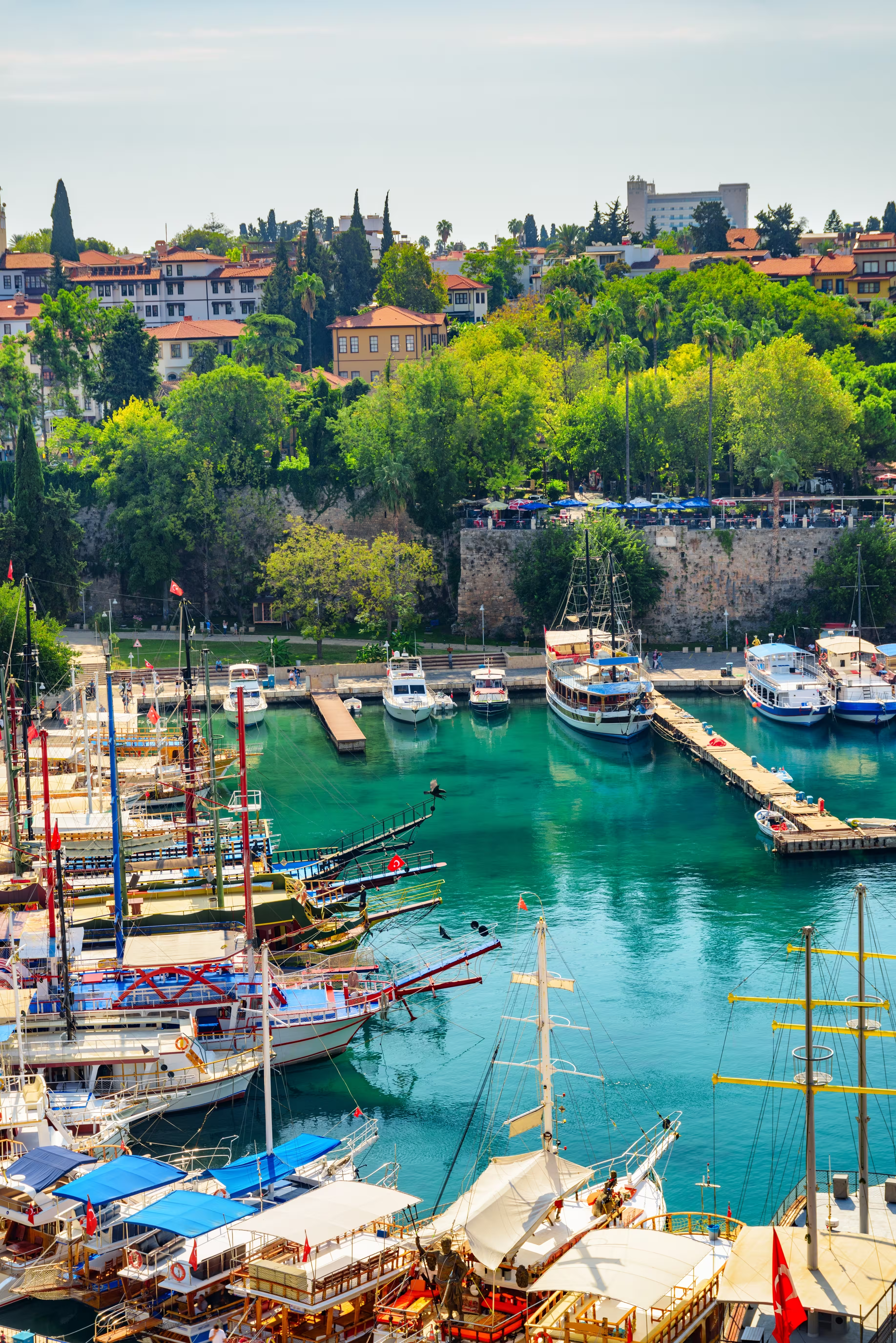
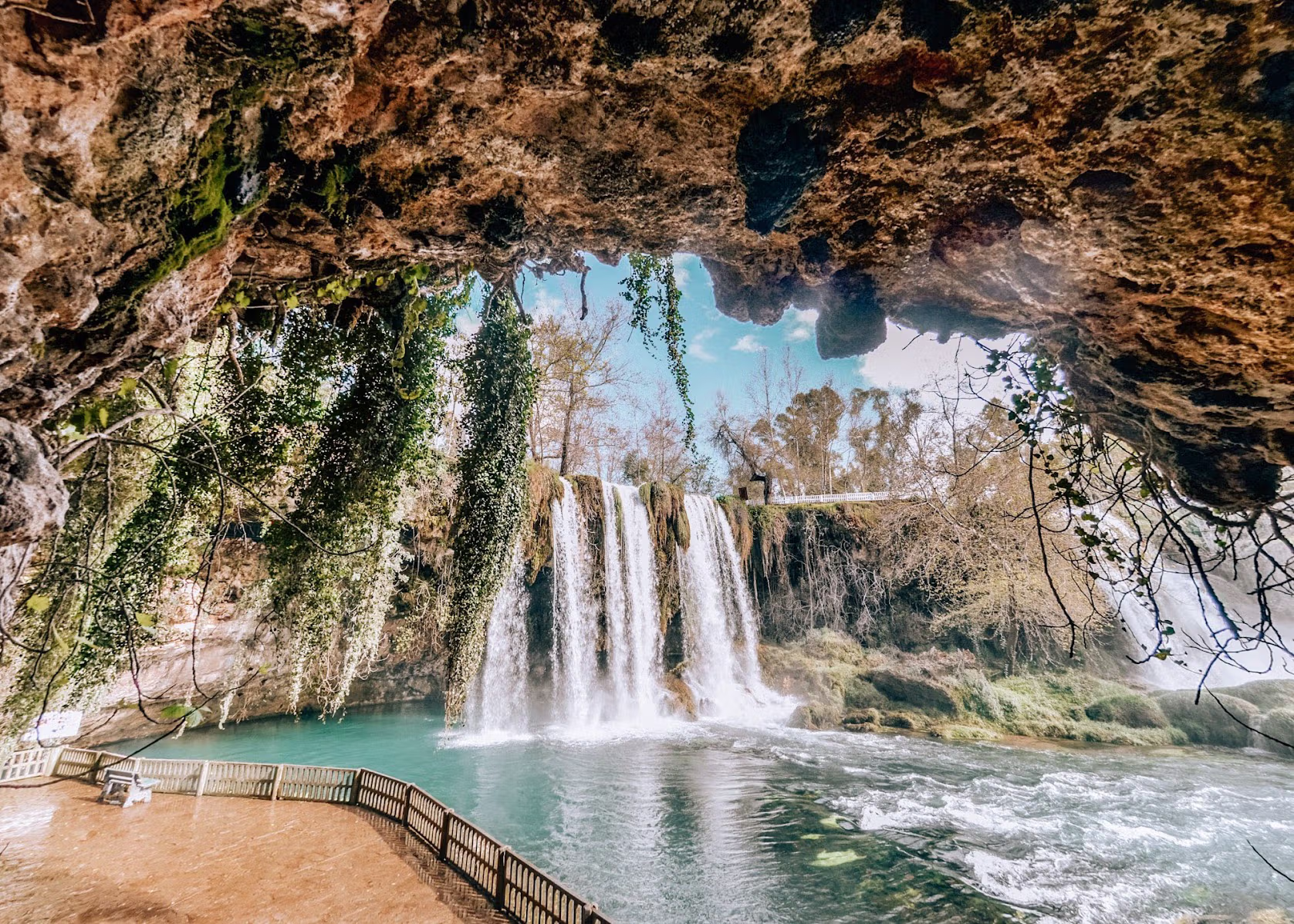
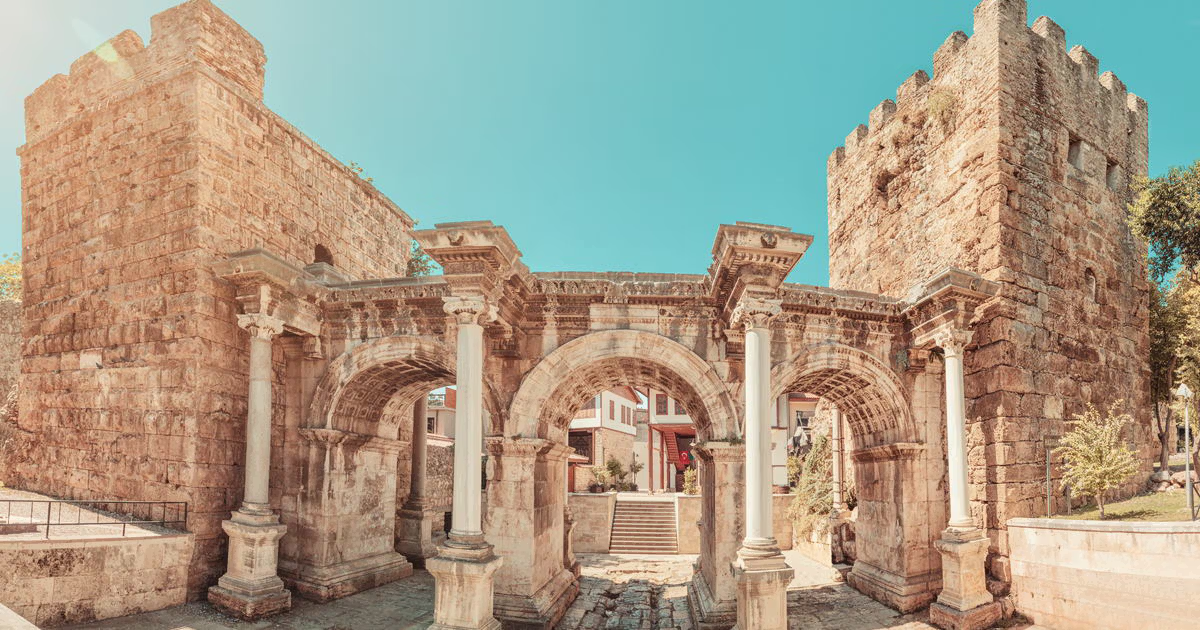
A day that stays put. Most groups take the morning boat along the cliffs to the Düden waterfall, where the river drops straight into the sea, then walk Kaleiçi — the walled old town, Hadrian's Gate from AD 130, Ottoman houses largely restored, and a harbour that was Roman before it was anything else. The afternoon is free. After a week on the road, this is the day the group remembers as rest.
Day 9 | Antalya to Konya — Aspendos and the Mevlevi lodge
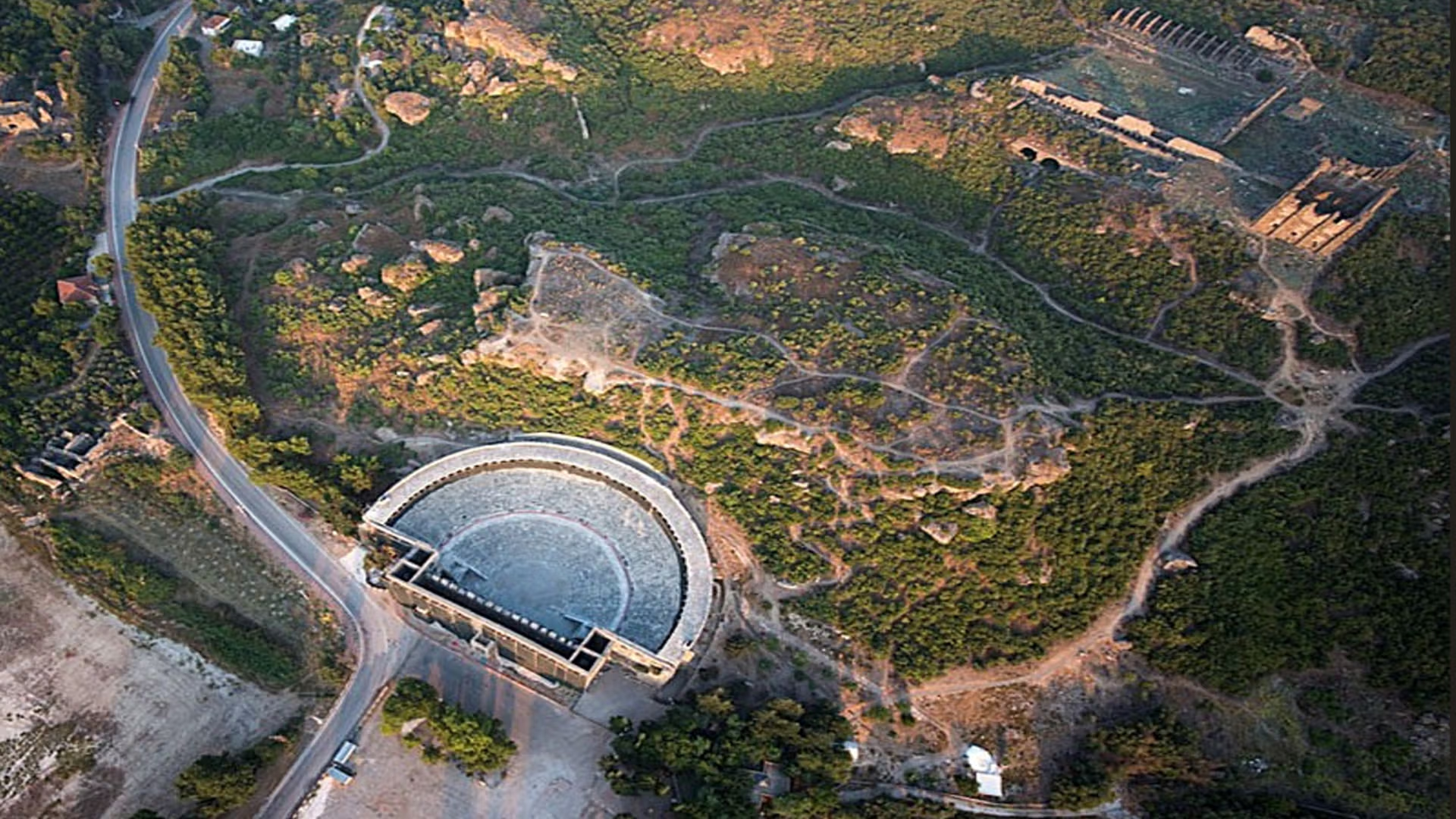
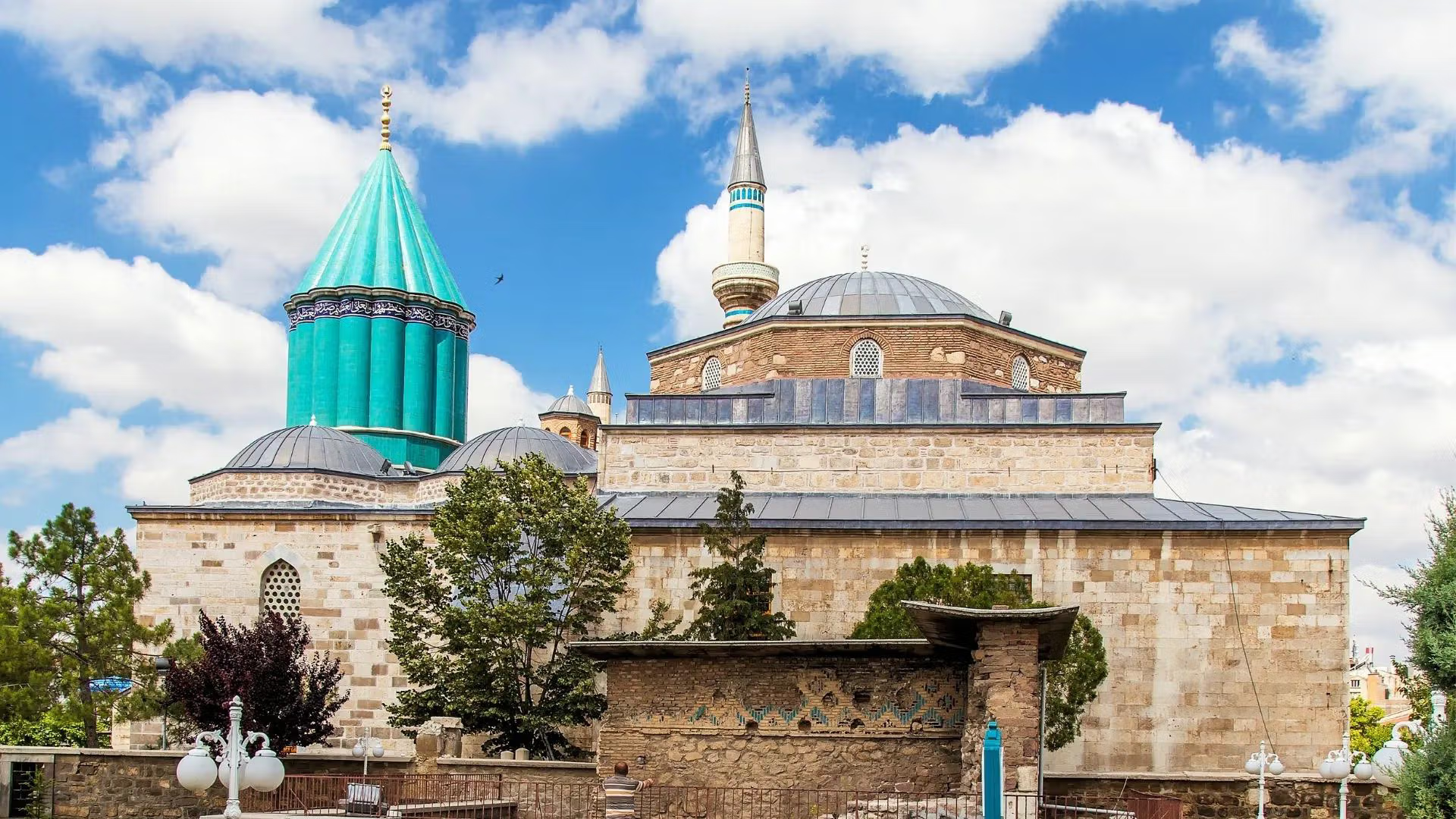
Aspendos has the best-preserved Roman theatre in the Mediterranean, and the reason is the acoustics: your guide stands on the stage and speaks at a normal volume while the group sits in the top row. Then north over the Taurus to Konya, a city that reads nothing like the coast. The Mevlâna Museum is the lodge where Rumi taught and is buried, and it is still a place of pilgrimage rather than a monument. The Karatay Medrese holds the Seljuk tilework.
Day 10 | Konya to Cappadocia — a caravanserai and an underground city
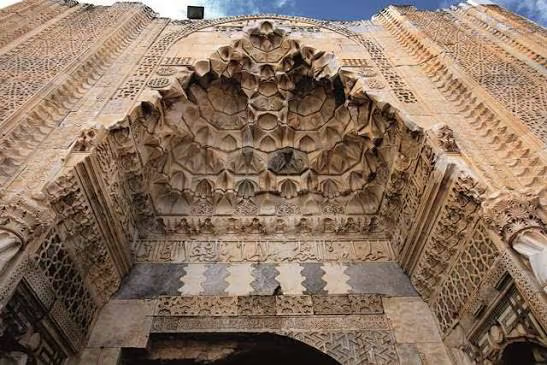
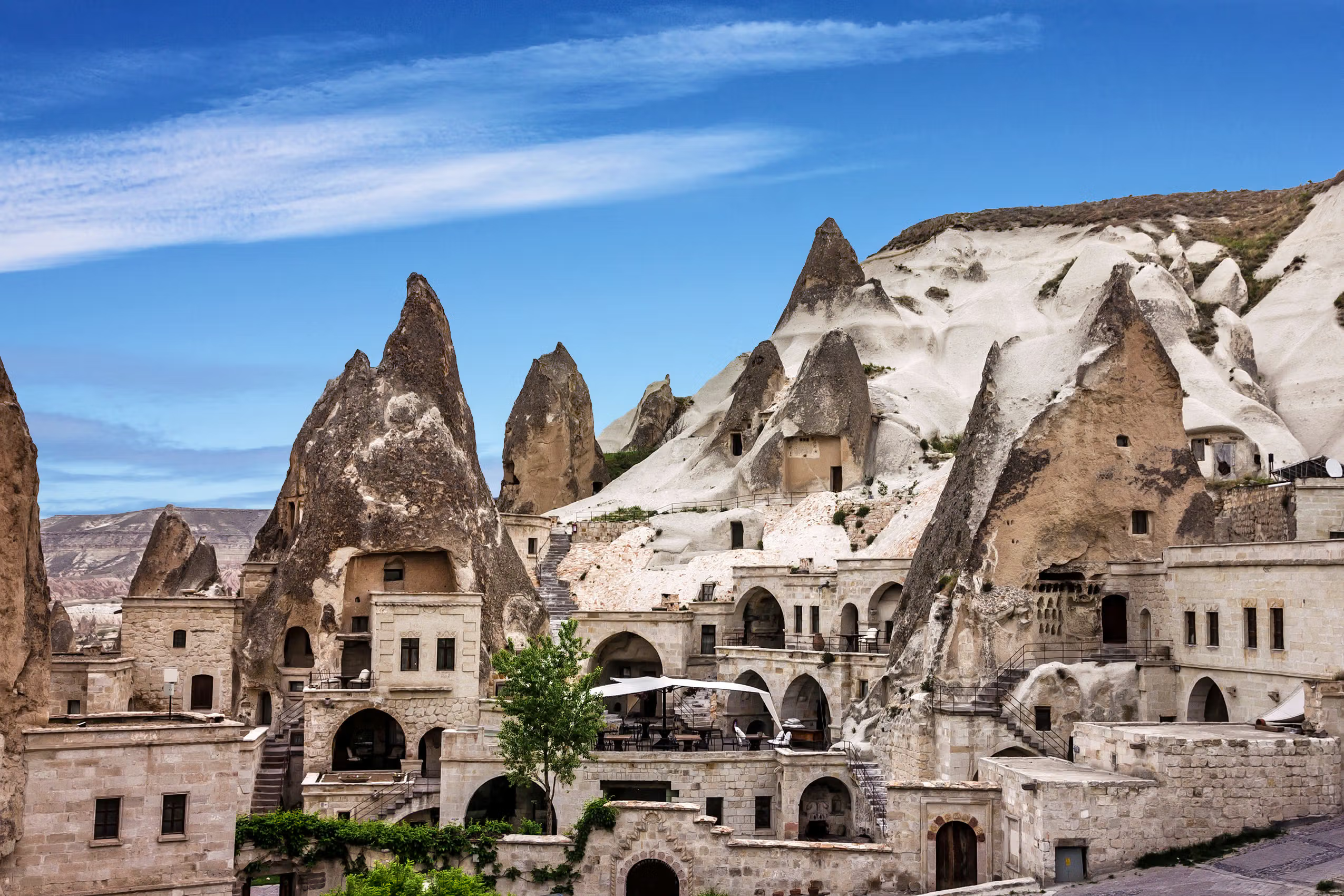
Two stops break the drive across the plateau. The thirteenth-century caravanserai at Sultanhanı is a Seljuk road station built for camel trains, and the empty courtyard explains the Silk Road better than any map. Then the underground city at Saratlı, cut level upon level into soft rock by people who needed to disappear and knew how. Cappadocia arrives in the late afternoon, and the landscape does the rest without help.
Day 11 | Cappadocia — Göreme, Avanos and the valleys
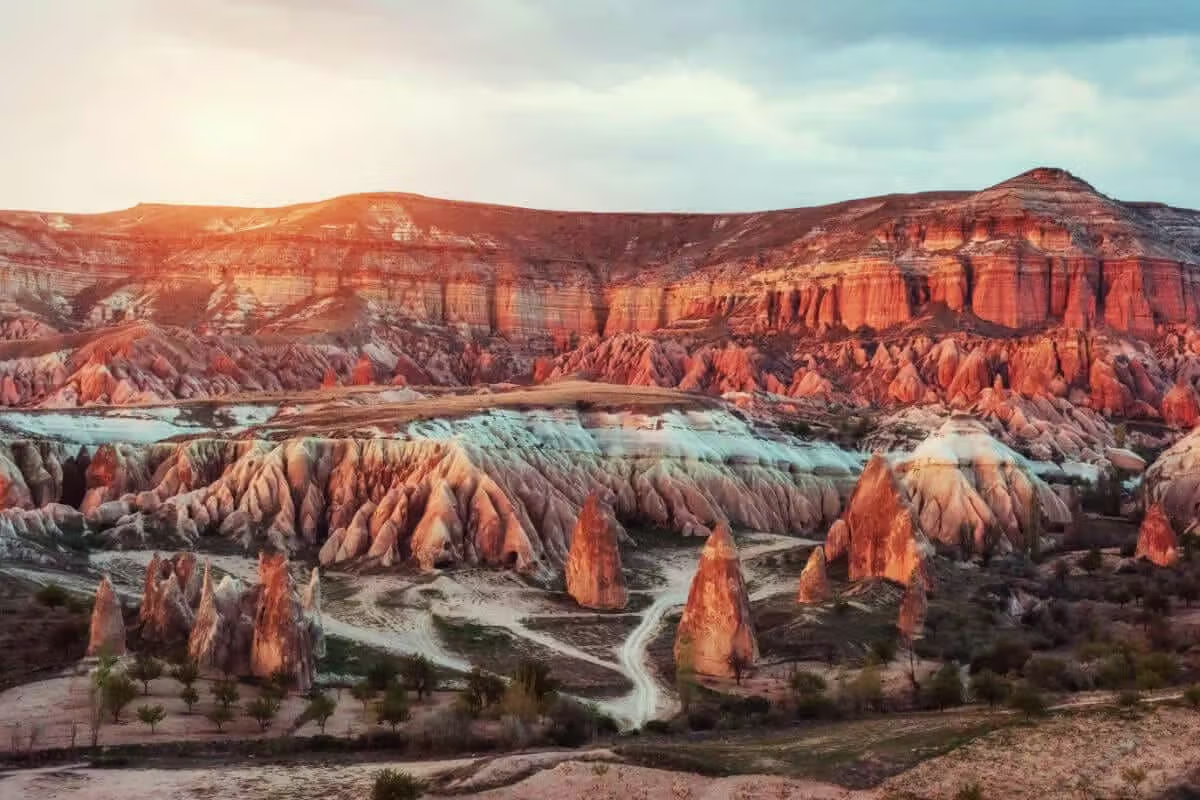
The balloons lift at first light, more than a hundred of them, watched from a viewpoint on the valley rim; a flight can be arranged for anyone who would rather be up there. Then the Göreme Open-Air Museum, where eleventh-century frescoes survive in rock-cut chapels. At Avanos the potters still throw on kick wheels, using the red clay the Kızılırmak has carried down since the Hittites worked it three thousand years ago — and your group is put at a wheel rather than shown one. Paşabağ and the Red Valley at the hour the tuff changes colour. In the evening, testi kebabı: lamb sealed in a clay pot that morning and broken open at the table.
Day 12 | Cappadocia to Ankara — Anıtkabir and the Hittites
North across the plateau to the capital. Anıtkabir is Atatürk's mausoleum and the country's ceremonial ground, and an hour there says more about modern Türkiye than any amount of explanation. Then the Museum of Anatolian Civilizations, which holds the Hittite collection, the Çatalhöyük material and the Phrygian finds from Gordion — and reaches further back than anything else on the programme. A deliberate inversion this late in the route.
Day 13 | Ankara to Istanbul — the Bosphorus
The last long drive, west across the Sakarya plain. Most groups take the afternoon on the water: ninety minutes up the Bosphorus past the Ottoman palaces, the wooden yalıs, the two fortresses that once closed the strait with cannon, and the fishing villages that are now suburbs. The farewell dinner is in the evening. By now the group has crossed from Europe to Asia and back more than once, which tends to be the detail they describe at home.
Day 14 | Istanbul — departure
Breakfast and the airport transfer, run in two waves so the group leaves by flight time rather than all at once. For anyone with a long gap, the Basilica Cistern and the Museum of Turkish and Islamic Arts each take under ninety minutes and sit beside one another.
Ankara to Istanbul, around 450 km. It runs with a mid-morning comfort stop and a sit-down lunch, and the afternoon ends on the Bosphorus rather than at the hotel, so the day finishes on the water. If the client would rather not drive it, we fly the leg and use the recovered day elsewhere.
Four sites carry real distance: Ephesus (about 2 km downhill on marble, which is slippery in the wet), Hierapolis and the travertines (uneven, barefoot on the terraces), Troy (uneven ground, little shade) and the Göreme valleys (steps and loose surfaces). Everything else is short. We send a walking grade with every quotation and can run a parallel light version at Ephesus and Göreme for groups with mixed mobility.
April to early June and September to October are the right windows: the plateau is not yet cold and the coast is not yet 38 degrees. July and August work with earlier starts. December to February the Cappadocia and Konya legs can see snow, which closes nothing but slows the plateau drives — we add time rather than cutting sites. Site hours shorten in winter, so Ephesus and Hierapolis move earlier in the day. Balloon flights depend on the weather in any season, which is part of why Cappadocia is two nights rather than one.
Any size, and there is no minimum. We operate this route for two people travelling independently, for a private party of four or six, for a dozen in a Sprinter and for a full coach of forty-six. The sites, the guides and the sequence are the same; the vehicle and the per-person price are what move. A good share of what we handle is not group travel at all, so a couple is a real enquiry rather than one we would send elsewhere.
Ephesus takes cruise groups from Kuşadası through the middle of the day. We start from İzmir early and enter by the upper gate, which puts the group ahead of the flow and walking the opposite direction to most of it. On heavy cruise days we move the carpet atelier before the site and enter later in the afternoon instead, after the ships have sailed.
Yes, and it is usually the right change. Istanbul takes three days comfortably and this version gives it three nights across two visits. Flying back from Cappadocia frees the time to put two of those nights together at the end, which is also when groups have the energy to shop and eat properly.
The whole country, in one loop
Hands at a village oven above the Aegean, a guide speaking from the stage at Aspendos, the Mevlevi lodge at Konya, and the valleys of Cappadocia as the tuff changes colour.
No items found.
More tours by Marveltour
The Turquoise Coast
11 days · Istanbul · Bursa · İzmir · Şirince · Bodrum · Kaunos · Fethiye · Kayaköy · Kaş · Myra · Phaselis · Antalya