A Culinary Journey Through Türkiye: Street Food, Region by Region
Eight street foods, four regions and the official names that protect them, with field notes for operators on timing, hygiene, vegetarian, Jain and halal groups.
A Culinary Journey Through Türkiye: Street Food, Region by Region
Key Takeaways
Four regions, eight icons: simit and balık ekmek in Istanbul, boyoz and kumru in İzmir, çiğ köfte and lahmacun in the Southeast, pide on the Black Sea.
Officially protected: İstanbul Simidi, İzmir Boyozu, İzmir Kumrusu, Antep Lahmacunu, Adıyaman Etsiz Çiğ Köfte, Bafra Pidesi and Sürmene Pidesi are registered geographical indications with the Turkish Patent and Trademark Office (TÜRKPATENT).
Vegetarian-friendly by law: street çiğ köfte in Türkiye is made without meat; the raw-meat version is a home and specialist tradition, not a street product.
Seasonality matters: commercial trawl and purse-seine fishing closes from 15 April to 1 September, which shapes what goes into a balık ekmek.
For operators: a street-food walk works best as a fixed 90–120 minute block, 4–6 pre-vetted stops, groups of 15 or fewer per guide, and a dietary brief collected before arrival.
Türkiye's street food, region by region
Türkiye's street food is regional before it is national. Istanbul eats simit and balık ekmek by the water; İzmir starts the day with boyoz and kumru; the Southeast lives on lahmacun and çiğ köfte; the Black Sea bakes long, butter-rich pide in wood-fired ovens. Many of these foods are now registered geographical indications, which means their recipe and place of origin are protected under Turkish industrial property law.
The country's food culture is recognised internationally as well. UNESCO's Creative Cities Network named Gaziantep a City of Gastronomy in 2015, followed by Hatay in 2017 and Afyonkarahisar in 2019, as the Ministry of Culture and Tourism's GoTürkiye portal notes.
Marveltour has operated programmes across Türkiye since 1982, for travellers from North America, Europe, Australia, New Zealand, South Africa, India and Malaysia. This guide follows the street-food map the way we route it on the ground, then sets out how operators can build a tasting walk into a group day without losing control of the clock, hygiene or dietary needs.
Istanbul: simit and balık ekmek
In Istanbul, street food follows the water. The two dishes every visitor should taste, simit and balık ekmek, are both at their best within sight of the Golden Horn and the Bosphorus.
Simit: the sesame ring that became a protected name
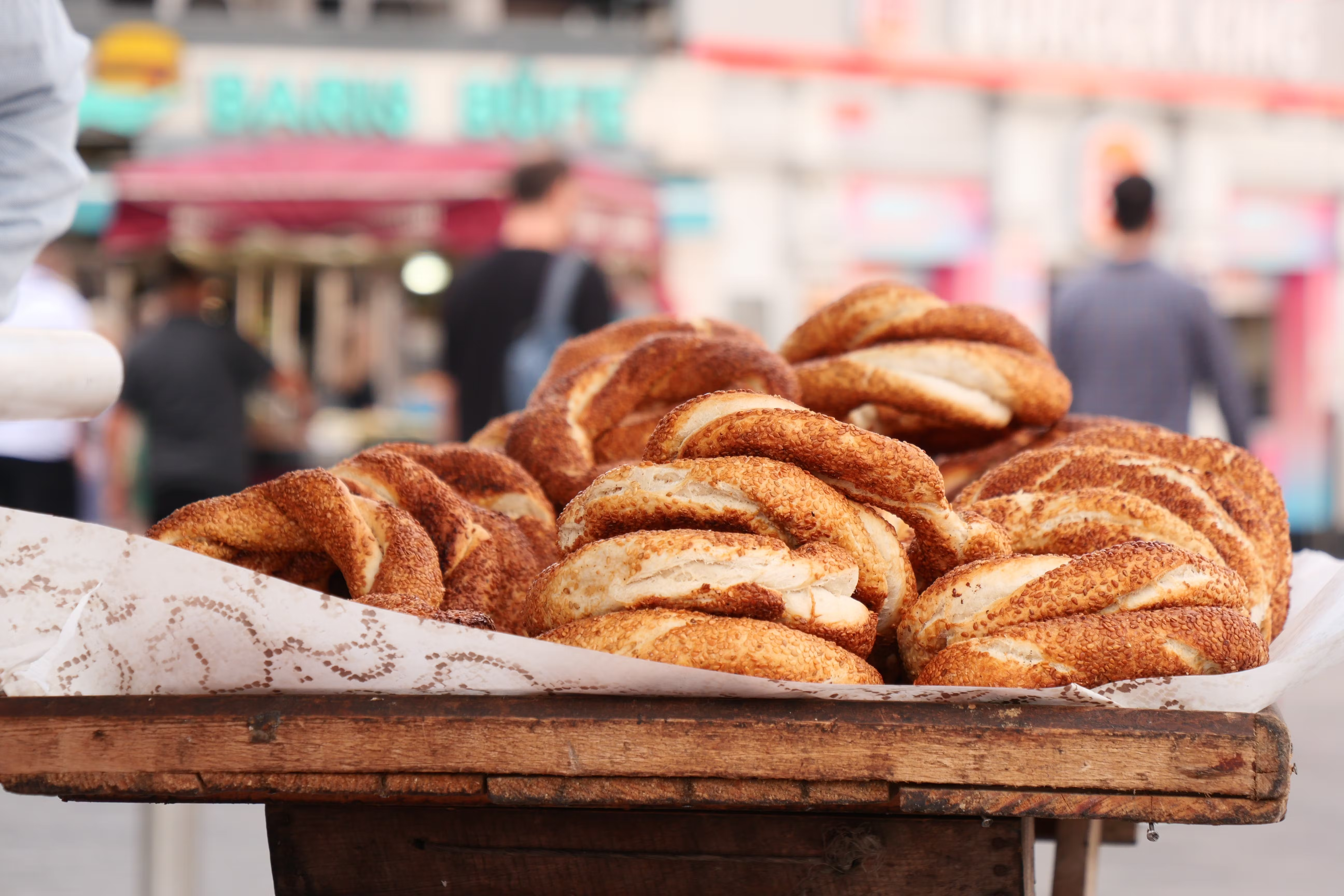
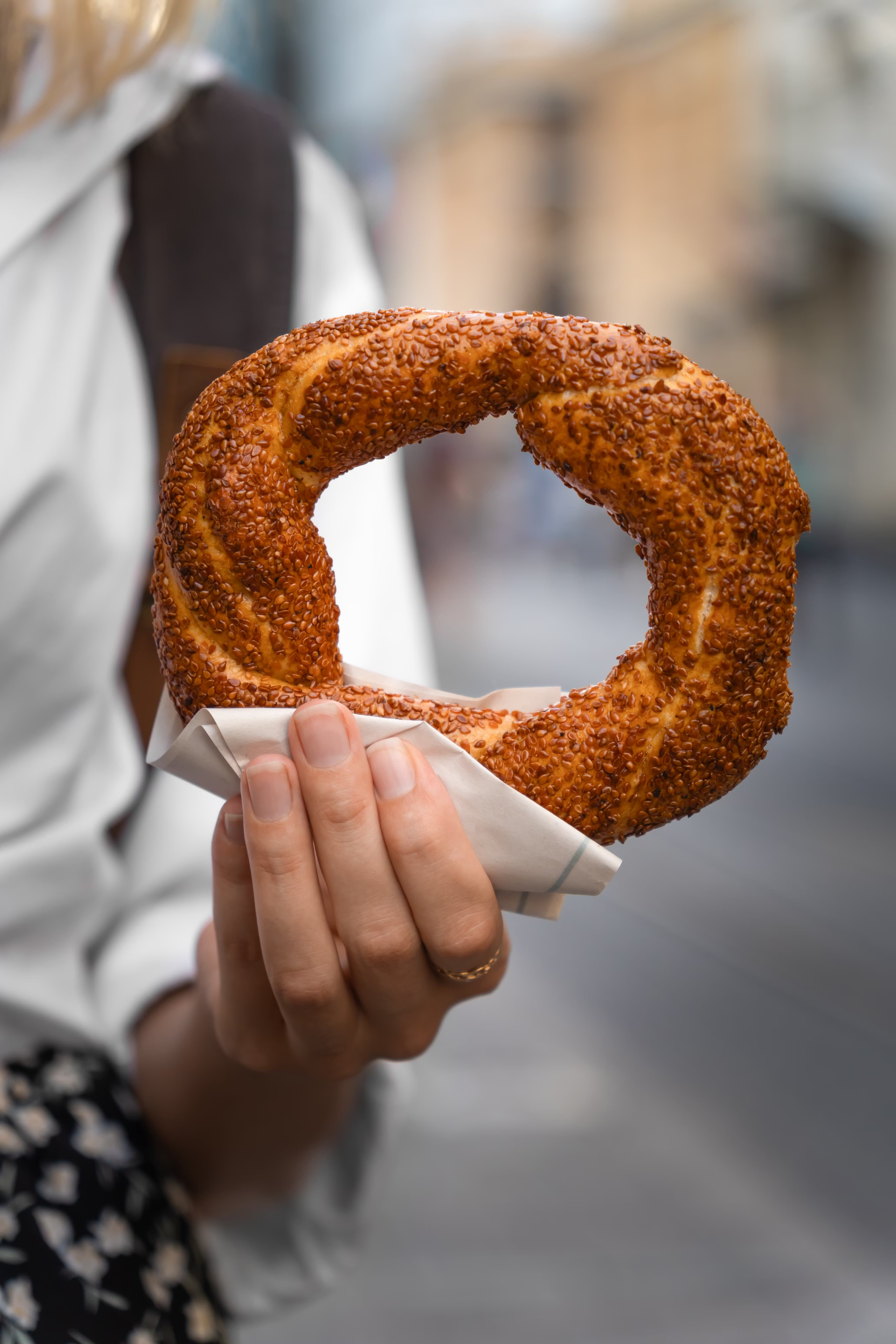
Simit is a ring of dough dipped in grape molasses (pekmez), rolled in sesame and baked until the crust is crisp and the crumb stays soft. It is sold from glass-fronted carts, ferry kiosks and corner bakeries from dawn, usually eaten with a glass of tea and a slice of white cheese.
The city's version is now officially defined. İstanbul Simidi was registered as a geographical indication (mahreç işareti) on 8 October 2025, registration no. 1782, held by the Istanbul Commodity Exchange (İstanbul Ticaret Borsası). The registration lists six ingredients: wheat flour, water, salt, fresh yeast, pekmez and sesame. Compliance checks are coordinated by the Exchange with the Istanbul Bread Bakers' Chamber and the Fatih District Directorate of Agriculture and Forestry.
The registration does not stop anyone selling simit. As the Exchange has clarified, only bakeries that want to use the protected İstanbul Simidi name and logo need to apply and pass inspection. For operators, that logo is a quick quality signal when choosing a bakery stop.
Balık ekmek: fish, bread and a view of the bridge
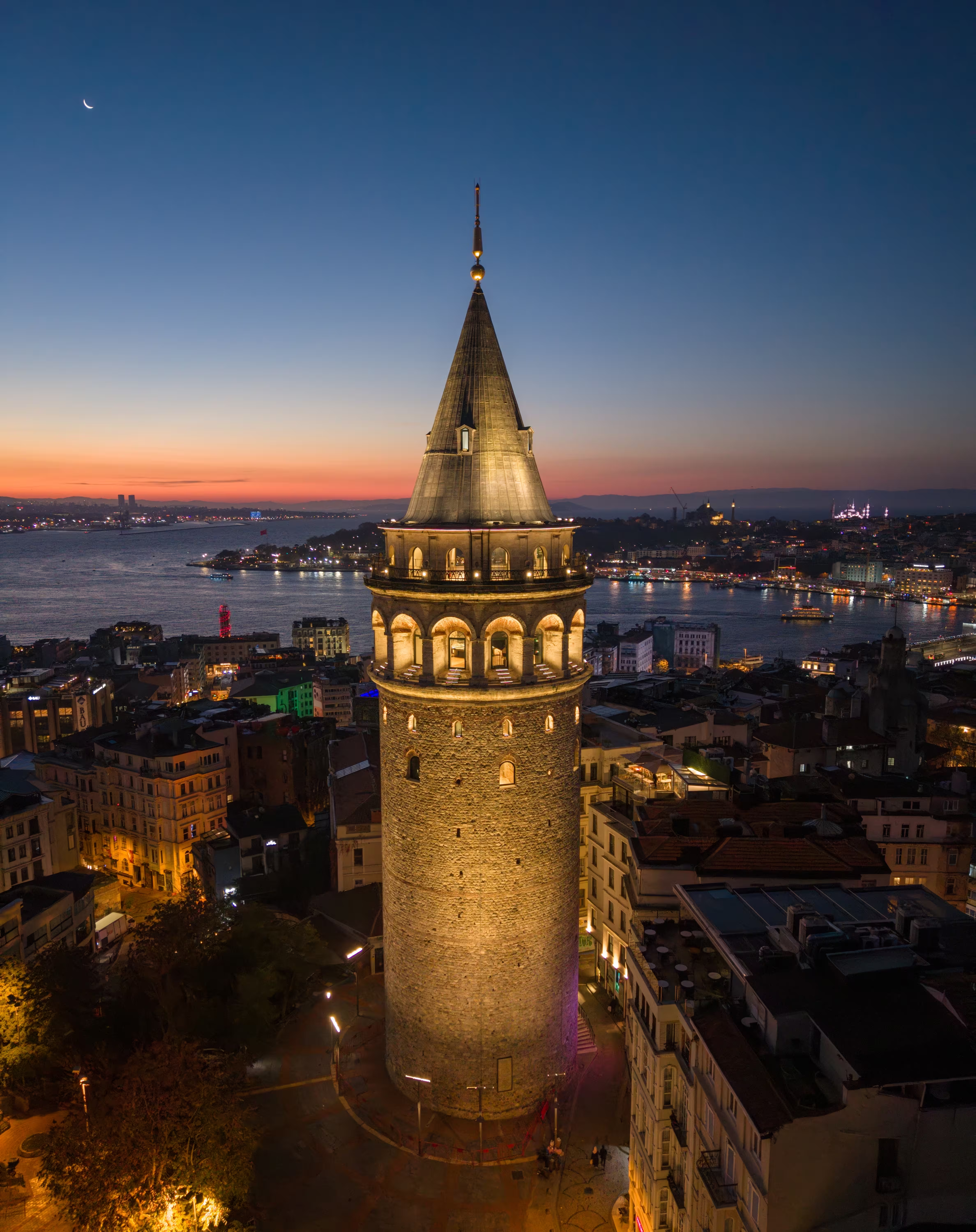
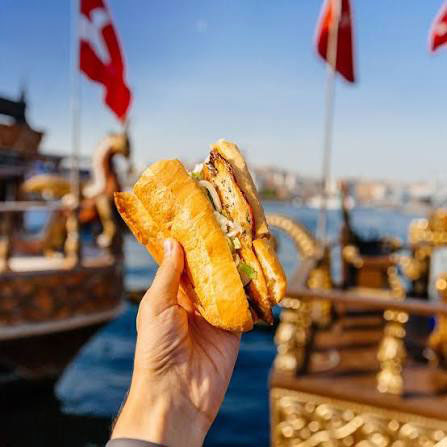
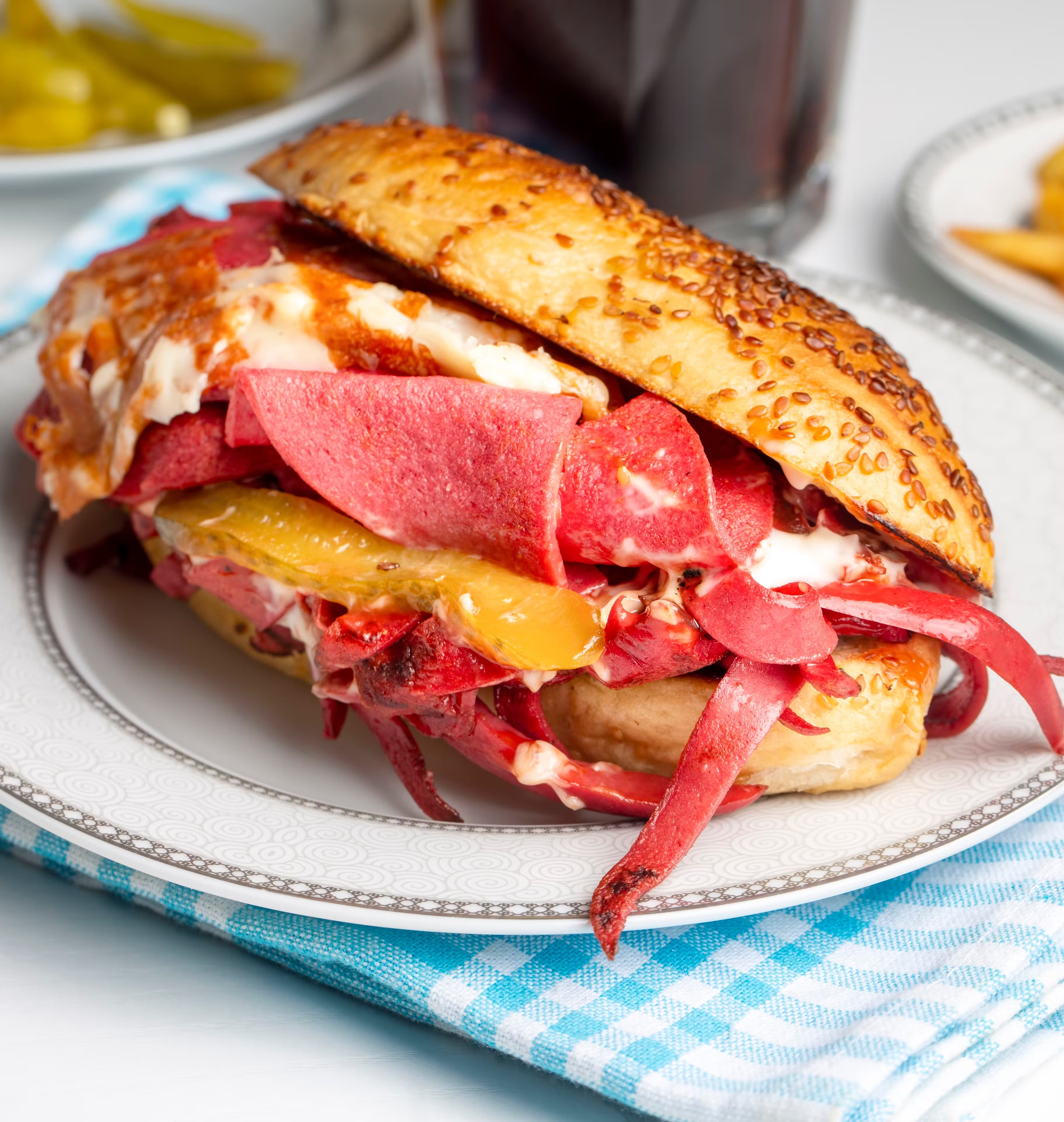
Balık ekmek is exactly what the name says: grilled fish, usually a mackerel fillet, pressed into half a loaf with raw onion and lettuce, finished with lemon and salt. GoTürkiye, the Ministry of Culture and Tourism's official portal, singles out the Eminönü and Karaköy waterfronts as the classic places to eat it, with the Galata Bridge and the Bosphorus as backdrop.
Seasonality is the detail most programmes miss. Under the Ministry of Agriculture and Forestry's commercial fishing rules, industrial purse-seine and trawl fishing stops in all Turkish seas from 15 April and reopens on 1 September (15 September in the Mediterranean). Small-scale coastal fishers are exempt. In autumn and winter, ask the grill what the day's local catch is; that is when the sandwich is at its most Istanbul.
İzmir: boyoz and kumru
İzmir has its own breakfast vocabulary. Simit here is called gevrek, and two foods found almost nowhere else, boyoz and kumru, are both protected under the city's name.
Boyoz: a Sephardic pastry that became İzmir's breakfast
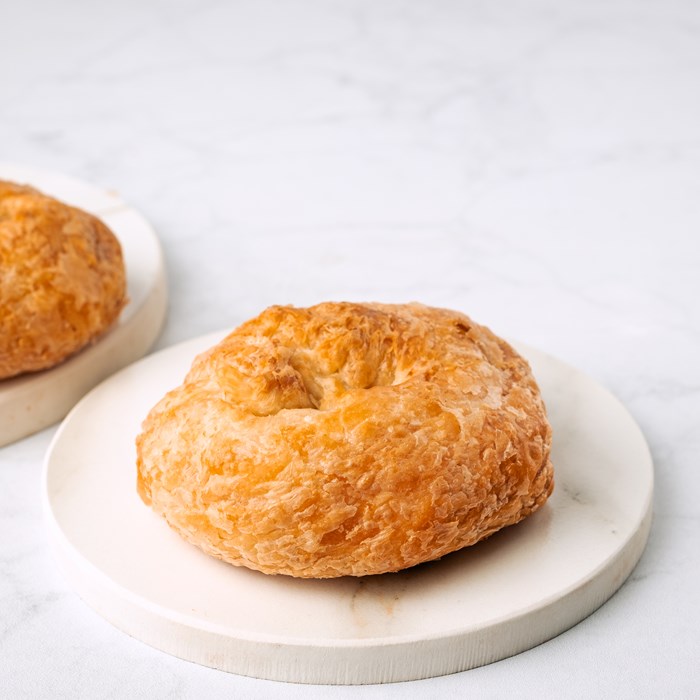
Boyoz is a small, coiled pastry: a soft dough of flour, water and salt, worked with sunflower oil and a little tahini, stretched thin, rolled and baked until it shatters into flaky layers. It is traditionally eaten warm with a hard-boiled egg and tea, bought from bakeries and street stalls in the morning.
Its roots are widely traced to the Sephardic Jews who settled in Ottoman İzmir after their expulsion from Spain in 1492; the name echoes bollos, the Ladino and Spanish word for buns. For decades the city's boyoz masters were Jewish bakers, and the old Jewish quarter around Kemeraltı remains the natural place to tell the story.
İzmir Boyozu was registered as a geographical indication on 8 December 2017 (no. 268), with protection backdated to 13 July 2012. The holder is the İzmir Chamber of Commerce (İZTO). The registration describes it as a pastry produced in İzmir since the Ottoman period with roughly 500 years of history, and all production must take place within İzmir province. Inspections involve the İzmir Provincial Directorate of Agriculture and Forestry and Ege University's Department of Food Engineering.
Kumru: İzmir's own sandwich
Kumru is named after the dove its sesame-crusted bread is said to resemble. İzmir Kumrusu was registered as a geographical indication on 7 December 2017 (no. 262), protected from 2 October 2014, also held by İZTO. According to the registration, the classic cold version fills kumru bread, made with or without chickpea yeast, with İzmir tulum cheese, tomato and green pepper. İZTO dates the sandwich to roughly 150 years of production in the city.
The hot, toasted version loaded with sucuk and melted cheese is the Çeşme kumrusu, popularised on the Çeşme peninsula. It is the one most visitors photograph; the cold İzmir original is the one locals defend.
The Southeast: lahmacun and çiğ köfte
Southeastern Türkiye is where the country's most spice-forward street food comes from. It is also the region of Upper Mesopotamia, so a tasting here sits naturally between Göbekli Tepe and the old bazaars of Gaziantep and Şanlıurfa. Gaziantep was Türkiye's first UNESCO City of Gastronomy, in 2015; neighbouring Hatay, home to Antioch, followed in 2017.
Lahmacun: thin, crisp and protected in Gaziantep
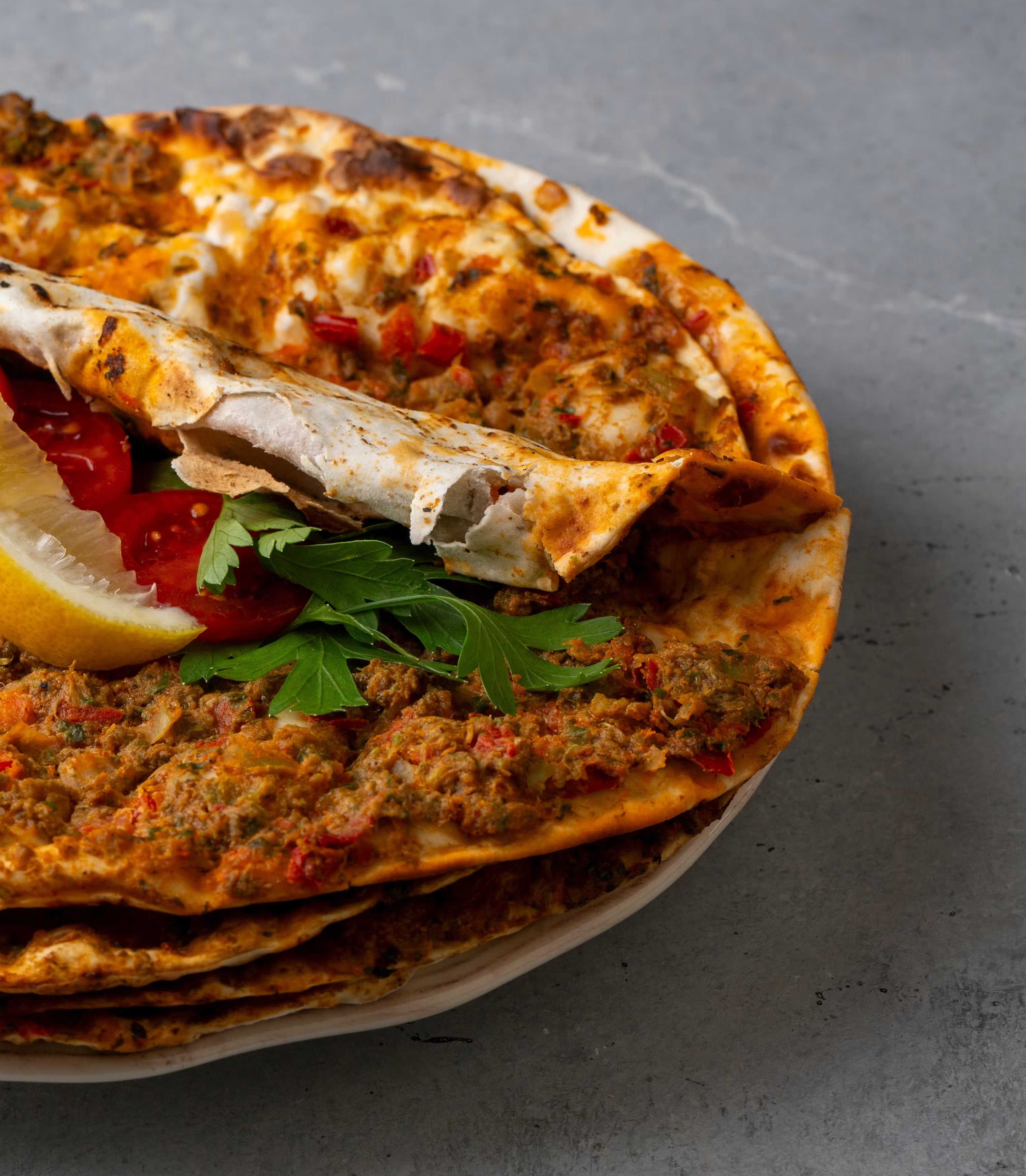
Lahmacun is a thin round of dough spread with spiced minced meat, onion, tomato and pepper and baked fast in a very hot oven. It is eaten rolled around parsley and a squeeze of lemon, often with a glass of ayran.
Antep Lahmacunu / Gaziantep Lahmacunu was registered as a geographical indication on 20 November 2017 (no. 236), held by the Gaziantep Commodity Exchange. The registration specifies lamb chopped by hand with a zırh (a curved cleaver), at 35–40% lamb with a 20–24% fat ratio, and requires every production stage to take place in Gaziantep province. In 2018 the Exchange also applied to the European Commission to register Antep lahmacunu at EU level.
Çiğ köfte: one name, two protected versions
Çiğ köfte (literally "raw meatball") was historically kneaded from raw meat with fine bulgur and isot, the smoky dried pepper of Şanlıurfa. That meat version, Şanlıurfa Çiğ Köftesi, was registered as a geographical indication in 2008 by the Şanlıurfa Chamber of Commerce and Industry.
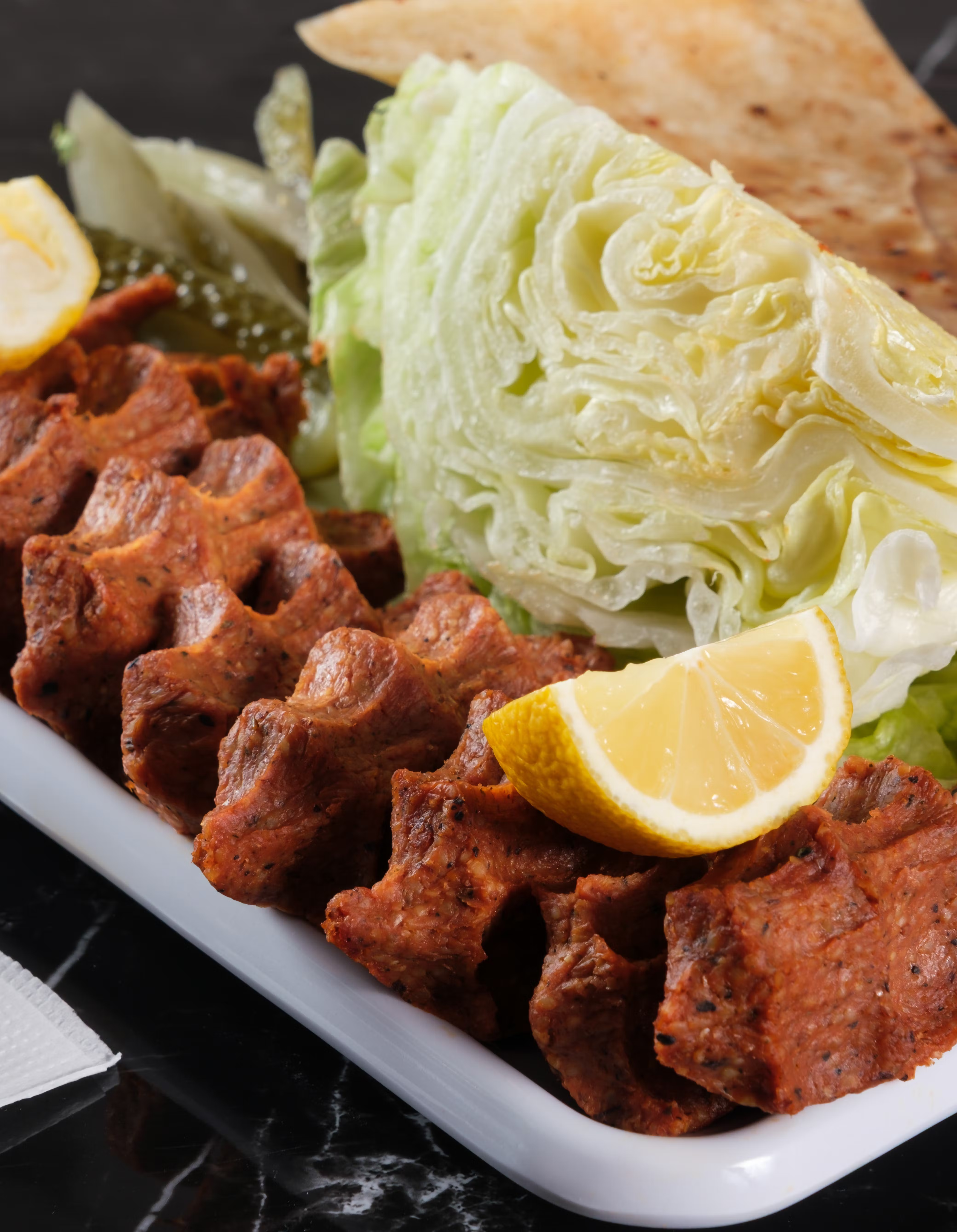
The çiğ köfte sold on Turkish streets today is a different product: made entirely without meat. Adıyaman Etsiz Çiğ Köfte ("meatless çiğ köfte") was registered on 12 July 2018 (no. 366), held by the Adıyaman Chamber of Commerce and Industry, after TÜRKPATENT ruled that the meatless and meat versions are distinct products. Commercial sale of the raw-meat version is not permitted, which is why every street kiosk serves the bulgur-based recipe.
A typical meatless çiğ köfte combines fine bulgur, isot, pepper and tomato paste, grated onion and garlic, pomegranate molasses, olive oil and spices. It is wrapped in lettuce or thin lavaş with pickles and lemon.
The Black Sea: pide, town by town
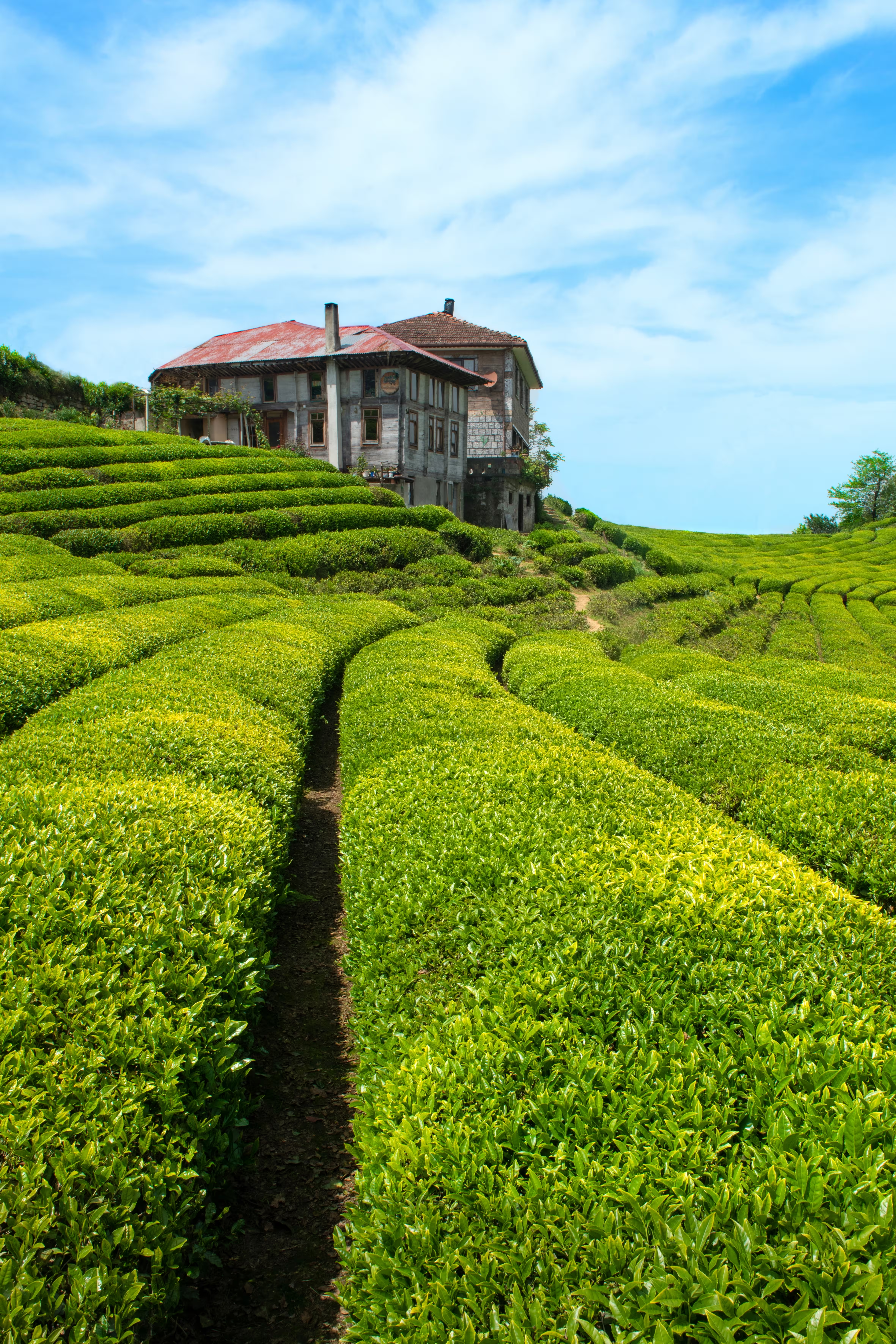
On the Black Sea, pide is not one dish but a map. Almost every coastal town claims its own shape, filling and oven, and several have registered them. Pide here is bakery food rather than cart food: ordered at the counter, baked in a wood-fired stone oven and eaten minutes later.
Samsun: Bafra, Terme and Çarşamba
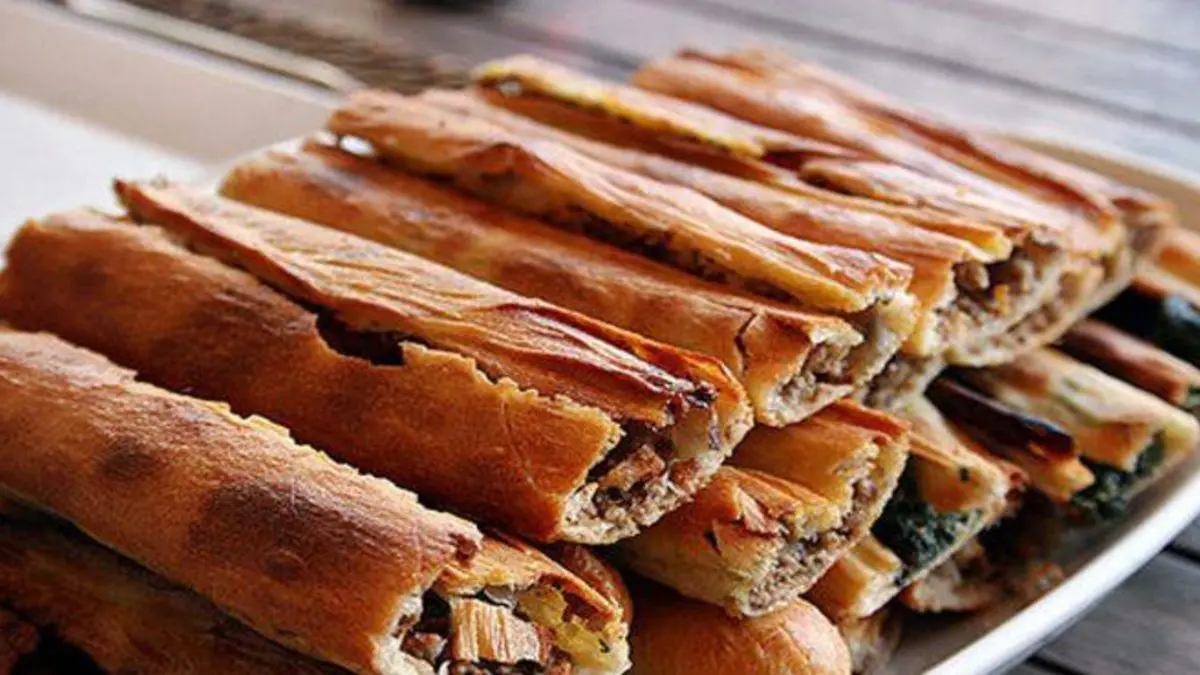
Samsun province alone holds three protected pides. Bafra Pidesi is the best known: a long, very thin boat of dough, around 70–75 cm long and 3–4 cm wide according to its registration, filled with minced meat, baked over wood and finished with local butter. The Bafra municipality notes that restaurants wanting to sell the registered product need permission from the local chamber, and that it is traditionally served with tea or ayran.
Nearby, Terme Pidesi, registered on 2 March 2010 (no. 129), is baked open with a generous filling, while Çarşamba Pidesi is recognisable by its yellowish dough.
Trabzon: Sürmene pide
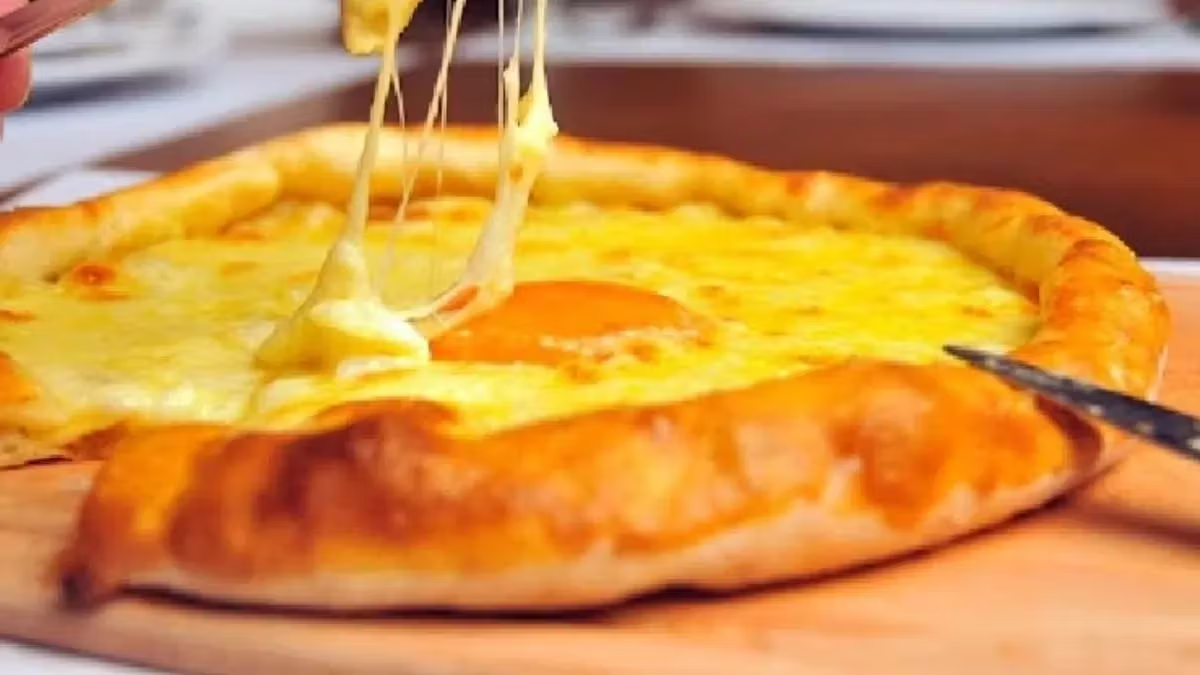
Further east, Sürmene Pidesi, also sold as Trabzon pide, is a round, open pide topped with highland butter and brined local cheese, baked in a stone oven over wood. It is one of nine registered gastronomy products from Trabzon province, alongside Akçaabat köftesi and Hamsiköy sütlacı. The Trabzon Chamber of Commerce and Industry and the Eastern Black Sea Development Agency (DOKA) are now developing these into a dedicated gastronomy route.
Türkiye's Street Food at a Glance
Dish
Region
What it is
Protected status
Best time
Vegetarian
Jain-suitable
Simit
Istanbul
Sesame-crusted bread ring glazed with grape molasses
İstanbul Simidi, GI no. 1782 (2025)
Morning
VJ & VG
Yes
Balık ekmek
Istanbul
Grilled fish fillet in bread with onion and lettuce
—
Lunch; Sept–April for local catch
No (fish)
No
Boyoz
İzmir
Flaky coiled pastry with sunflower oil and tahini
İzmir Boyozu, GI no. 268 (2017)
Breakfast
Plain: VJ; egg on the side
Plain: yes
Kumru
İzmir / Çeşme
Sesame sandwich bread; cold with cheese or hot with sucuk
İzmir Kumrusu, GI no. 262 (2017)
Late morning to afternoon
VJ
Ask: confirm cheese and no onion
Lahmacun
Gaziantep and the Southeast
Thin flatbread with spiced minced lamb
Antep Lahmacunu, GI no. 236 (2017)
Lunch or early evening
No (meatless versions on request)
No
Çiğ köfte
Adıyaman, Şanlıurfa and nationwide
Bulgur and isot paste wrapped in lettuce or lavaş
Adıyaman Etsiz Çiğ Köfte, GI no. 366 (2018)
Any time
VJ & VG
No (onion and garlic)
Pide
Samsun and Trabzon
Wood-fired boat-shaped or round flatbread
Bafra, Terme, Çarşamba and Sürmene pides are registered GIs
Lunch
VJ: cheese or butter versions
Cheese version on request
Dietary flags are general guidance. Recipes vary by vendor; confirm ingredients for each stop before the group arrives.
Building a Street-food Walk into a Group Day
A street-food walk only stays on time when it is run like a site visit, not a free-for-all. The pattern we use across Türkiye is a fixed 90–120 minute block, four to six pre-arranged stops, and a tasting portion at each stop rather than a full meal.
The five rules we run by
Fix the block, not the stops. Give the walk a hard start and end time in the programme and treat stops as flexible inside it. If one vendor is slow, drop a stop; never extend the block.
Pre-order and pre-pay everything. Agree quantities, portion size and price with each vendor 24–48 hours ahead and settle on one invoice. No cash changes hands in front of the group, and food is ready on arrival.
Keep groups small. Plan one guide for every 12–15 guests. A full coach of 40 becomes three walking groups starting 10 minutes apart on the same loop, or on mirrored loops that meet at a shared final stop.
Sequence the tastes. Start with bread and pastry (simit, boyoz), move to savoury (kumru, lahmacun, pide), and finish with something sweet or tea. Mild before spicy; vegetarian stops before meat stops, so dietary guests are never waiting for the main group.
Design a loop, not a line. Start and end within a short walk of where the coach can legally stop. In Istanbul's historic peninsula and İzmir's Kemeraltı, the coach drop-off point decides the route.
Timing risks to plan around
Friday midday prayers. Streets around major mosques fill around the noon prayer, especially on Fridays. Route around them or schedule the walk for the morning.
Cruise days. On days when several ships are in port, the historic peninsula and Eminönü fill earlier. Move the walk forward by an hour.
Weather. Have a covered alternative for each outdoor stop: a bakery with seating instead of a cart, a lokanta instead of the waterfront.
Ramadan. Most vendors stay open, but eating in the street during the day can feel out of place in more conservative neighbourhoods. Shift tastings towards the evening, after iftar, when food streets are at their liveliest.
Keeping Hygiene Under Control
Street food is safe for groups when the vendor is chosen before the walk, not during it. Every stop on a Marveltour programme is visited, tasted and agreed in advance by our local team.
Vet every vendor against official sources
Check the Ministry's public disclosure lists. The Ministry of Agriculture and Forestry publishes the results of its food inspections on its Güvenilir Gıda (Safe Food) portal under Gıda Kamuoyu Duyurusu, in two lists: foods that endanger health, and foods found to be counterfeit or adulterated. The Ministry reports more than 8,000 food inspectors. In 2025 its inspections identified 121 products that endanger health and 1,208 counterfeit or adulterated products, all named publicly with producer and brand.
Look for the geographical indication logo. Bakeries and kiosks licensed to use a registered name, such as İstanbul Simidi or İzmir Boyozu, are inspected against the registration by the holding chamber with the provincial agriculture directorate.
Know the hotline. ALO 174 is the Ministry's food line for complaints and reports, also reachable through the Güvenilir Gıda mobile app.
Controls on the day
Cooked to order, served hot. Prioritise foods that come straight from the oven or grill: simit, boyoz, lahmacun, pide, balık ekmek. Leave out items that sit at room temperature for hours, and keep raw shellfish such as street stuffed mussels off group walks.
Bottled water only. Hand out sealed water at the start and use bottled water for any hand-washing point.
Sanitiser at every stop. Guides carry it; vendors are briefed that guests will use it before eating.
Sesame and gluten are everywhere. Simit and kumru are coated in sesame, and boyoz contains tahini. Collect allergy information before arrival and give guides a written allergen card for each stop.
A clear incident plan. Guides carry the address of the nearest pharmacy and private clinic for every walk, and the operator's 24-hour line.
Vegetarian, Jain and Halal Guests
Türkiye's street food adapts well to many groups, provided dietary needs are known before the group lands. Collect a dietary profile for every guest at booking, then build each stop around it.
The four profiles to collect at booking
Profile
Excludes
Street stops that work
Lacto-vegetarian
Meat, poultry, fish; often eggs
Simit, plain boyoz, cold İzmir kumru, çiğ köfte, cheese pide
Jain
All of the above plus eggs, onion, garlic and root vegetables such as potato and carrot
Simit, plain boyoz, cheese pide made without onion; çiğ köfte only from a batch made without onion and garlic
Halal
Pork, alcohol, meat not slaughtered according to Islamic rules
All eight dishes in this guide, with meat sourcing confirmed
Allergy or medical
Varies: sesame, gluten, nuts, dairy
Built stop by stop with a written allergen card
Vegetarian and Jain guests
Lead with the naturally meatless stops. Simit, plain boyoz and street çiğ köfte contain no meat by default, and a cheese pide is easy to order anywhere on the Black Sea.
Check what "vegetarian" means to each guest. Many Indian vegetarians do not eat eggs, so serve boyoz without the traditional hard-boiled egg. Some also avoid cheese made with animal rennet; ask the baker which cheese is used.
Plan for Jain restrictions separately. Onion and garlic appear in çiğ köfte, lahmacun and many fillings. Order a dedicated batch made without them a day in advance, or replace the stop with a bakery.
Avoid cross-contact. Pide and lahmacun share ovens and trays with meat products. Ask for vegetarian items to be baked first, on a clean tray, and served separately.
Give guides a language card. Useful phrases for vendors: etsiz (without meat), et, tavuk, balık yok (no meat, chicken or fish), yumurtasız (without egg), soğansız, sarımsaksız (without onion, without garlic).
Halal guests
Halal is the default, but documentation is the request. Türkiye is a Muslim-majority country, pork is not part of street food, and none of the dishes in this guide contains alcohol.
Use the official accreditation chain. The Halal Accreditation Agency (Helal Akreditasyon Kurumu, HAK) is the only official body authorised to accredit halal certification in Türkiye. Since 4 June 2023, halal certificates for products supplied to the Turkish market must come from HAK-accredited certification bodies. For Malaysian clients who rely on JAKIM, check that the certifier on a restaurant's certificate also appears on JAKIM's list of recognised foreign halal bodies.
Plan around prayer times. Schedule walks so that they finish before the midday or afternoon prayer, and identify the nearest mosque on each route.
Taste Türkiye with Marveltour
Street food is the fastest way into a Turkish city, and the easiest part of a programme to get wrong. Since 1982, Marveltour has built tasting walks into programmes in Istanbul, İzmir, Upper Mesopotamia and along the Black Sea, with every vendor vetted and every dietary profile planned in advance.
Planning a group with vegetarian, Jain or halal requirements? Start a conversation with our team, or explore all destinations across Türkiye.
A Culinary Journey Through Türkiye: Street Food, Region by Region
Eight street foods, four regions and the official names that protect them, with field notes for operators on timing, hygiene, vegetarian, Jain and halal groups.
Nicaea at 1,700: A Journey to İznik, Where the Nicene Creed Was Born
The creed recited in churches every Sunday was agreed here in 325 AD. A fourth-century basilica lies beneath the lake, and İznik works as an overnight or a long day from an Istanbul programme.
Türkiye’s 22 UNESCO World Heritage Sites: A Journey Through 12,000 Years of History
A member of the UNESCO World Heritage Convention since 1983, Türkiye saw its first sites inscribed in 1985 and its latest, Sardis, in 2025, with 80 more on its Tentative List.
Faith Based Travel in Türkiye: Biblical Itinerary Guide
Plan a Christian pilgrimage in Türkiye: Paul's routes, the Seven Churches of Revelation, Ephesus, Cappadocia and Nicaea, with itineraries for group leaders.