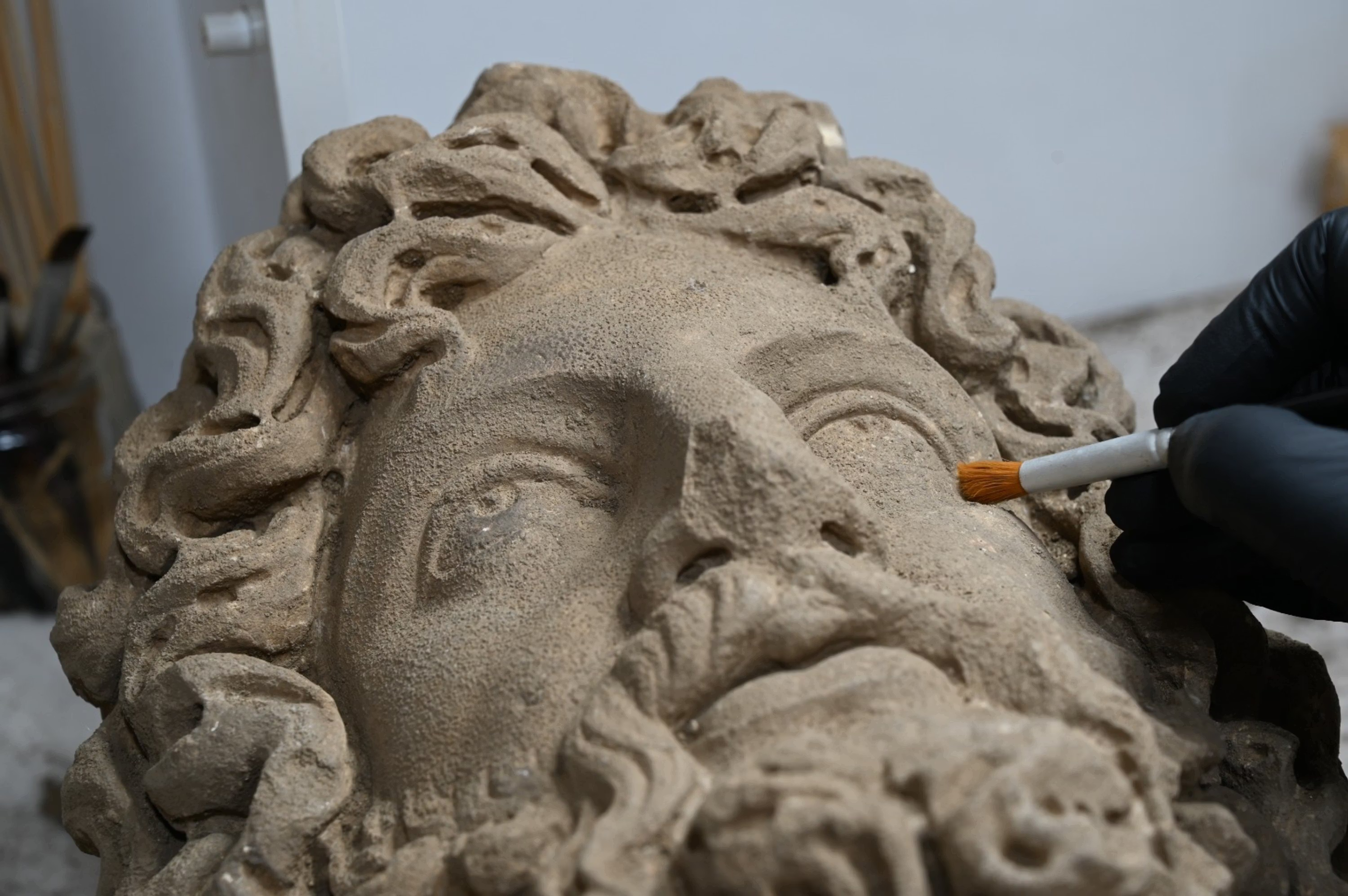
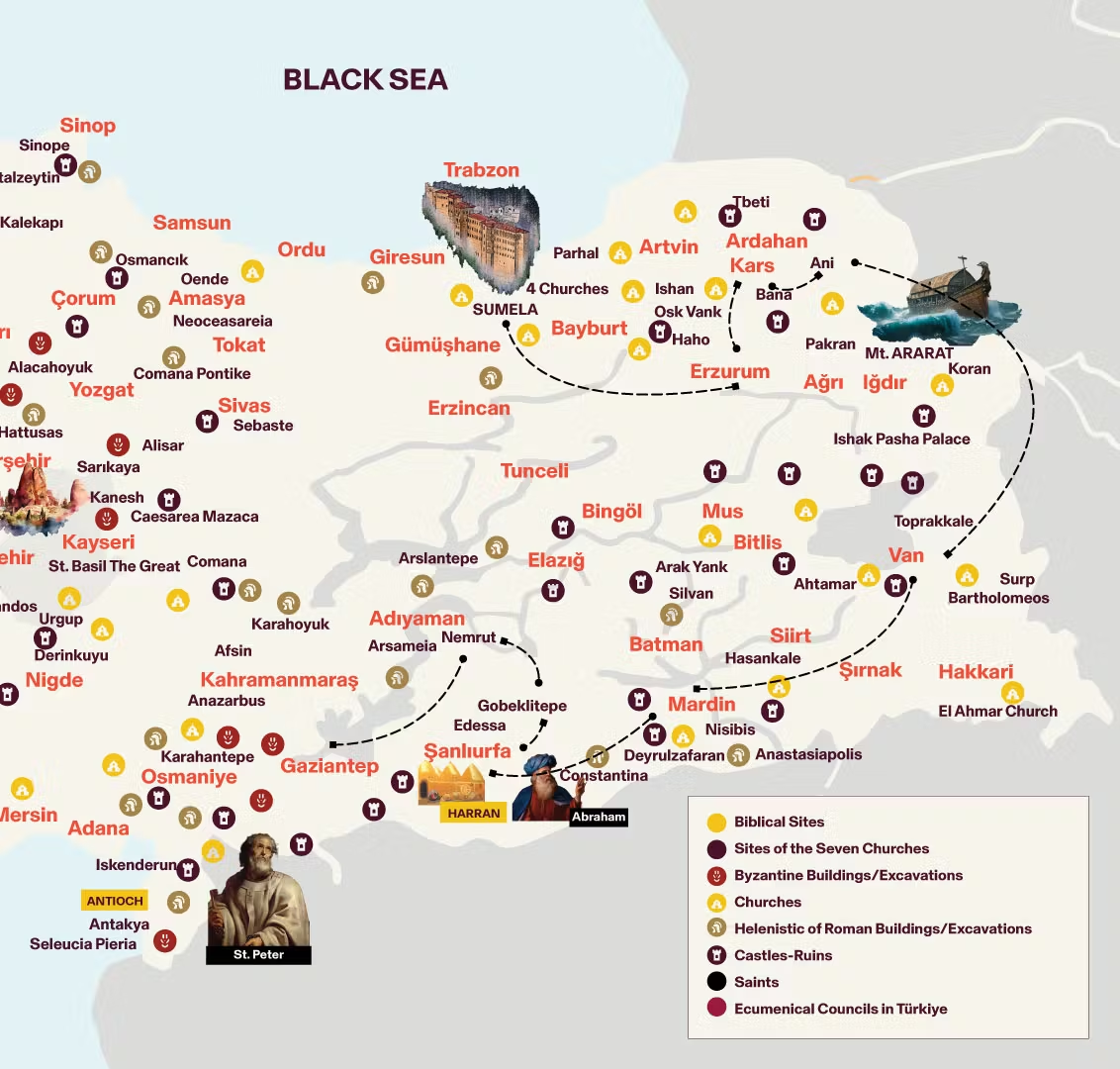
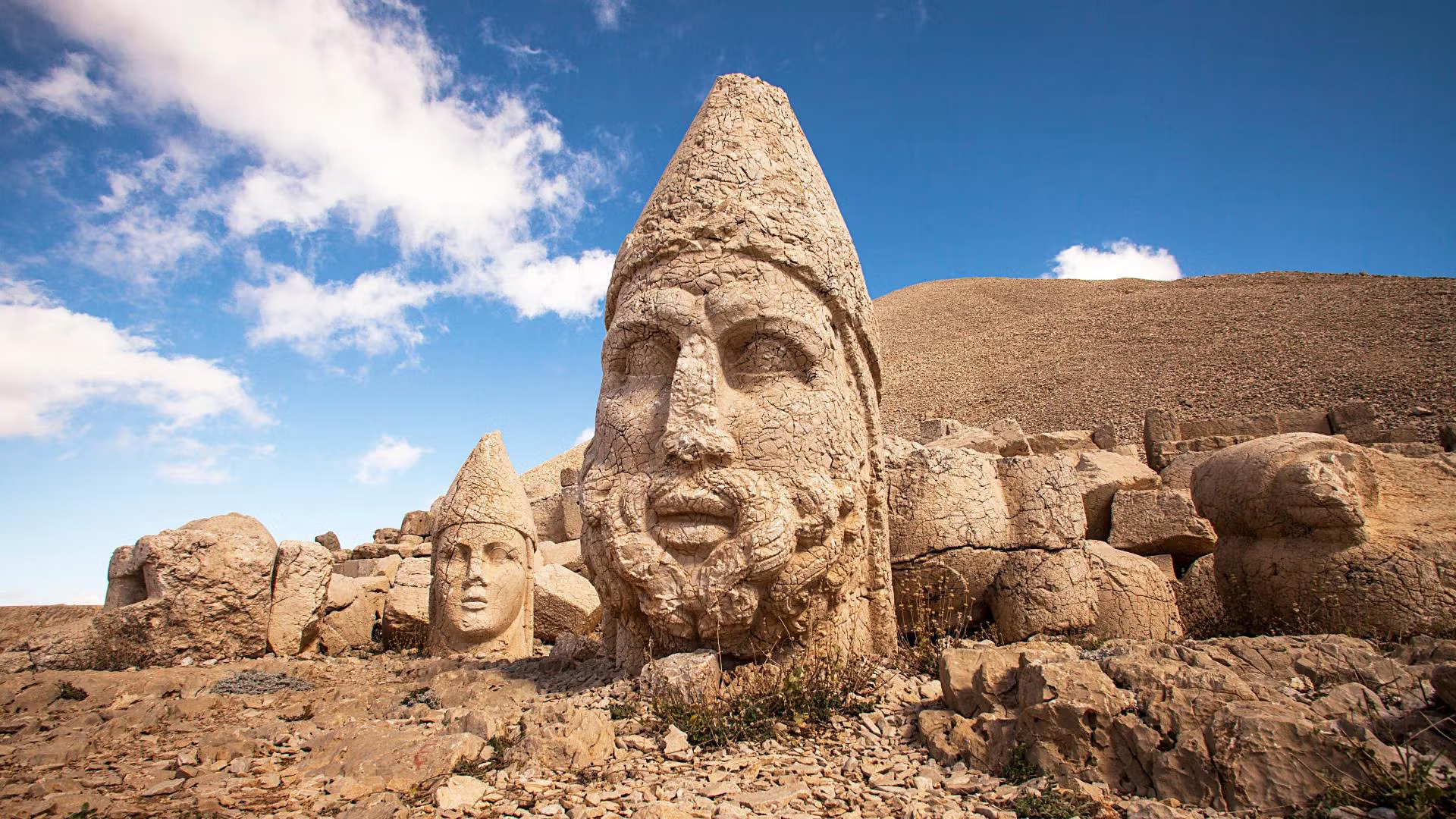
Climb Nemrut to 2,150 metres, to the Commagene gods sitting where the earthquakes left their heads.
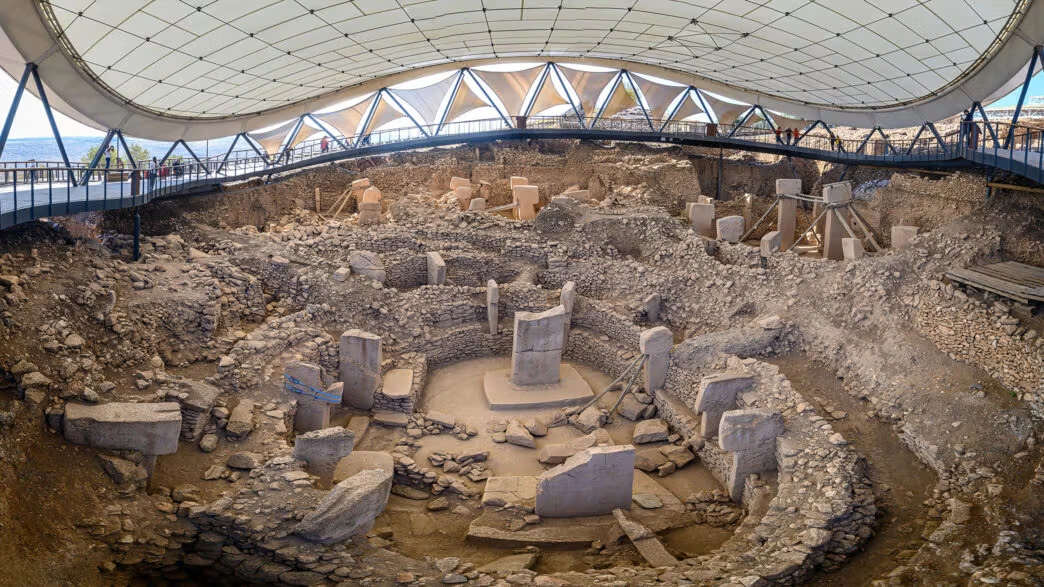
Walk Göbekli Tepe, carved eleven thousand years ago, six thousand years before Stonehenge.
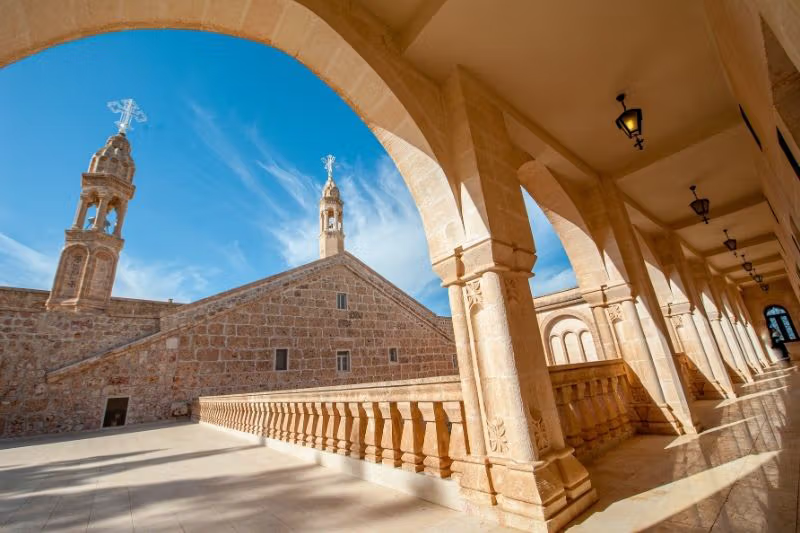
Hear the Syriac liturgy at Deyrulzafaran, still sung in a dialect of the language Jesus spoke.
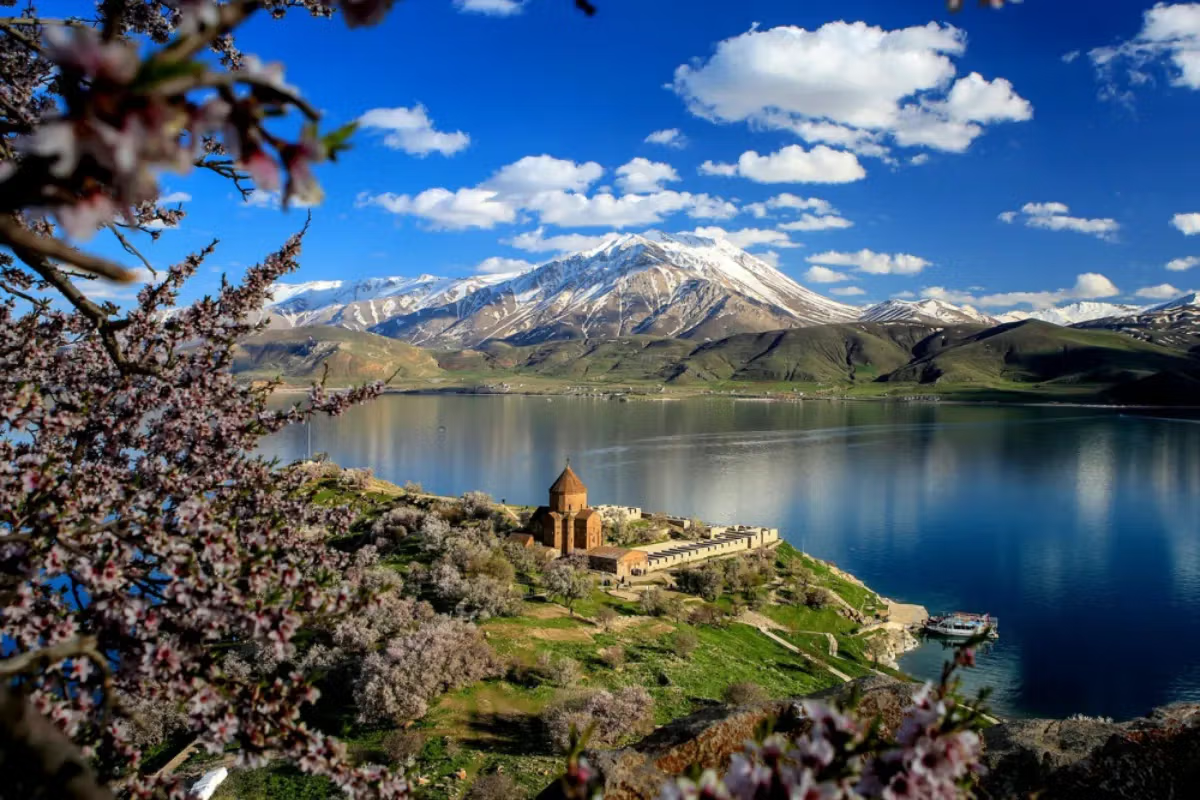
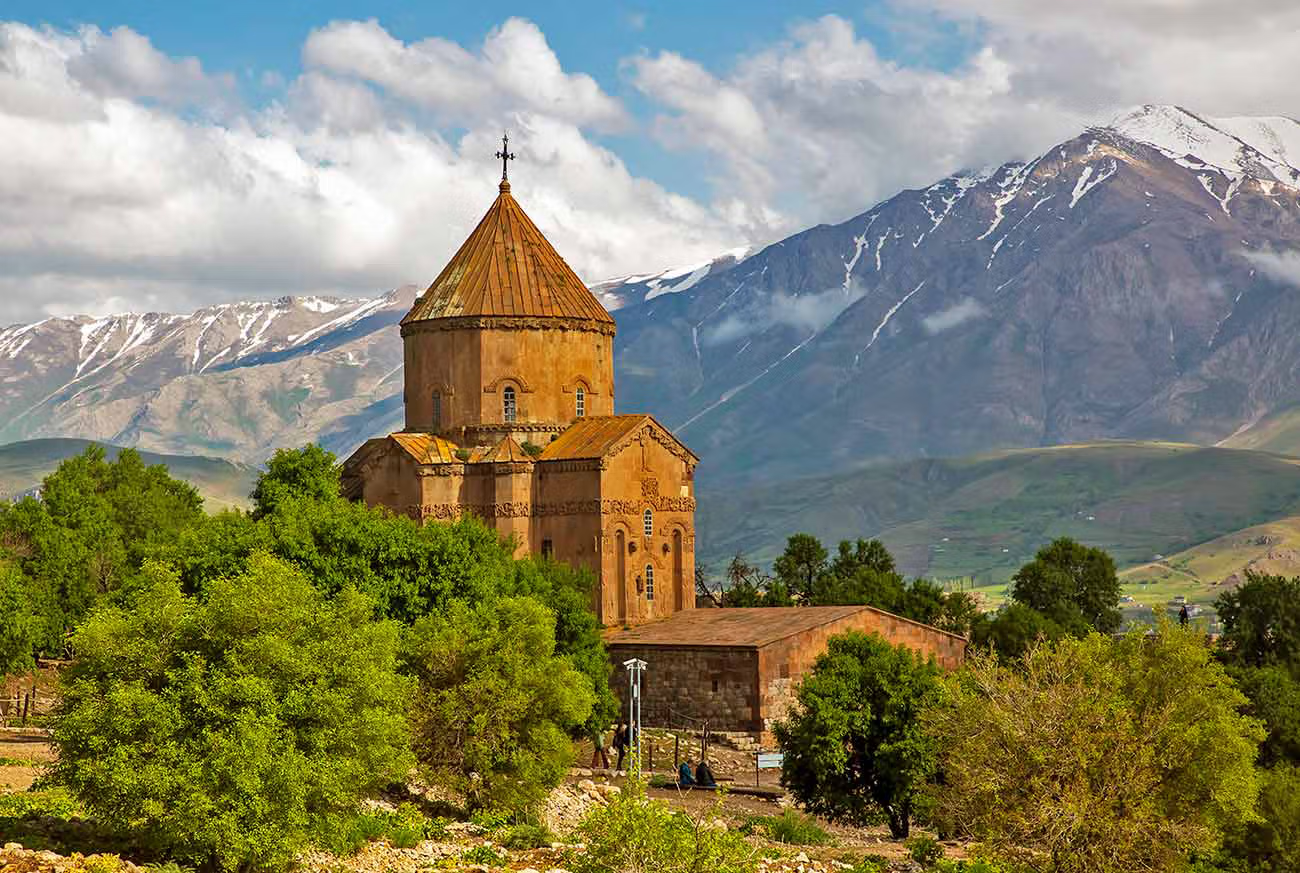
Cross Lake Van by boat to the Church of the Holy Cross, its outer walls carved with Adam, Eve and Jonah's whale, then sit down to a Van breakfast of two dozen dishes.
Stand in the cathedral at Ani, a city of a hundred thousand people on the medieval Silk Road, abandoned after invasion and earthquake and empty on the border ever since.
Why the programme is built this way
The route runs one way, and that is the first decision. The group flies into Gaziantep and out of Trabzon, so nothing is driven twice across a region where doubling back would cost whole days. It also means the journey has a shape: it starts on the Mesopotamian plain at the oldest continuously inhabited end of the country, climbs to two thousand metres, and comes down to the sea.
The second decision is where the nights sit. Mardin, Van, Kars, Gaziantep and Trabzon all get two or more, which is what makes a sixteen-day eastern programme bearable. Mardin earns it because the monasteries, Dara and the old town cannot be done in an afternoon. Van earns it because Akdamar depends on the boat and the boat depends on the lake. Trabzon holds four nights and works as a base rather than a stop, which is how the Black Sea should be done: the coast is the least interesting part of it and the valleys inland are the point.
The third is that the journey is organised around three different religious histories rather than one. Harran and the pools at Şanlıurfa for Abraham, the Syriac monasteries at Mardin and Midyat for a Christian community that has been there since the fourth century, and Akdamar and Ani for Armenian architecture. A guide who can hold all three is what makes this route work, and that is the part that is hard to buy anywhere else.
Feature
Details
Days
16 days, 15 nights
Bases
8, five of them two nights or more
UNESCO World Heritage Sites
3 — Göbekli Tepe, Nemrut Dağ, Ani
UNESCO Creative City of Gastronomy
1 — Gaziantep
Highest point
Nemrut summit, 2,150 m
By road
approx. 2,800 km
Longest single drive
Mardin to Van, approx. 450 km with two stops
Also operated at
9 days and 6 days
Itinerary
Day 1 | Gaziantep — Arrival
Your group is met at Gaziantep airport and transferred to the hotel, with the rest of the day free. Gaziantep is a good place to start a long journey: it is a working city with one of the oldest continuously inhabited centres in the world, and the first evening needs no programme beyond walking out into it.
Day 2 | Gaziantep — Zeugma, copper and baklava
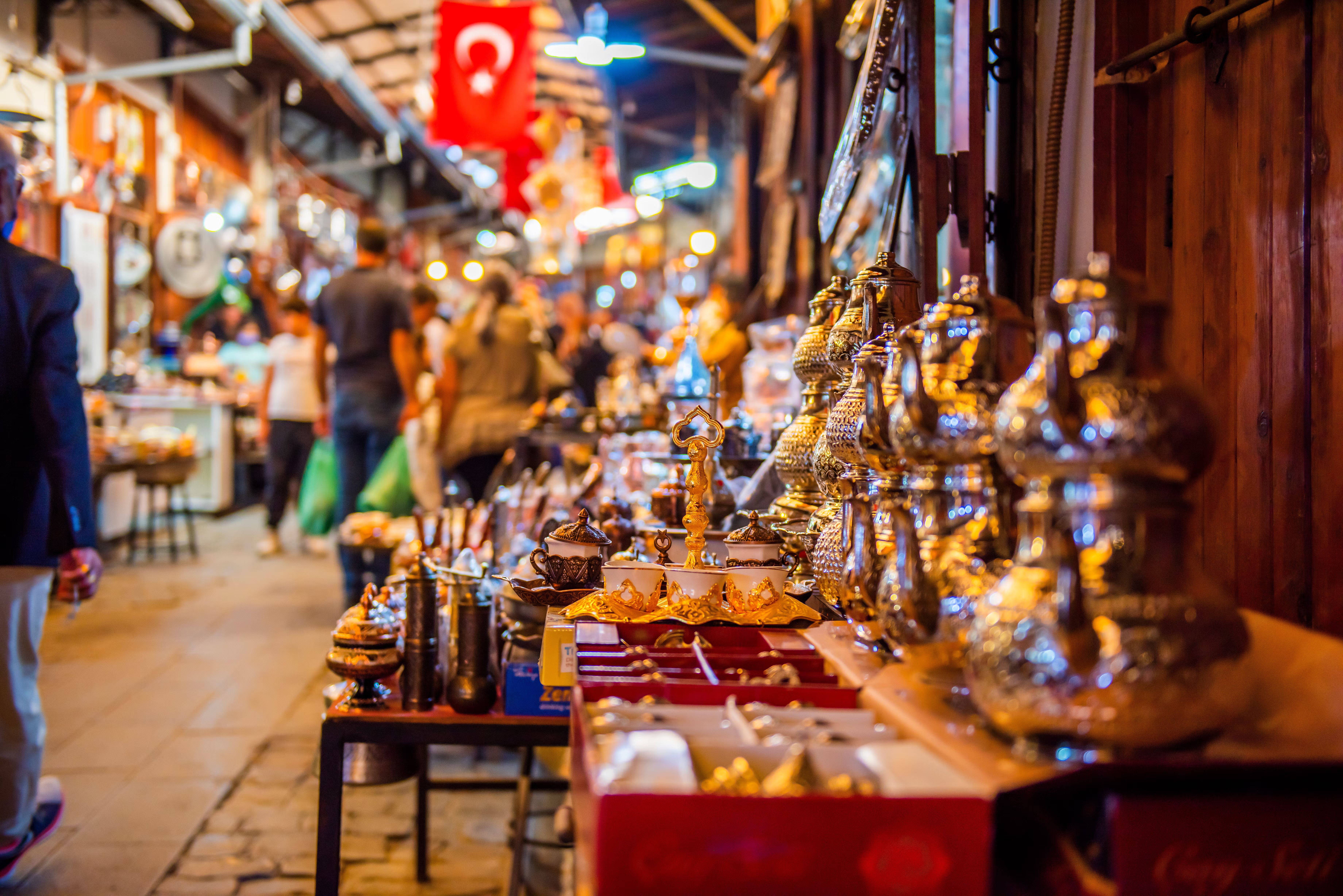
The Zeugma Mosaic Museum holds the floors lifted out of a Roman city before the Birecik dam covered it, and the Gypsy Girl is a fragment the size of a dinner plate that stops people where they stand. Then the Bakırcılar bazaar, where coppersmiths still work to order, and a baklava shop that makes nothing else — forty layers, Antep pistachio, a protected name. Coffee afterwards at Tahmis, open since 1635.
Day 3 | Gaziantep to Adıyaman — Nemrut
North and east through the Euphrates country, with lunch at Kahta before the ascent. Nemrut is a tomb nobody has found: King Antiochus of Commagene had fifty metres of broken stone piled over his burial and surrounded it with colossal statues of himself among Greek and Persian gods. Earthquakes took the heads off and they now sit on the terraces at eye level. At 2,150 metres, in the late light, it is the single most extraordinary thing in eastern Türkiye.
Day 4 | Adıyaman to Şanlıurfa — Göbekli Tepe and Harran
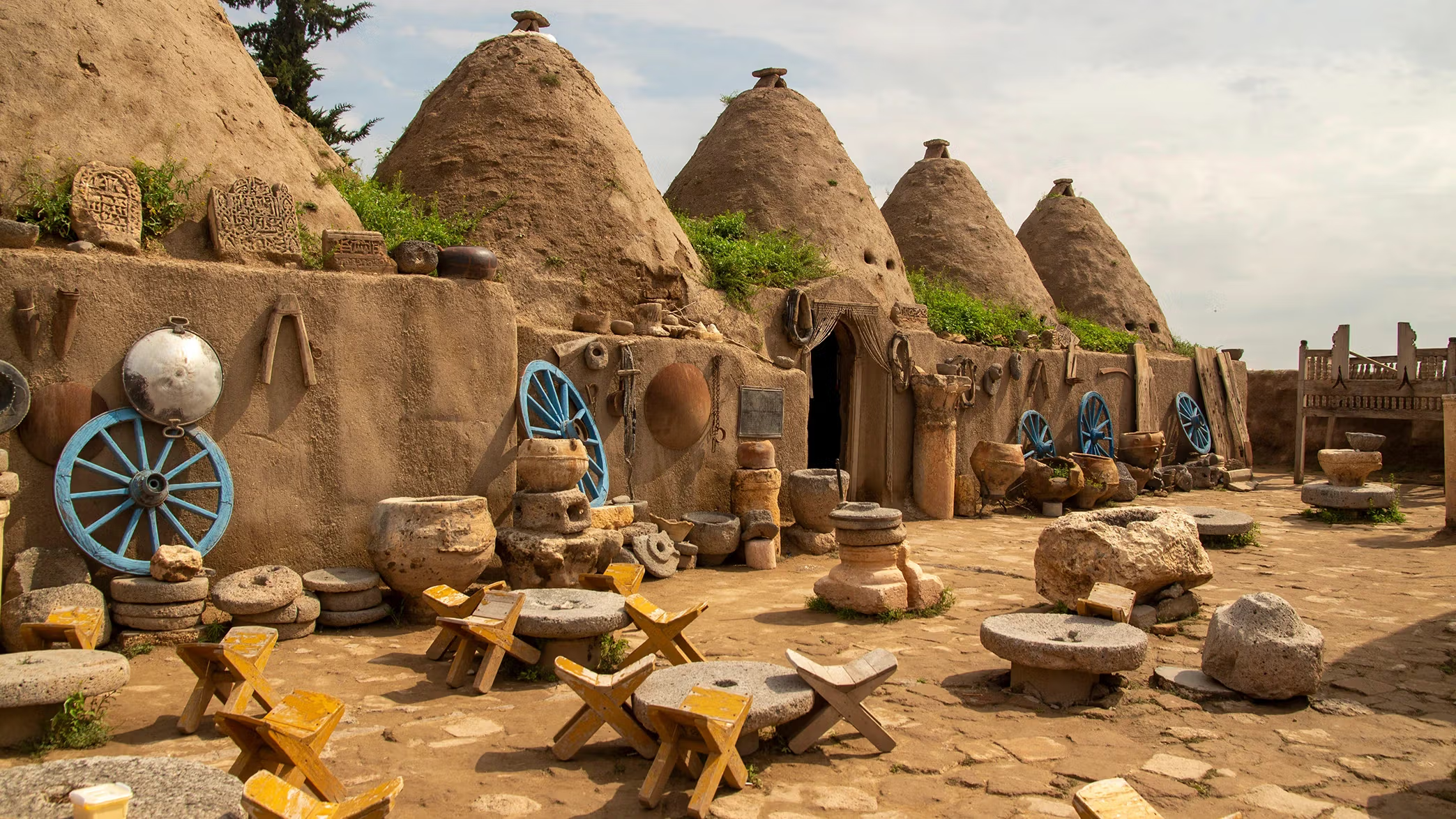
Göbekli Tepe in the morning, while it is cool. T-shaped limestone pillars up to five metres high, carved with boars, cranes, foxes and scorpions, raised eleven thousand years ago by people who had not yet invented farming or pottery, and then deliberately buried. It moved the start of monumental architecture back by seven thousand years. Then the Şanlıurfa museum, which holds what came out of the ground there, and Harran in the afternoon, where the beehive houses are still built the way they were when Abraham passed through.
Day 5 | Şanlıurfa to Mardin — the pools of Abraham
The morning is Şanlıurfa on foot: Gümrük Han, where the tea is drunk at tables in a sixteenth-century courtyard, the covered bazaars, and Balıklıgöl — the pool where tradition holds Abraham was thrown into a fire that God turned to water, its carp sacred and uncatchable. Three faiths claim this city, and the morning shows you why. In the afternoon, east to Mardin for two nights.
Day 6 | Mardin — Dara, Deyrulzafaran and the old town
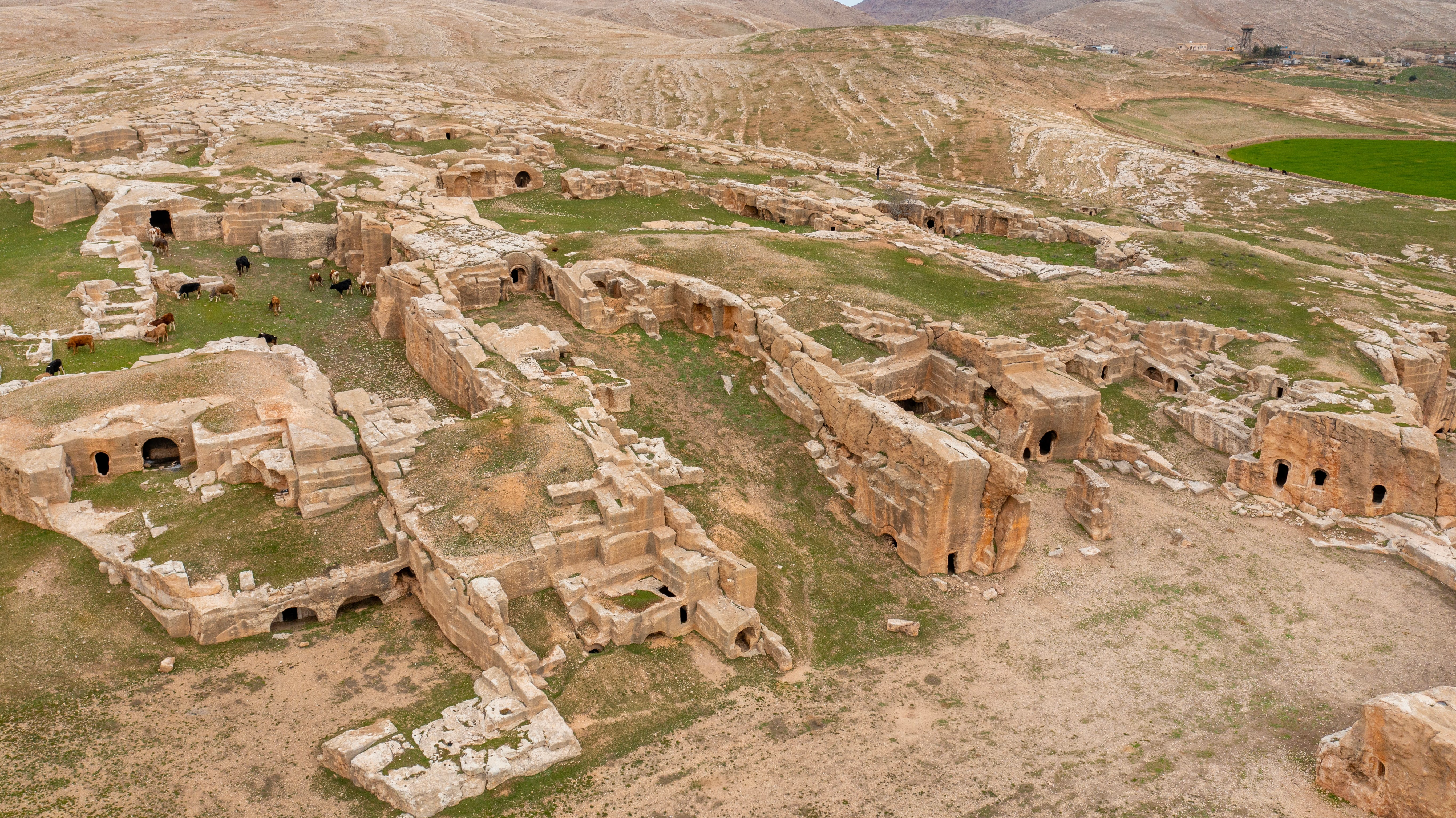
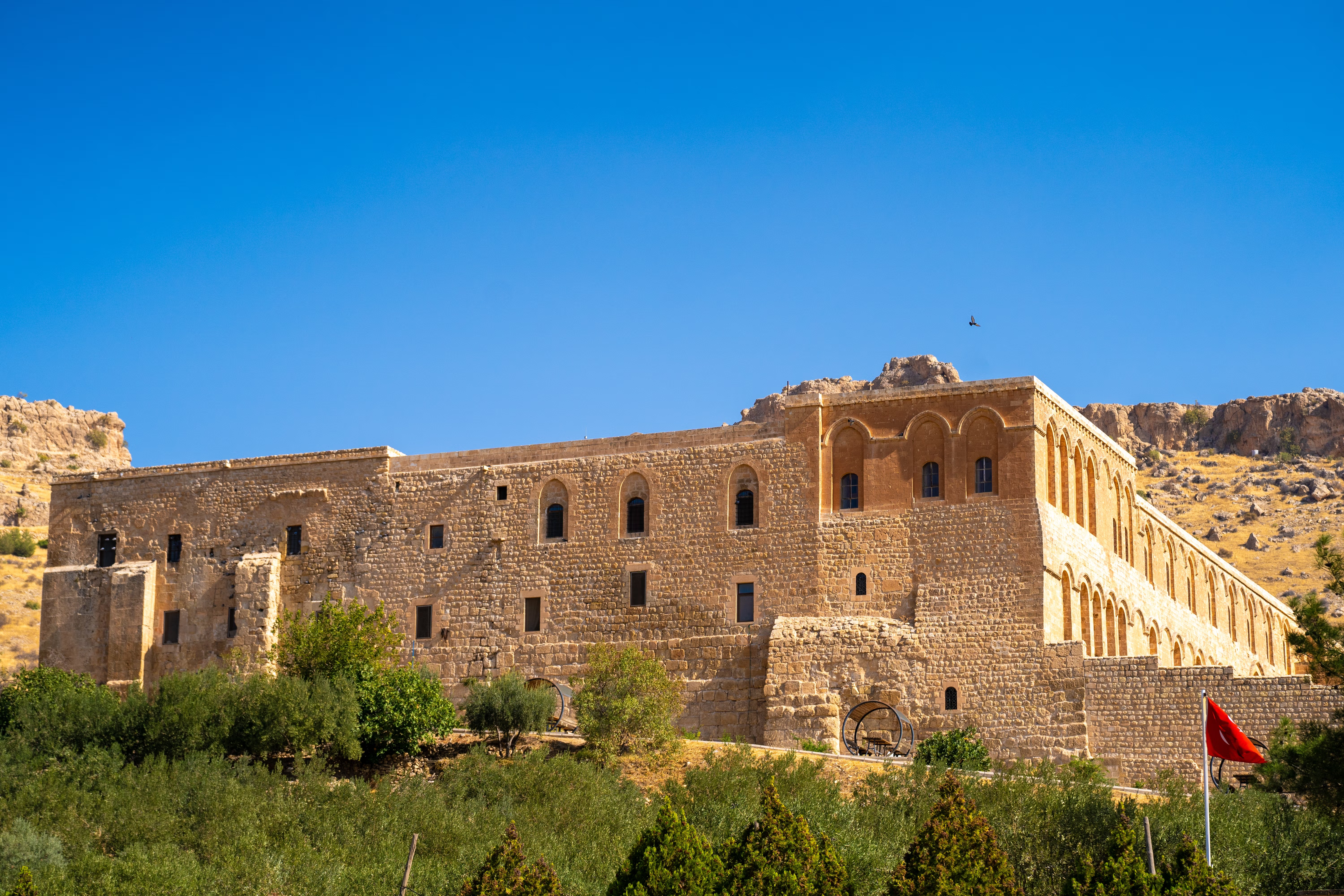
Dara first, a Byzantine frontier fortress city with cisterns the size of cathedrals cut down into the rock and a necropolis carved into a quarry face. Then Deyrulzafaran, a Syriac Orthodox monastery founded in the fifth century on a temple older still, and the seat of the Patriarchate until 1932. Monks are there now. In the afternoon, the Kasımiye Medrese, which looks out over the whole Mesopotamian plain, and the honey-coloured streets of old Mardin on foot.
Day 7 | Mardin to Van — Mor Gabriel and Hasankeyf
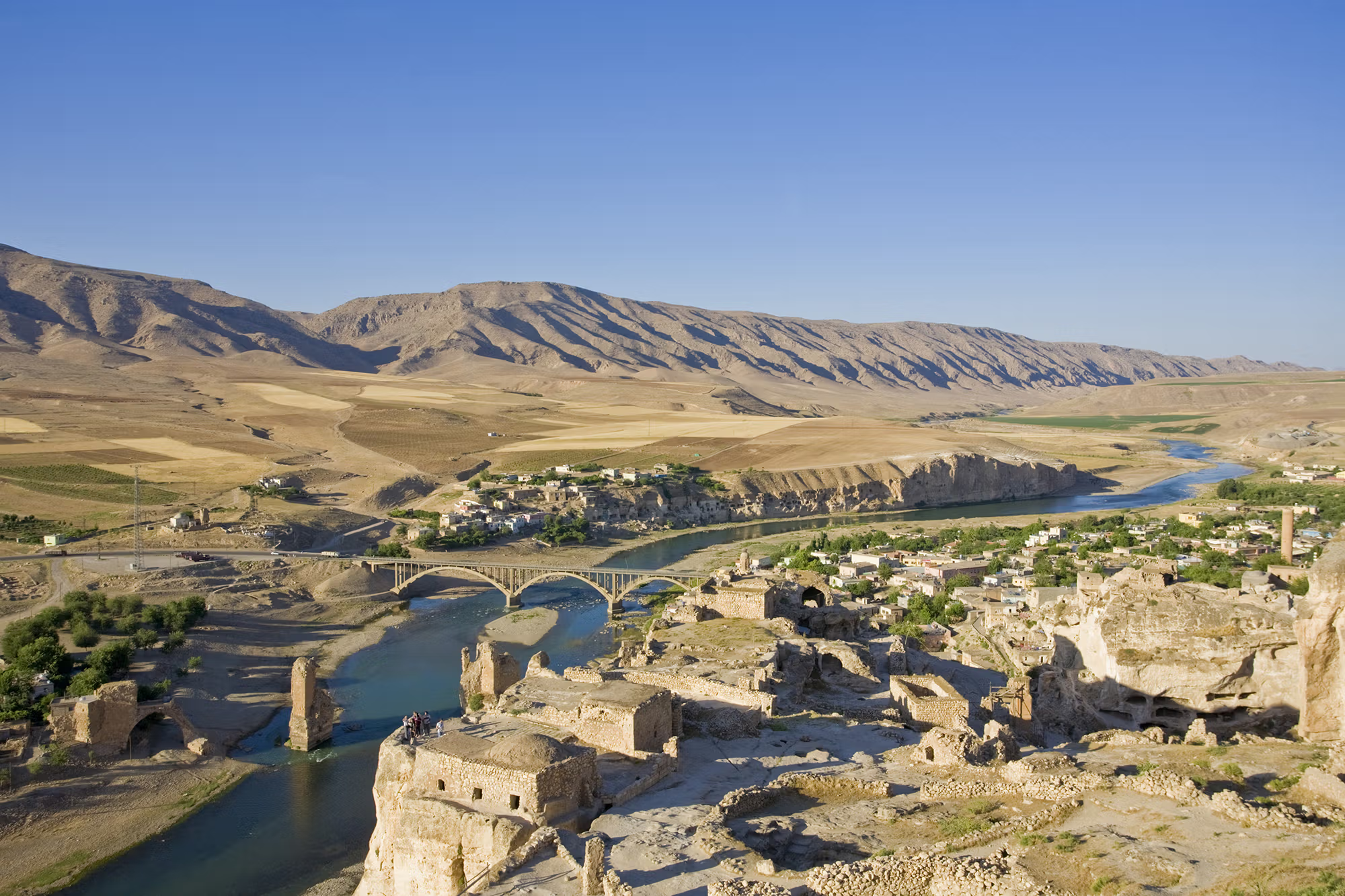
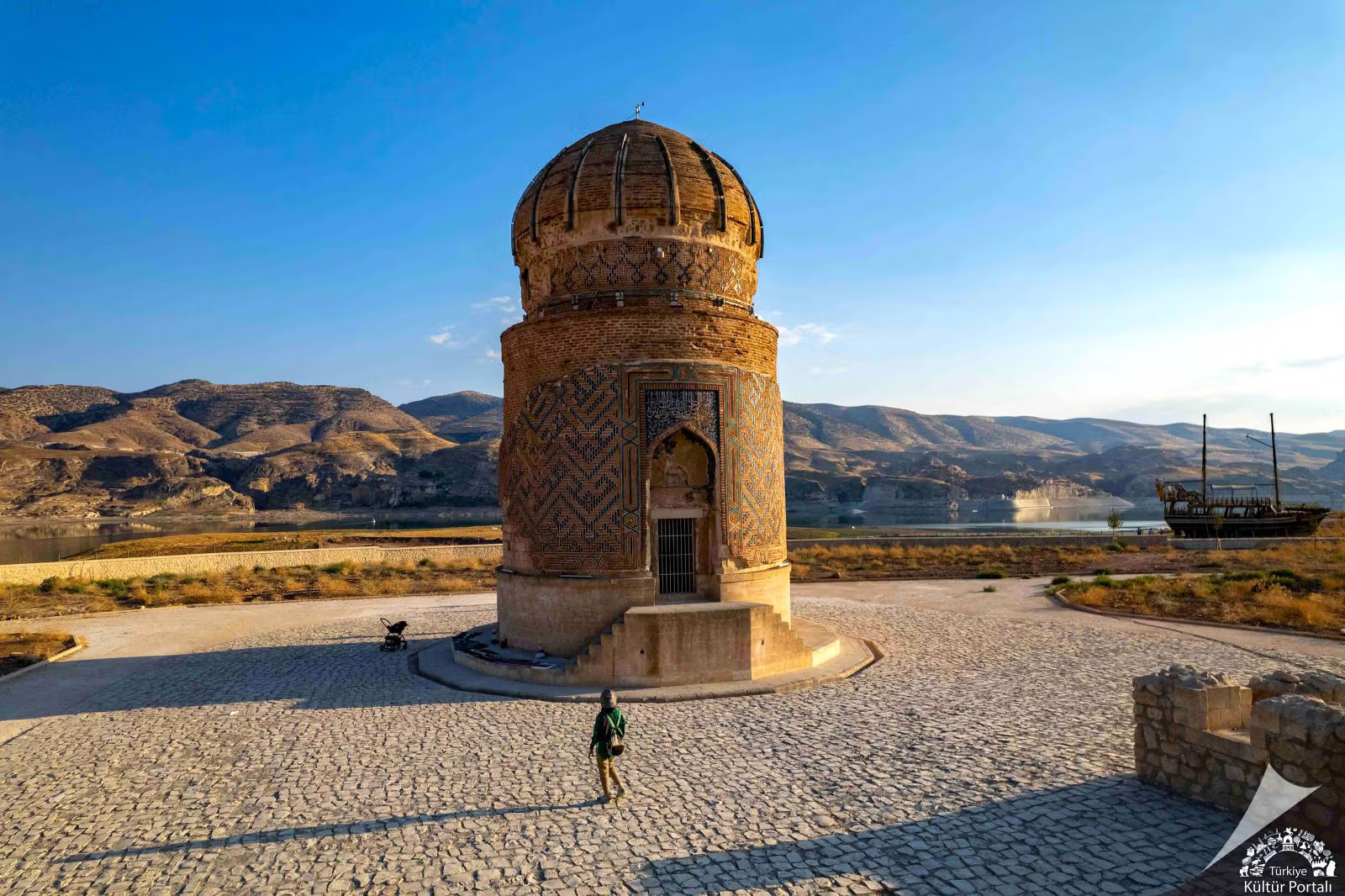
Mor Gabriel, founded in 397, is among the oldest working monasteries on earth, and the community around it still speaks Turoyo, a living descendant of Aramaic. Then north to Hasankeyf. The old town on the Tigris went under the Ilısu reservoir in 2020; the Zeynel Bey tomb and several other monuments were cut free, moved on rails and re-erected in a cultural park above the water. Your guide will tell you what was saved and what was not, which is a more honest afternoon than a tour of the old streets would have been. Then the long road east to Van.
Day 8 | Van — Çavuştepe and Akdamar
Breakfast first, because in Van breakfast is the local institution: twenty-odd dishes on a table at once, herb cheese, clotted cream, local honey, eggs cooked in butter. Then Çavuştepe, an Urartian fortress from the eighth century BC with cuneiform still legible on the temple blocks. In the afternoon the boat from Gevaş out to Akdamarisland, and the tenth-century Church of the Holy Cross: Adam and Eve, David and Goliath, Jonah and the whale carved in relief right round the outside walls.
Day 9 | Van to Kars — Mount Ararat and İshak Paşa
North along the lake, then up. Muradiye falls in the morning, and from Doğubayazıt the whole mass of Ararat, 5,137 metres and snow-capped in any month. The İshak Paşa Palace above the town is the extraordinary one: an eighteenth-century Kurdish governor's palace built with Ottoman, Seljuk, Persian and Armenian stonework in the same building, underfloor heating in the harem and a view down the plain towards Iran. Then across to Kars for two nights.
Day 10 | Kars — Ani
Ani sits on a gorge that is now the closed Armenian border, and it was a city of a hundred thousand people when London had twenty. The cathedral of 1001 still stands with its pointed arches, which were being built here before the Gothic ones in France. So does the Church of the Redeemer, cut exactly in half by lightning in 1957 and left that way. Nothing has been rebuilt and almost nobody is there. Back in Kars for the old city and the Russian-period streets.
Day 11 | Kars to Erzurum
The Kars museum in the morning, then the drive south-west across high grassland. Erzurum sits at nearly two thousand metres and was the Seljuk frontier: the Çifte Minareli Medrese is one of the great buildings of that period, and the Kümbetler beside it are conical Seljuk tombs standing in a row. Dinner in the city — Erzurum cooking is mountain food, and cığ köfte here is made differently from the way it is in Urfa.
Day 12 | Erzurum to Trabzon — the Çoruh valley
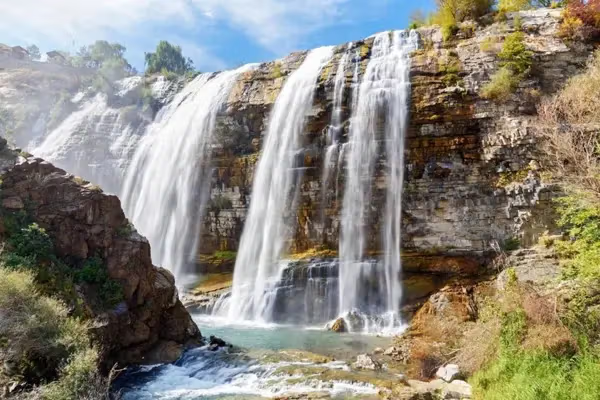
The best drive in the country, and it takes the day. The Ulu Cami and the coppersmiths first, then north out of Erzurum, past Tortum falls and the length of Tortum lake, and down into the Çoruh gorge — a thousand metres of near-vertical valley with the river at the bottom and the road cut into the side of it. The landscape changes from high steppe to rainforest in about four hours. Artvin, then the coast, then Trabzon.
Day 13 | Trabzon — the city
Hagia Sophia of Trabzon is a thirteenth-century church of the Byzantine successor empire at Trebizond, which outlived Constantinople itself by eight years and fell to the Ottomans only in 1461. Its frescoes are among the best-preserved anywhere. Then the Atatürk Mansion, a white villa in a garden above the city, and the old centre and bazaar on foot. Dinner is Black Sea food, which is a different cuisine entirely: anchovies, maize bread, collard greens, and cheese that is melted rather than sliced.
Day 14 | Trabzon — Sumela and Uzungöl
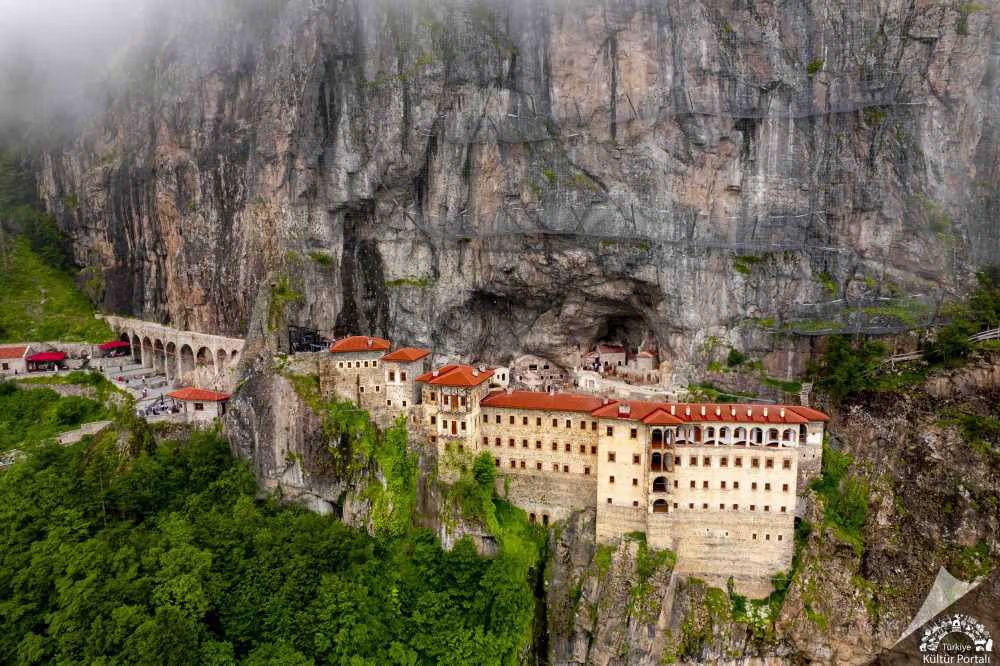
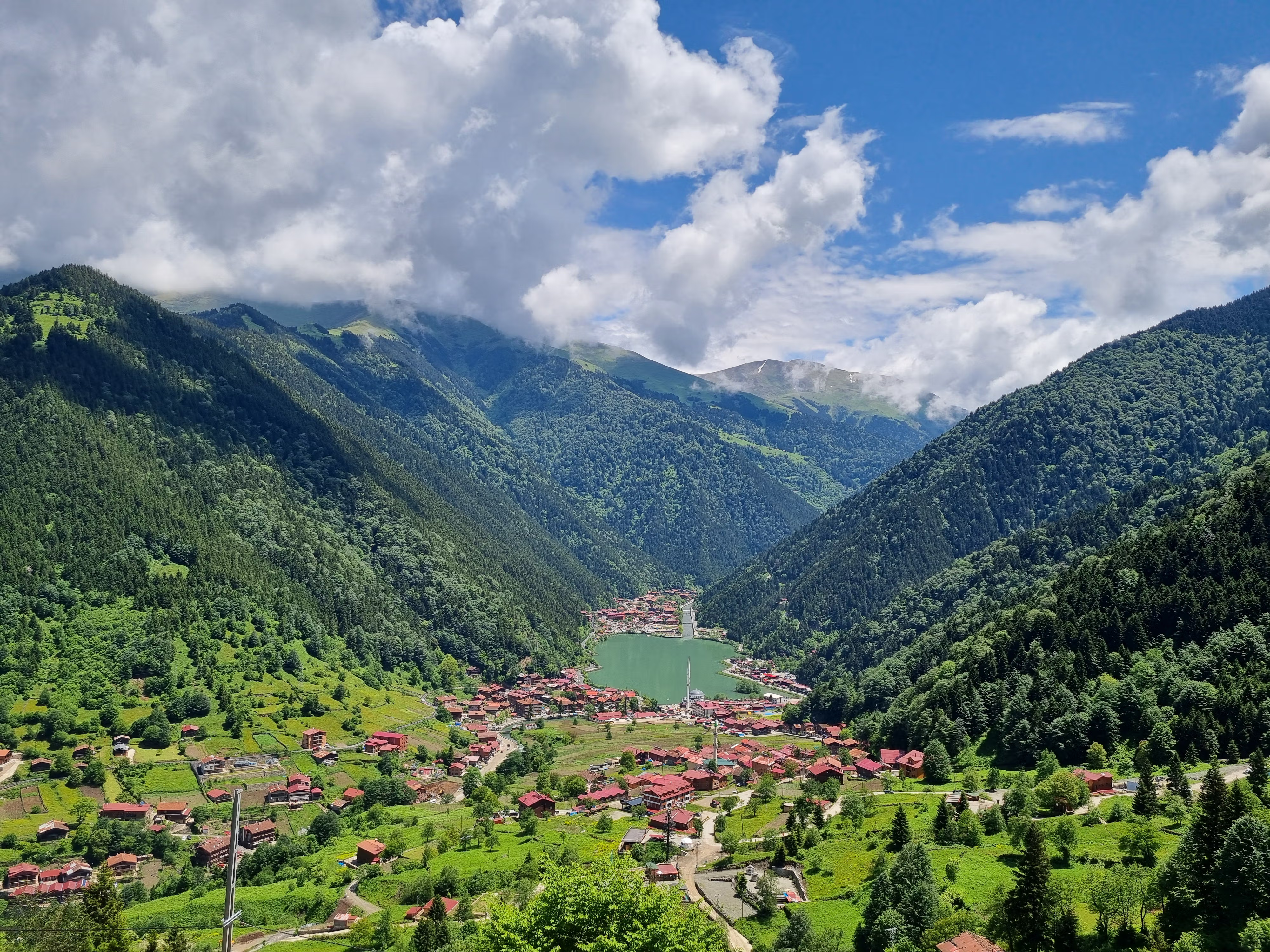
Sumela is built into a cliff three hundred metres above the floor of the Altındere valley, founded in the fourth century and lived in until 1923, and the approach through the forest shows it to you a piece at a time. The rock church still holds its frescoes inside and out. In the afternoon, Uzungöl: a lake in a bowl of forested mountains, a wooden mosque on the shore and tea gardens on the slope above it. Back to Trabzon in the evening.
Day 15 | Trabzon — a day to go slowly
The fifteenth day of any journey should not be a schedule, and this one is not. The day runs east along the coast to Sürmene, where knives have been forged by hand for three hundred years and the workshops will show you how, with viewpoints and tea stops along the way and the afternoon free in Trabzon. Groups who would rather keep moving can go up into the Hemşin valleys instead, to Ayder and the Zilkale fortress, which is the wildest landscape on the route.
It is sixteen days with eight bases, five of them two nights or more, and the two longest transfers are the Mardin to Van run and the Erzurum to Trabzon crossing. The second of those is the best drive in Türkiye rather than the cost of getting somewhere: the road drops a thousand metres through the Çoruh gorge and the vegetation changes from steppe to rainforest in an afternoon. The programme also runs at nine and six days for clients who want the region without the length.
Mardin to Van, roughly 450 km, broken by Mor Gabriel in the morning and Hasankeyf around midday, so the group is out of the vehicle twice for real visits rather than comfort stops. It arrives in Van in the evening and the following day stays in the Van basin. If a client will not take that day, we fly Mardin or Diyarbakır to Van and recover most of it.
May to October. The Nemrut summit road is under snow through the winter and the Van and Kars plateaux are severe from November, so the season is genuinely closed rather than merely uncomfortable. Late May to June and September to early October are the right windows: the plateau is green in the first and the light is best in the second. July and August are hot on the Mesopotamian leg and fine everywhere above 1,500 metres.
The summit at Nemrut is the one real test — a steep stone path of about 600 metres from the car park, at altitude, and there is no alternative route to the terraces. Göbekli Tepe is on raised walkways and easy. Ani, Dara and Çavuştepe are uneven and exposed with no shade. Sumela involves a climb from the valley floor, though a shuttle covers most of it. Everything else is short. We send a walking grade with every quotation.
Because the day from Mardin to Van is already long and adding Diyarbakır would make it longer. Our nine-day and six-day eastern programmes both include it, and on the sixteen-day route one extra night between Şanlıurfa and Mardin brings in the walls, the Hevsel Gardens and Zerzevan Castle without touching the rest of the itinerary.
We run programmes in this region continuously and have done for years; our Italian-market groups go most often. The real constraints are distance and hotel capacity rather than anything else, which is why the route is one-way and why the bases are where they are. Hotels in Adıyaman, Kars and Mardin are the limiting factor in high season and need booking early. Government travel advice differs between source markets, and we would always suggest an operator reads their own rather than take ours.
The part nobody programmes
The fallen heads on Nemrut, the pillars at Göbekli Tepe, Jonah's whale on the walls at Akdamar, the rooftops of Mardin above the plain, and Ani standing empty on the border.
No items found.
More tours by Marveltour
The Grand Tour of Türkiye
14 days · Istanbul · Gallipoli · Troy · Ephesus · Pamukkale · Antalya · Konya · Cappadocia · Ankara