Faith Based Travel in Türkiye: Biblical Itinerary Guide
Plan a Christian pilgrimage in Türkiye: Paul's routes, the Seven Churches of Revelation, Ephesus, Cappadocia and Nicaea, with itineraries for group leaders.
Faith Based Travel in Türkiye: Biblical Itinerary Guide
Key Takeaways
3 corridors: Aegean, Central Anatolia, southern Mediterranean.
7 churches of Revelation: Ephesus, Smyrna (İzmir), Pergamum (Bergama), Thyatira (Akhisar), Sardis (Sart), Philadelphia (Alaşehir), Laodicea (near Denizli).
2 ecumenical council cities: Nicaea/İznik (325, the Nicene Creed) and Ephesus (431, Mary as Theotokos).
4 UNESCO World Heritage sites on a typical route: Ephesus, Pergamon, Hierapolis-Pamukkale, Göreme and the Rock Sites of Cappadocia.
1,700 years of Nicaea: in November 2025 Pope Leo XIV and Ecumenical Patriarch Bartholomew prayed together at İznik for the Council's 1,700th anniversary.
Faith-based travel in Türkiye follows three corridors: the Aegean (Ephesus, the Seven Churches of Revelation and Nicaea), Central Anatolia (Paul's Galatian cities and Cappadocia) and the southern Mediterranean (Tarsus and Antioch). A focused group programme needs 7–8 days for one corridor and 10–14 days to combine two or three. Most of the New Testament outside the Holy Land is set in what is now Türkiye.
Türkiye holds more New Testament geography than any country except Israel and the Palestinian territories. Paul was born in Tarsus, the disciples were first called Christians in Antioch (Acts 11:26), and all seven churches addressed in Revelation 2–3 stood in western Anatolia. All seven ecumenical councils of the undivided Church met in what is now Türkiye (Nicaea, Constantinople, Ephesus, Chalcedon), including the First Council of Nicaea (325) and the Council of Ephesus (431).
This guide is written for tour operators, travel advisors and church group leaders. It covers which regions to combine, which sites carry which biblical texts, realistic driving times, and what a ground handler should include.
What are the core regions for faith-based travel in Türkiye?
Faith-based travel in Türkiye centres on three regions: the Aegean corridor, Central Anatolia and the southern Mediterranean. Each carries a different period of early Church history and needs different transport logistics. Most groups choose one region for a 7–8 day programme, or link two for 10–14 days.
At a Glance
Faith-Based Travel Regions in Türkiye
Region
Key sites
Main texts and themes
Gateway airport
Days
Aegean Corridor
Ephesus, House of the Virgin Mary, Basilica of St John, the Seven Churches, Hierapolis, Alexandria Troas, Assos, Miletus, Nicaea (İznik)
Revelation 2–3, Acts 19–20, Ephesians, Colossians; Johannine and Marian tradition; Nicene Creed
İzmir (ADB)
6–8
Central Anatolia
Antioch in Pisidia (Yalvaç), Iconium (Konya), Lystra, Derbe, Cappadocia's rock churches
Acts 13–16, Galatians; Cappadocian Fathers
Kayseri (ASR), Nevşehir (NAV), Konya (KYA)
4–6
Southern Mediterranean
Tarsus, Antioch on the Orontes (Antakya), Seleucia Pieria, Perge, Attalia (Antalya), Myra (Demre)
Acts 9, 11, 13–14; first gentile mission; St Nicholas
Adana (COV), Hatay (HTY), Antalya (AYT)
3–5
Aegean corridor: This route follows the Hermus and Maeander river valleys of the Roman province of Asia. Ephesus is its anchor: UNESCO notes that the city played a decisive role in spreading Christianity across the Roman Empire. From İzmir, every Revelation city is within about three hours by motorway, Laodicea being the farthest. Nicaea, on Lake İznik about two hours by road from Istanbul, belongs to this north-western side of Anatolia geographically, although programmes often pair it with a flight to Cappadocia.
Central Anatolia: The high plateau holds Paul's Galatian mission cities and the volcanic valleys of Cappadocia. Monastic communities there followed the teaching of Basil the Great, Bishop of Caesarea (Kayseri), from the 4th century.
Southern Mediterranean: Tarsus and Antioch frame the start of the gentile mission. From Antioch the church sent Paul and Barnabas out via Seleucia (Acts 13:1–4). Note that Antakya was heavily damaged in the February 2023 earthquakes; see the FAQ for the current status of St Peter's Grotto.
To connect these regions in one departure, many group organisers book Marveltour's The Footsteps of Saint Paul and The Seven Churches of the Revelation circuit, which balances teaching time with driving stages of under four hours.
Which sites trace the footsteps of the Apostle Paul in Türkiye?
Paul's route through Türkiye runs from his birthplace at Tarsus, through Perge, Antioch in Pisidia, Iconium, Lystra and Derbe, to Ephesus and Alexandria Troas. These cities span all three of his missionary journeys recorded in Acts (c. AD 46–57). Pairing each stop with its scripture passage gives groups a coherent teaching sequence.
The climb from Perge over the Taurus Mountains to Antioch in Pisidia follows the Roman Via Sebaste and takes about three hours by coach today. It gives leaders a natural moment to read 2 Corinthians 11:26, where Paul lists the rivers and bandits he faced on the road. Pace the Lycaonian cities (Iconium, Lystra, Derbe) as one long day from Konya with scheduled rest stops.
Where are the Seven Churches of Revelation?
All seven churches addressed in Revelation 2–3 were in western Türkiye, within roughly 250 km of İzmir. They can be visited in three to four days, travelling clockwise in the order of the letters. Each letter gives group leaders a ready-made devotional for the site.
Pergamon became a UNESCO World Heritage site in 2014 and Hierapolis-Pamukkale in 1988 (UNESCO Pergamon, UNESCO Hierapolis). Laodicea's water supply, carried by aqueduct and reaching the city lukewarm, is the usual on-site illustration for Revelation 3:15–16.
Extensively excavated city and churches; pair with Hierapolis (St Philip) and Colossae
Why are Ephesus and the House of the Virgin Mary so important?
Ephesus was the capital of the Roman province of Asia and the base of Paul's longest ministry, about three years (Acts 20:31). Christian tradition also places the Apostle John and Mary here. The Council of Ephesus met in the city in 431 and affirmed Mary's title Theotokos (God-bearer). UNESCO inscribed Ephesus as a World Heritage site in 2015.
Paul in Ephesus: Paul taught daily in the lecture hall of Tyrannus for two years (Acts 19:9–10). His preaching hurt the trade in silver shrines of Artemis and led to a riot in the theatre (Acts 19:23–41). Groups read this passage in the Great Theatre itself, which seated an estimated 24,000.
The Church of Mary and the Council of 431: The Church of Mary, beside the harbour, is identified as the meeting place of the Council of Ephesus. UNESCO's listing names this church and the Basilica of St John as evidence of the city's importance to Christianity, and records two councils held here, in 431 and 449.
The Basilica of St John: On Ayasuluk Hill in Selçuk, Emperor Justinian built a great basilica over the traditional tomb of John the Apostle in the 6th century. Its restored columns and baptistery make a strong setting for reading John's Gospel or letters.
The House of the Virgin Mary (Meryem Ana Evi). This small domed chapel on Bülbüldağı (Mount Koressos) stands about 7 km from Ephesus. UNESCO describes it as a major place of Christian pilgrimage. Catholic and Orthodox pilgrims and many Muslim visitors come here, and three popes have visited (Paul VI in 1967, John Paul II in 1979, Benedict XVI in 2006). The tradition is not universally accepted, so present it as tradition, not history. The chapel is a quiet place for prayer; outdoor Mass can be arranged in advance.
Planning tip: Visit Ephesus at opening time or late afternoon to avoid cruise-ship crowds from Kuşadası. Allow at least half a day for the ancient city, plus 2–3 hours for Mary's House and St John's. For context on the pastoral challenges of each Aegean church, combine Ephesus with Marveltour's Seven Churches of the Revelation programme.
How do Cappadocia and the councils of Nicaea shape Christian heritage?
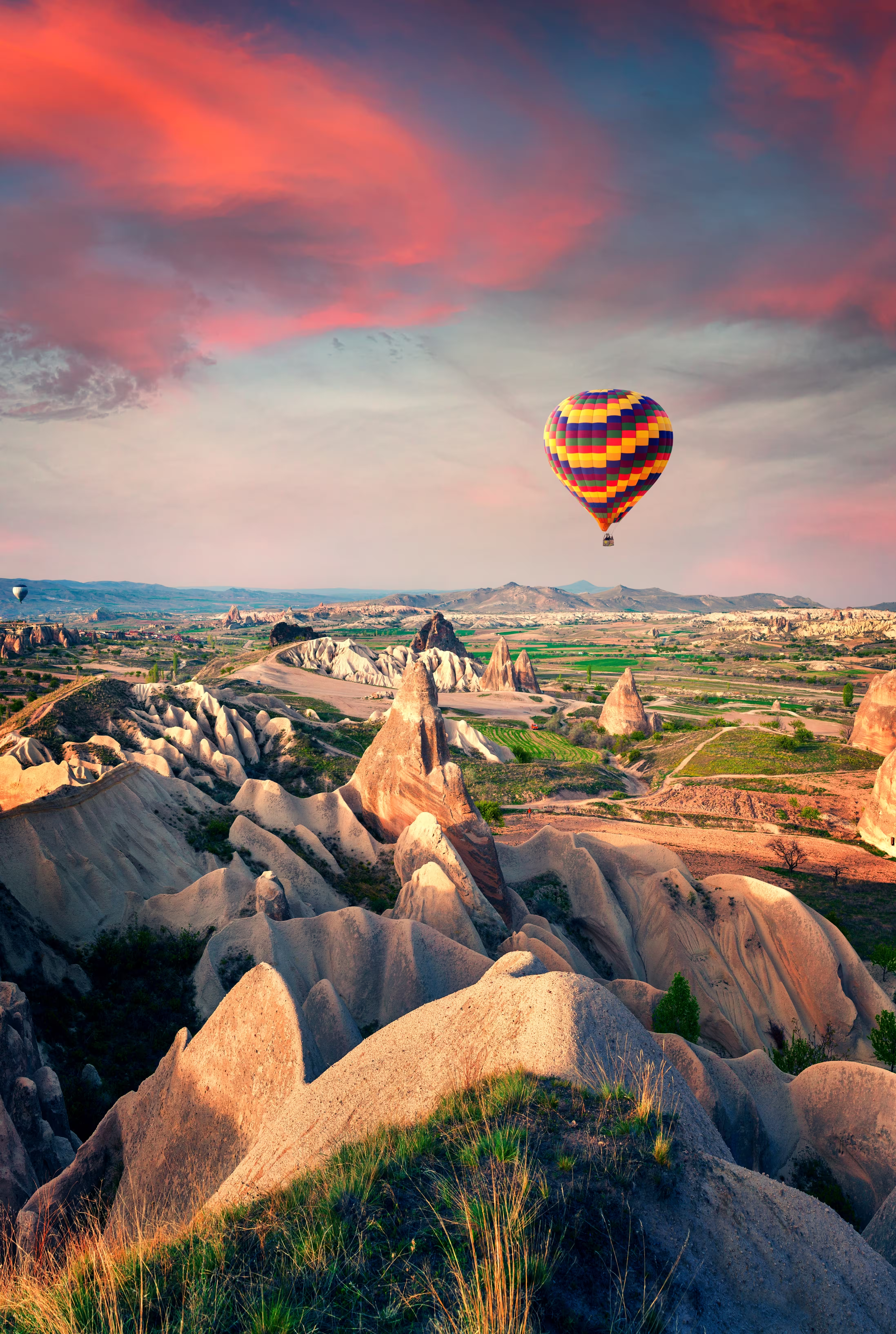
Cappadocia shows how the early Church lived; Nicaea shows what it believed. Cappadocia's rock-cut churches and monasteries date from the 4th to 13th centuries and form one of the largest cave-dwelling complexes in the world (UNESCO). Nicaea, modern İznik, hosted the First Council in 325, which produced the Nicene Creed still recited by most Christian churches.
Cappadocia: the Cappadocian Fathers and monastic life
Three 4th-century bishops, Basil the Great, Gregory of Nazianzus and Gregory of Nyssa, shaped Trinitarian theology at the councils of Nicaea and Constantinople. Basil's rules for community life became the foundation of Eastern Orthodox monasticism. UNESCO dates the first monastic communities here to the 4th century, inspired by Basil's teaching.
Göreme Open-Air Museum: rock-cut churches with post-iconoclastic frescoes, including Tokalı and El Nazar (10th century) and Karanlık and Elmalı (late 12th–early 13th century).
Monastic refectories: rock-cut tables and benches show daily communal life.
Underground cities of Kaymaklı and Derinkuyu: multi-level refuges used by Christian communities during Arab raids.
Ihlara Valley: a 14 km gorge with more than a dozen frescoed churches; a good walking and prayer day.
Nicaea (İznik): the Creed and its 1,700th anniversary
In 325, Emperor Constantine convened bishops at Nicaea to answer Arius, who taught that the Son was a created being. The Council affirmed the Son as "of one substance" with the Father and issued the first form of the Nicene Creed. The Second Council of Nicaea (787) later met in Hagia Sophia of İznik and restored the veneration of icons.
The site gained new attention in 2025. On 28 November 2025, Pope Leo XIV joined Ecumenical Patriarch Bartholomew and other church leaders for a common prayer at İznik to mark the Council's 1,700th anniversary (Dicastery for Promoting Christian Unity). They prayed beside the excavated Basilica of St Neophytos, whose foundations lie in the shallows of Lake İznik.
Groups can see the Roman and Byzantine city walls, the Lefke and Istanbul gates, Hagia Sophia of İznik and the lakeside basilica site in half a day. Marveltour's Istanbul & Cappadocia Tour links Nicaea and Constantinople's imperial history with Cappadocia's monastic valleys.
How long should a Christian pilgrimage to Türkiye be, and what should it include?
A focused pilgrimage needs 7 days and 6 nights for one region; 10–14 days lets a group combine Paul's routes, the Seven Churches and Cappadocia without exhausting drives. Plan for daily coach stages of four hours or less, and separate international airfare from the ground contract.
Sample Programmes
How Long a Faith Tour in Türkiye Takes
Programme
Duration
Route
Best for
Seven Churches of Revelation
7 days / 6 nights
İzmir – Pergamum – Thyatira – Sardis – Philadelphia – Laodicea/Hierapolis – Ephesus
Church groups studying Revelation
Footsteps of Paul and the Seven Churches
10–12 days
Antalya/Perge – Antioch in Pisidia – Konya – Pamukkale – Ephesus – Seven Churches – Troas
Bible colleges, seminary cohorts
Istanbul, Nicaea and Cappadocia
7–8 days
Istanbul – İznik – flight to Cappadocia – Göreme, Ihlara, Kaymaklı
Orthodox and ecumenical groups; Creed study
Grand Biblical Türkiye
14 days
Tarsus – Antioch – Cappadocia – Konya – Antioch in Pisidia – Pamukkale – Ephesus – Seven Churches – Istanbul
Repeat pilgrims, academic study tours
Every programme can be tailored. Read more about our trade-only ground services on our About Us page.
Logistics checklist for group leaders
Coaches and driving times: Use modern air-conditioned coaches with licensed drivers. Keep legs under four hours and stop every 90–120 minutes at serviced rest areas.
Domestic flights: Fly the long sectors (Istanbul–Kayseri/Nevşehir, Kayseri–İzmir, Antalya–Istanbul) instead of driving them; each saves 6–9 hours on the road.
Meals and hotels: Standard packages include daily breakfast plus selected lunches near remote sites with few restaurants. Leave some evenings free for fellowship or independent dining.
Air and ground contracts: Keep international and domestic flights separate from the ground programme. Groups keep control of flight schedules, and Marveltour manages transfers, entrance fees and licensed guides.
Worship spaces: Book private Mass, communion services or devotions in advance. Options include open-air basilicas (permits required at state sites), hotel meeting rooms and active local parishes in İzmir, Istanbul and Antalya.
Licensed guides: In Türkiye, only professional tourist guides licensed by the Ministry of Culture and Tourism may guide groups. Ask for a guide experienced with biblical groups.
Seasons: April–June and September–early November give mild weather. July–August temperatures at Ephesus and Laodicea often pass 35°C, so schedule site visits early.
Conclusion
Türkiye holds the foundational geography of early Christianity: Paul's roads, the seven cities of Revelation, the monastic valleys of Cappadocia and the council city of Nicaea. A rewarding pilgrimage depends less on the number of sites than on pacing. Good itineraries keep drives short and leave time on site for scripture, teaching and prayer.
Marveltour is a trade-only ground operator for faith-based groups. We handle hotels, coaches, entrance protocols, worship-space bookings and licensed specialist guides from arrival to departure. Read more on our About Us page (link: /about-us), or contact our team to start planning your next departure.
Frequently asked questions
How many days do you need for a biblical tour of Türkiye?
Seven days cover one region, such as the Seven Churches of Revelation. Ten to twelve days combine Paul's routes with the Seven Churches. Fourteen days allow a full circuit from Tarsus and Antioch to Ephesus and Istanbul.
Can guests bring personal Bibles and devotional books into Türkiye?
Yes. Personal Bibles and devotional books for private study and group worship are normal personal belongings. Avoid carrying bulk quantities of identical literature for public distribution, which can draw customs scrutiny. Check current rules with the Republic of Türkiye Ministry of Trade customs guidance before travel.
Can pilgrimage groups still visit St Peter's Grotto in Antakya?
The cave church survived the February 2023 earthquakes, though much of Antakya was destroyed. Tradition holds that Peter led the first community of believers here, in the city where they were first called Christians (Acts 11:26). Local Christians held a Christmas Eve service in the grotto in December 2025 (Al-Monitor/AFP). City infrastructure is still being rebuilt, so confirm access and hotel options with your ground operator before including Antakya.
Which ecumenical council took place in Nicaea?
The First Council of Nicaea met in 325 under Emperor Constantine to resolve the Arian controversy over the divinity of Christ. It produced the original Nicene Creed, recited today by Catholic, Orthodox and most Protestant churches. A Second Council of Nicaea followed in 787.
What is the best time of year for a Christian pilgrimage to Türkiye?
April to June and September to early November offer mild temperatures for walking large open sites. Easter and the feast of Sts Peter and Paul (29 June) are popular for liturgical groups. Summer is hot inland and on the Aegean.
How are meals and transport structured on a standard faith tour?
A standard 7-day / 6-night package typically includes daily breakfast, 4 group lunches and 3 dinners. Domestic and international flights are contracted separately. Groups travel by dedicated touring coach with a professional driver between pre-booked hotels.
Sources and further reading
UNESCO World Heritage Centre. Ephesus (inscribed 2015).
This article is for general information. Site access, opening hours and regulations change; confirm current details with official Turkish sources or your ground operator before travel.
Share
Use AI to summarize this article
More journals by Marveltour
A Culinary Journey Through Türkiye: Street Food, Region by Region
Eight street foods, four regions and the official names that protect them, with field notes for operators on timing, hygiene, vegetarian, Jain and halal groups.
Nicaea at 1,700: A Journey to İznik, Where the Nicene Creed Was Born
The creed recited in churches every Sunday was agreed here in 325 AD. A fourth-century basilica lies beneath the lake, and İznik works as an overnight or a long day from an Istanbul programme.
Türkiye’s 22 UNESCO World Heritage Sites: A Journey Through 12,000 Years of History
A member of the UNESCO World Heritage Convention since 1983, Türkiye saw its first sites inscribed in 1985 and its latest, Sardis, in 2025, with 80 more on its Tentative List.
Faith Based Travel in Türkiye: Biblical Itinerary Guide
Plan a Christian pilgrimage in Türkiye: Paul's routes, the Seven Churches of Revelation, Ephesus, Cappadocia and Nicaea, with itineraries for group leaders.